
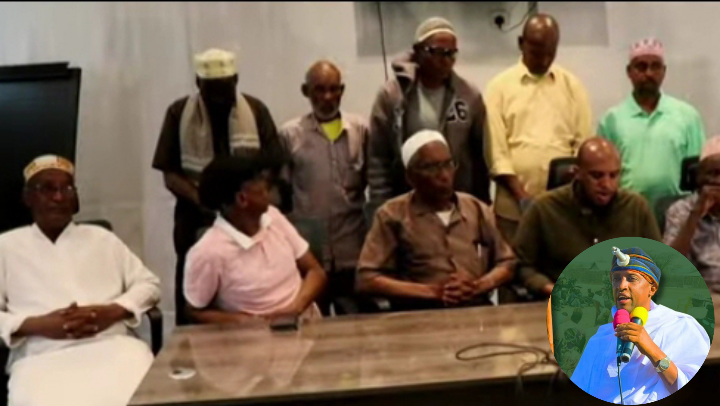

Isiolo, Kenya| Amid escalating political uncertainty in Isiolo County, a coalition of Somali professionals and the respected Council of Elders has issued a strong appeal for restraint, urging County Assembly Members (MCAs) and stakeholders to pursue alternative dispute resolution (ADR) mechanisms rather than push forward with the impeachment of Governor Abdi Ibrahim Guyo.
The elders warned that the highly politicized impeachment process could fracture the county’s fragile inter-ethnic balance, derail service delivery, and stall ongoing development initiatives critical to the region’s long-term progress.
A Voice of Reason Amid Rising Tensions
In a joint statement read by prominent professional Luqman Ahmed on June 22, the elders acknowledged the legality of impeachment under the Constitution but cautioned against using it prematurely or for politically motivated ends.
They stressed that the process, while lawful, is “tedious, divisive, and destabilizing,” particularly in a county like Isiolo that has long struggled to maintain ethnic cohesion and inclusive governance.
“We’re not here to take sides,” said Abdulkadir Shariff Abdullahi, Chairperson of the Somali Council of Elders. “Our concern is the peace and unity of Isiolo. Impeachment should only come after all peaceful avenues have been fully exhausted. Our county cannot afford political warfare at the expense of development and stability.”
An Appeal for Dialogue and Mediation
The elders emphasized the importance of dialogue, arbitration, and community-based reconciliation.
They cited Isiolo’s past successes with Alternative Justice Systems (AJS), which have effectively defused local disputes without resorting to formal court processes.
“Isiolo has made commendable strides in embracing local conflict resolution frameworks. We should not abandon these foundations now,” said Ahmed. “ADR mechanisms can offer accountability without the chaos that an impeachment war might bring.”
Backdrop: The Impeachment Controversy
Tensions erupted following a motion introduced by Sericho MCA Abubakar Godana on June 10, accusing Governor Guyo of gross misconduct, abuse of office, and violating constitutional and public finance management principles.
The motion, supported unanimously by a number of MCAs(most of whom are allied to UDM), cited overstaffing through the appointment of advisors and chief officers(despite the same MCAs vetting and approving them).
Other allegations include mismanagement of public resources, delayed flagship projects—including the Isiolo stadium and county headquarters(without presenting any evidence to the effect)—and controversial remarks allegedly directed at Senator Fatuma Dullo during Madaraka Day celebrations.
However, Governor Guyo challenged the motion in court. On June 16, Justice Heston Nyaga of the Isiolo High Court granted a conservatory order halting proceedings until the petition is determined.
The court also compelled the Assembly to supply all relevant documents to the governor within 48 hours and allowed seven days for formal responses.
Despite the judicial stay, MCA Godana reintroduced a fresh motion on June 19, raising questions about the Assembly’s motives and triggering renewed calls for de-escalation.
Security Fears and Political Fallout
The intensifying feud has spurred security concerns. Some MCAs have reportedly sought refuge in Nakuru and Machakos counties, claiming they faced threats and intimidation.
On June 18, tensions boiled over when a crowd—allegedly mobilized to disrupt Assembly proceedings—stormed the premises, vandalized equipment, and damaged the Hansard system, further exacerbating an already volatile political climate.
Grassroots leaders and residents from various communities, including the Gabra and Samburu, voiced frustration over the lack of public consultation in the impeachment effort.
Omar Godana, Chair of the Gabra Council of Elders, alleged that the chaos may be fueled by external political interests from neighboring counties and appealed to President William Ruto to intervene to prevent ethnic unrest.
Joyce Nairisiae, Chairperson of the Samburu Council of Elders, echoed these sentiments, warning that continued political instability risks undoing gains made in infrastructure, education, and public health.
Governor Guyo’s Stance: Open to Dialogue
Governor Abdi Ibrahim Guyo has consistently maintained that the accusations against him are politically driven and lacks merit. In a statement issued on June 20, he expressed readiness to engage in dialogue with MCAs, stressing the need to prioritize development over partisan clashes.
“I will seek out my colleagues in the Assembly because we must not allow politics to sabotage the county’s growth trajectory,” said Guyo.
Calls for ADR Gain Momentum
Support for alternative dispute resolution is gaining traction not only among elders but also across civil society and professional groups.
Many argue that Isiolo’s interwoven ethnic and political realities make confrontational legal battles potentially explosive. ADR, they say, offers a pathway to justice and reform without deepening tribal or political fault lines.
“Dialogue is not a sign of weakness. It is a strength that ensures continuity in service delivery, protects peace, and reinforces good governance,” said Luqman Ahmed.
Divided County, Shared Future
Isiolo remains sharply divided. While some residents back the MCAs’ oversight mandate and insist on holding the governor accountable, majority of the residents fear the impeachment effort masks deeper political maneuvering that could plunge the county into instability.
The Somali Council of Elders’ message is clear: the county’s fragile peace must not be sacrificed on the altar of political vendettas.
Their intervention reflects a broader desire to preserve unity, especially in a region where ethnic harmony is both a strength and a vulnerability.
What’s Next?
With the court’s determination on Governor Guyo’s petition pending, all eyes are on Isiolo. The coming weeks will test the county’s capacity to navigate complex political terrain without slipping into crisis.
Whether through the courtroom or the community, the outcome will likely set a precedent for how Kenya’s devolved units manage internal disputes in ethnically diverse contexts.
The elders and professionals remain steadfast in their resolve to champion reconciliation. Their efforts may yet offer a peaceful and dignified way forward—one that balances accountability with stability, and justice with unity.
Share This Post