


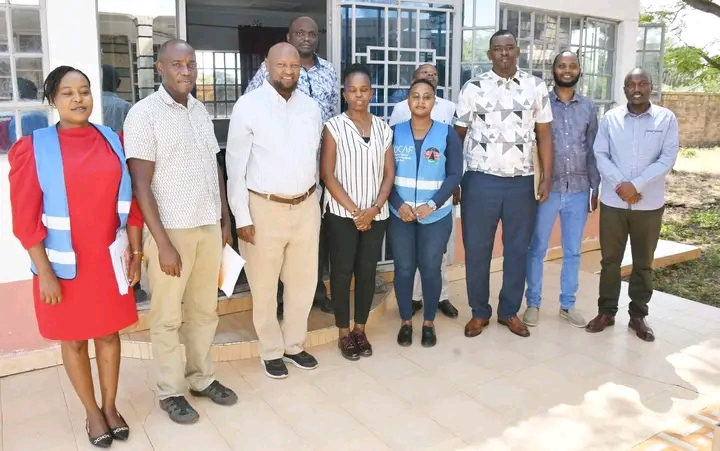

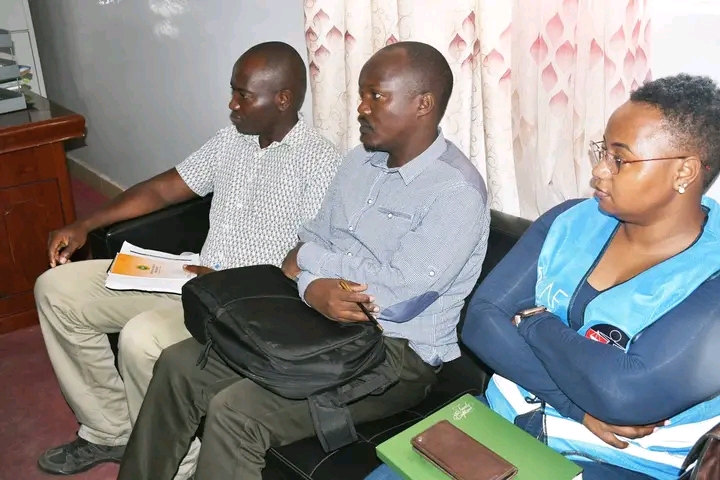



Isiolo, Kenya| Isiolo County Secretary Dade Boru welcomed a technical assessment team from the Kenya Devolution Support Program (KDSP) II on a courtesy visit to his office, marking a pivotal step in enhancing the county’s governance and service delivery frameworks.
The team’s visit aimed to conduct a comprehensive baseline survey focusing on critical social aspects, including social risk management, stakeholder engagement, community participation, labor management, working conditions, inclusion of minority, vulnerable, and marginalized groups, and the establishment of robust Monitoring and Evaluation (M&E) systems for Social Risk Management and Grievance Redress Mechanisms (GRM).
The KDSP II initiative, a continuation of the successful KDSP I, is designed to strengthen devolution by supporting counties in improving governance, accountability, and service delivery.
During the meeting, County Secretary Dade highlighted Isiolo’s achievements under KDSP I, notably the construction of a modern Accident and Emergency Centre and a maternity wing at Biliqo Health Centre.
These projects have significantly enhanced healthcare access in the region, demonstrating the county’s commitment to devolution’s objectives.
“Despite a few challenges, the County Government successfully implemented KDSP I and is keen on effectively executing the objectives of KDSP II,” Dade stated.
“We are particularly focused on improving our social risk management and Grievance Redress Mechanisms to ensure inclusive and responsive governance.”
Strengthening Social Safeguards and Accountability
The KDSP II technical team conducted in-depth assessments through interviews with key county officials, including the KDSP II Coordinator, Social Safeguard Officers, GRM Officers, and a representative from the County Assembly of Isiolo.
The evaluation focused on several critical areas:
- Social Risk Management: Ensuring policies and frameworks mitigate risks that could affect vulnerable populations.
- Stakeholder Engagement and Community Participation: Promoting inclusive decision-making processes that involve all community segments.
- Labor Management and Working Conditions: Assessing compliance with fair labor practices and safe working environments.
- Inclusion of Minority, Vulnerable, and Marginalized Groups: Ensuring equitable access to resources and opportunities for underrepresented communities.
- Monitoring and Evaluation for Social Risks and GRM: Establishing mechanisms to track progress and address grievances promptly and effectively.
Dade emphasized that Isiolo County has already implemented service charters across its departments, alongside several GRM systems, to enhance transparency and accountability.
These mechanisms allow residents to voice concerns and seek redress, fostering trust between the county government and its citizens.
Voices of Support for Isiolo’s Progress
The visit has garnered positive feedback from community leaders and stakeholders. Bishop Stephen Kalunyu, a prominent local figure, praised the county’s efforts, stating, “This visit marks a significant step in deepening accountability, inclusion, and service delivery in Isiolo. By successfully implementing KDSP I — evident in the establishment of critical infrastructure like the Accident and Emergency Centre and the Biliqo maternity wing — the County Government has shown its strong commitment to devolution’s core goals.”
Kalunyu further commended the county’s focus on social risk management and community participation, noting, “The emphasis on improving grievance redress mechanisms is timely and progressive. Kudos to Secretary Dade and the entire county leadership for laying the groundwork for an inclusive and responsive KDSP II phase. This collaboration reflects Isiolo’s resolve to leave no one behind — including minority and marginalized groups — in its development journey.”
Echoing these sentiments, Lena Nkatha Muriuki, another community stakeholder, highlighted the importance of structured engagement in achieving devolution’s goals. “This kind of follow-through is exactly what devolution was meant to achieve,” she said.
“Seeing Isiolo prioritize not just infrastructure but also social safeguards and community voice is commendable. Let’s keep pushing for implementation that reflects these strong intentions on the ground where it matters most.”
KDSP II: A Catalyst for Inclusive Development
The KDSP II program, funded by the World Bank and implemented in collaboration with the Kenyan government, aims to strengthen county-level institutions to deliver services efficiently and equitably.
Isiolo’s participation in the program underscores its commitment to aligning with national devolution goals while addressing local needs.
By focusing on social safeguards and grievance redress, Isiolo is positioning itself as a model for inclusive governance.
The county’s efforts to engage minority and marginalized groups ensure that development benefits reach all residents, regardless of socio-economic status or background.
The baseline survey conducted by the KDSP II team will provide critical data to guide the county in refining its policies and interventions.
Looking Ahead
As Isiolo County moves forward with KDSP II, the focus will remain on translating commitments into tangible outcomes.
The county government plans to leverage the survey’s findings to strengthen its social risk management frameworks, enhance community participation, and ensure that grievance redress mechanisms are accessible and effective.
These efforts are expected to build on the successes of KDSP I, further improving service delivery and fostering sustainable development.
The visit by the KDSP II technical team underscores Isiolo’s proactive approach to devolution and its dedication to creating a governance system that is transparent, inclusive, and responsive to the needs of its people.
As the county continues to collaborate with national and international partners, it is poised to set a benchmark for other counties in Kenya striving to achieve devolution’s transformative potential.
Share This Post