
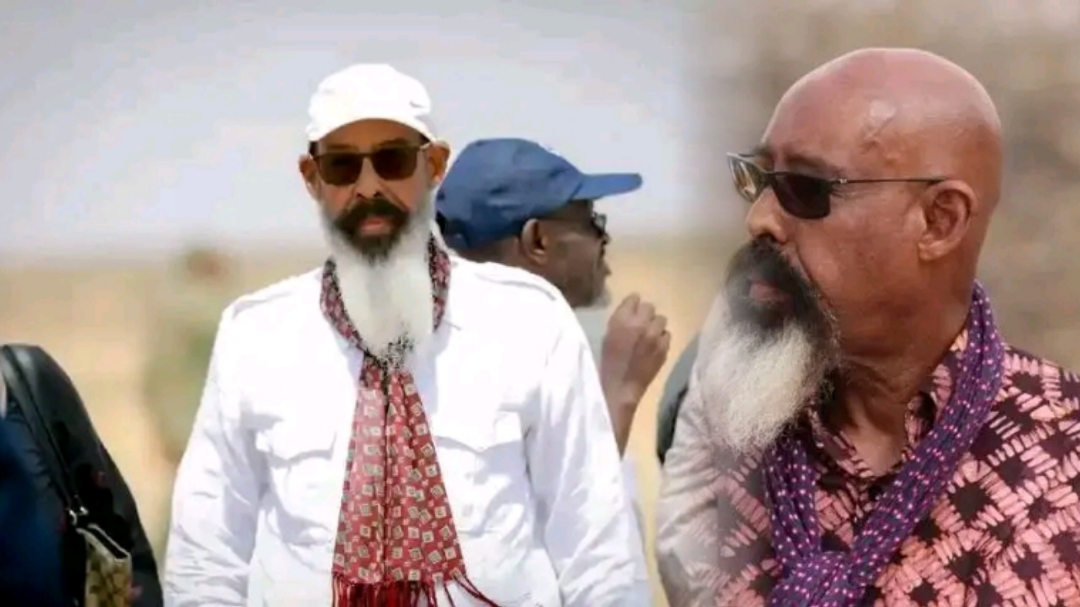

Nairobi, Kenya| General Mohamed Said Hirsi Morgan, a towering and polarizing figure in Somalia’s military and political history, passed away on May 28, 2025, in a Nairobi hospital after a brief illness, his family confirmed.
Known for his pivotal role as the last Minister of Defence under President Siad Barre’s regime and his subsequent activities as a warlord during Somalia’s civil war, Morgan’s death marks the end of an era for one of the nation’s most debated figures.
His legacy, stained by allegations of human rights abuses and celebrated by some for his military contributions, continues to divide opinions across Somalia and its diaspora.
Early Life and Rise to Prominence
Born in 1949 in Qardho, in Somalia’s Karkaar region, Mohamed Said Hirsi Morgan hailed from the Majeerteen sub-clan of the Darod tribe, a prominent clan in Somalia’s complex social fabric.
His early education took place at Haji Mire Primary and Secondary School in Bosaso, a bustling commercial hub in the Bari region. Morgan later moved to Mogadishu to attend “Allaahida” college, laying the groundwork for his military career.
In 1967, he was sent to the Soviet Union for military training, returning in 1970 as a disciplined officer.
His expertise was further honed through advanced military training in Italy and the United States, positioning him as a rising star in Somalia’s armed forces.
Morgan’s ascent was accelerated by his marriage in the early 1970s to one of President Siad Barre’s daughters, a union that cemented his place within the inner circle of Barre’s authoritarian regime.
This familial tie not only elevated his status but also granted him significant influence within Somalia’s political and military spheres.
Starting his career in the presidential guard, Morgan served at the presidential palace for approximately seven years. By 1980, as a colonel, he commanded the Mogadishu sector, likely Sector 77, home to elite units of the Somali Armed Forces.
His leadership extended to the Red Berets, an elite unit tasked with quelling the 1982 revolt led by the Majeerteen-led Somali Salvation Democratic Front (SSDF).
Military Career and the “Butcher of Hargeisa” Moniker
Morgan’s military career reached its zenith between 1986 and 1988 when he served as the military commander of the 26th Sector, encompassing the region of Somaliland.
This period, however, remains the most controversial chapter of his life. He was implicated in severe human rights abuses against the Isaaq clan, earning him the infamous title “Butcher of Hargeisa.”
A document attributed to him, known as the Morgan Report or “Letter of Death,” allegedly authored in January 1987, outlined genocidal tactics to address Somalia’s “Isaaq problem.”
The report advocated for the “obliteration” of the Isaaq people, including measures to prevent their resurgence.
These policies culminated in the 1988 bombing and shelling of Hargeisa, Somalia’s second-largest city, which killed an estimated 50,000 to 60,000 civilians and displaced nearly half a million people.
The 1988 Hargeisa campaign, documented by organizations like Human Rights Watch and referenced in a 2001 UN report, stands as one of the darkest episodes of the Somali Civil War.
Survivors and Somalilanders continue to condemn Morgan for orchestrating what many describe as the Isaaq genocide, a charge that has cemented his notoriety in the region.
Social media posts, such as one by Simba Hasheem from Mandera, Northern Kenya, reflect this sentiment, describing Morgan’s legacy as “stained with bloodshed and human suffering” and accusing him of targeting entire communities with “merciless annihilation.”
In 1989, Morgan transitioned to a political role, serving as Minister of Public Works and Housing before being appointed Minister of Defence and substitute head of state in September 1990. At the height of his power, he commanded a formidable force of 54,000 soldiers.
However, the collapse of Barre’s regime in 1991 marked a turning point, reducing his forces to just 1,000 by 2005 and thrusting him into a new role as a factional leader in Somalia’s ensuing chaos.
Warlord Era and the Somali Civil War
Following the fall of the central government in 1991, Morgan reinvented himself as a warlord, leading the Somali National Front (SNF) and later the Somali Patriotic Movement.
His campaigns in southern Somalia, particularly in the Juba Valley, were marked by brutality and contributed to widespread suffering. In 1992, his operations were cited as a primary cause of the devastating famine that claimed hundreds of thousands of lives.
Morgan’s forces captured Kismayo in December 1993, exploiting the withdrawal of Belgian UN peacekeepers and the international community’s focus on rival warlord Mohamed Farah Aidid.
His control over Kismayo turned the city into a personal stronghold, where his troops engaged in violence, looting, and starvation tactics.
Despite participating in peace talks, including the 1993 UN-sponsored Informal Preparatory Meeting on National Reconciliation and the Conference on National Reconciliation in Addis Ababa, as well as the 2002–2004 Kenya peace talks that led to the Transitional Federal Government, Morgan’s actions often undermined reconciliation efforts. In 2004, he threatened to attack Kismayo, jeopardizing fears of renewed conflict.
His unrepentant stance and continued aggression earned him a reputation as a destabilizing force, prolonging Somalia’s cycle of violence and despair.
Later Years and Death
In his later years, Morgan settled in Garowe, the capital of Puntland, where he served as a senior advisor to the Puntland President, focusing on restructuring the region’s armed forces and combating ISIS.
He also spent time in Nairobi and Oman, maintaining a low profile compared to his earlier years.
On May 28, 2025, Morgan experienced severe abdominal pain while in Bosaso and was airlifted to Nairobi for treatment.
He passed away in a Nairobi hospital, with his death confirmed by his family and reported by Somalia’s Horseed Media.
Puntland declared three days of mourning, and his body was transferred to Garowe for a state funeral.
Somali leaders, including Prime Minister Hamza Abdi Barre and Puntland President Said Abdullahi Deni, praised Morgan’s contributions to the Somali military, describing him as a “brave” and “pivotal” figure.
However, the Federal Government of Somalia and its president have issued no official statements, reflecting the sensitivity of Morgan’s legacy.
A Polarizing Legacy
General Morgan’s legacy is a study in contrasts. To some, particularly in Puntland and among supporters of the Barre regime, he was a patriot who strengthened Somalia’s military and defended national unity.
Social media posts on X from May 28, 2025, such as those by users @kacaanofsade and @LtKhalifa, laud his military achievements, including his defeat of the Somali National Movement (SNM) at Balidhig. Yet, for others, particularly in Somaliland, Morgan remains a symbol of brutality.
The moniker “Butcher of Hargeisa” encapsulates the enduring pain of survivors who hold him responsible for the 1988 atrocities.
Despite allegations of war crimes, Morgan lived freely in Kenya and elsewhere after 1991, with no international prosecution pursued.
Freelance journalist Yassin Juma, in a social media post, described Morgan as a “slippery” figure who eluded interviews but left an indelible mark on Somalia’s civil war history.
Juma noted, “Love him or hate him, his name in Somalia’s civil war history will be read by generations to come.”
This duality defines Morgan’s legacy: a career soldier celebrated by some, reviled by others, and undeniably central to Somalia’s tumultuous past.
Personal Life and the “Morgan” Nickname
Morgan’s family resides in the United States, though details about his personal life remain private.
His nickname, “Morgan,” is believed to be a Somalized version of “Morkaan,” possibly meaning “baby camel” in Somali.
Some speculate it was adopted from a Western source during his military training abroad, but its exact origin remains unclear.
What Next?
General Mohamed Said Hirsi Morgan’s death closes a complex chapter in Somalia’s history. From his rise as a key figure in Siad Barre’s regime to his role as a warlord in the civil war, Morgan’s life was marked by significant military achievements and profound controversies.
His alleged involvement in the Isaaq genocide and the 1992 famine continues to cast a long shadow, while his contributions to Somalia’s military and Puntland’s security efforts are celebrated by some.
As Somalia reflects on his legacy, the debates surrounding his actions—both heroic and horrific—will likely endure, shaping how future generations remember one of the nation’s most enigmatic figures.
Share This Post