
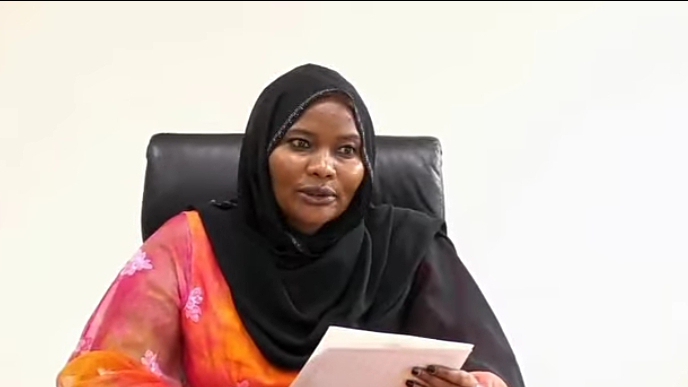

Nairobi, Kenya| Isiolo Woman Representative Mumina Bonaya has launched a strong defense of the Teachers Service Commission’s (TSC) recent promotion of educators serving in Arid and Semi-Arid Land (ASAL) regions, condemning what she termed as politically motivated attacks by the Parliamentary Committee on Education.
Addressing journalists during a press briefing at Parliament Buildings, Bonaya accused the committee of displaying blatant bias and unjustified criticism toward the TSC’s actions, which she described as a long-overdue correction of historical injustices facing teachers in marginalized counties.
“It is disheartening that instead of embracing this step toward equity and fairness, certain leaders are now seeking to reverse it,” she said. “Where was this scrutiny when ASAL teachers were consistently sidelined and excluded from upward mobility within the profession?”
Bonaya’s remarks came in response to the committee’s recent grilling of TSC officials over the criteria used to promote hundreds of teachers, many of whom are stationed in hardship areas.
The MP, who hails from Isiolo County—one of the counties considered to be among the most underserved in terms of education and infrastructure—sharply criticized the committee’s stance, calling it “self-serving” and “divorced from the ground realities.”
According to Bonaya, the promotions were not only merited but essential in addressing long-standing disparities in Kenya’s education sector.
She emphasized that the TSC had employed objective, transparent criteria, including years of service, leadership responsibility, and consistent service in challenging and remote environments.
“These are educators who have persevered under some of the harshest conditions—without adequate housing, proper infrastructure, or even basic teaching tools—yet they have remained committed to shaping future generations. Their promotions are not a favor; they are an act of justice,” she added.
Bonaya further warned that any attempts to pressure or coerce the TSC into reversing the promotions could lead to serious institutional ramifications. She hinted at the possibility of legal or parliamentary action should the independence of the TSC continue to be undermined.
“This is not merely about individual promotions. It is about protecting constitutional bodies from political interference, preserving their credibility, and upholding fairness across the board,” she declared.
The Isiolo legislator reaffirmed her unwavering support for the autonomy of independent commissions, noting that such institutions play a critical role in ensuring equitable governance and fostering national unity.
“Parliament must lead by example in respecting the independence of institutions like the TSC. Undermining their authority erodes public trust and deepens regional inequalities that we, as a country, should be working to close,” she emphasized.
Bonaya’s statement comes amid increasing tension between lawmakers and the TSC, with some MPs demanding a review of the promotion exercise.
However, her forthright defense has reignited the conversation about equitable representation, inclusivity, and the rights of public servants in underserved regions.
With over a decade of advocacy for marginalized communities, Mumina Bonaya has emerged as a leading voice for educational justice in Kenya, and her latest remarks are likely to bolster calls for a more balanced approach to national development and public service recognition.
(Video coming soon)