
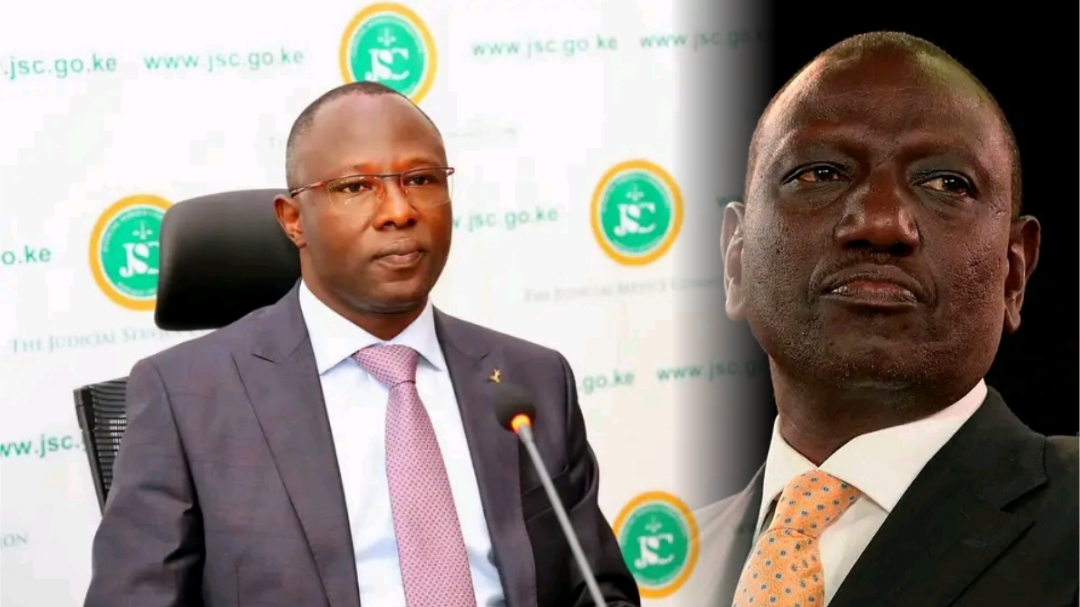

President William Ruto has taken a significant step toward the reconstitution of the Independent Electoral and Boundaries Commission (IEBC) by nominating Erastus Edung Ethekon as the next chairperson of the electoral body.
The nomination, announced through a statement issued by Head of Public Service Felix Koskei, marks a pivotal moment in Kenya’s ongoing electoral reform efforts.
Ethekon, who hails from Turkana County, has been selected to succeed former IEBC chair Wafula Chebukati, whose tenure ended following the 2022 general election.
The position has remained vacant since then, contributing to the prolonged period of partial functionality within the commission.
In addition to Ethekon’s nomination, President Ruto has forwarded six names for appointment as IEBC commissioners. The nominees include:
- Ann Njeri Nderitu – from Nyandarua County
- Moses Alutalala Mukhwana – from Kakamega County
- Mary Karen Sorobit – from Uasin Gishu County
- Hassan Noor Hassan – from Mandera County
- Francis Odhiambo Aduol – from Kisumu County
- Fahima Araphat Abdallah – from Lamu County
The nominations are expected to be submitted to the National Assembly for vetting and approval, as outlined in the Kenyan Constitution and relevant statutes governing the appointments of IEBC officials.
This move comes amid heightened calls for electoral reforms and a return to institutional stability, following months of political discourse on the state of the commission.
Since the departure of the previous IEBC leadership, the commission has been operating below capacity, hindering its ability to carry out critical functions such as by-elections, boundary reviews, and voter registration exercises.
Restoring the IEBC to full operational capacity is widely viewed as a necessary step ahead of the 2027 general election and in the broader context of enhancing electoral transparency and public trust in democratic processes.
Stakeholders—including political parties, civil society organizations, and international observers—have consistently emphasized the need for a credible, impartial, and fully functional electoral body.
The nominations also follow recommendations from the National Dialogue Committee, which had urged the government to prioritize the reconstitution of the IEBC to avert legal and administrative crises tied to the electoral calendar.
As the vetting process unfolds, attention will now turn to Parliament and the relevant oversight bodies to assess the qualifications, experience, and integrity of the nominees.
The outcome will significantly shape the country’s electoral landscape in the coming years.
Share This Post