

•Iran’s Yemen proxy, Houthis, Vow Red Sea Escalation
In a sharp and sweeping counteroffensive that has sent shockwaves across the Middle East, Iran has fired waves of ballistic missiles and drones at Israeli cities and American military installations in the Gulf.
The retaliation came hours after coordinated United States and Israeli airstrikes hammered Iranian targets on February 28, 2026, marking one of the most direct and dangerous confrontations between Tehran and Washington in decades.
Iranian leaders described the response as a lawful act of self-defense under Article 51 of the United Nations Charter against what they called an unprovoked and illegal assault. The Supreme National Security Council vowed a crushing response with no room for restraint.
Adding to the regional tension, Yemen’s Iran-backed Houthi rebels have announced plans to resume missile and drone attacks on commercial shipping in the Red Sea corridor, as well as on Israel itself, in solidarity with Iran.
Houthi Red Sea Threat Resurfaces
The Houthis, who control significant territory in Yemen and have long received support from Tehran, had paused their maritime campaign following a deal with the Trump administration that also halted US strikes against the group.
They further ceased operations against Israel after an October 2025 ceasefire that ended major fighting in Gaza.
This lull lasted roughly three and a half months, with no sustained confirmed attacks on merchant vessels from mid-November 2025 until late February 2026.
Following the US-Israeli strikes on Iran, senior Houthi officials indicated that the group has decided to restart operations.
Reports from multiple sources, including anonymous statements to international media, suggest that renewed missile and drone assaults on Red Sea shipping routes could begin imminently—potentially as early as the night of February 28.
The attacks are framed as support for Iran against what the Houthis describe as aggression by the United States and Israel.
Maritime security experts and organizations such as BIMCO have warned that vessels with connections to US or Israeli interests face the highest risk, though other ships could be targeted deliberately or by mistake.
Shipping companies are already advising rerouting, seeking refuge in neutral territorial waters like those of the United Arab Emirates or Qatar, or exiting the area entirely.
The resumption threatens to reverse recent progress toward stabilizing one of the world’s most vital trade corridors, where previous Houthi actions had forced many carriers to divert around Africa, inflating costs and delaying global supply chains.
The Initial US-Israeli Assault
The trigger was a large-scale joint operation that struck military bases, missile factories, nuclear-related sites, naval facilities, and leadership compounds across multiple Iranian cities including Tehran, Isfahan, Qom, Karaj, and Kermanshah.
US sources referred to the campaign as Operation Epic Fury. Israeli officials framed it as a preemptive move to neutralize an existential threat.
President Donald Trump declared the strikes major combat operations aimed at destroying Iran’s nuclear program, ballistic missile arsenal, navy, and network of regional proxies.
In a forceful address, he called openly for regime change and urged the Iranian people to rise up and overthrow their government, stating that American bombing would continue as long as necessary.
Israeli Prime Minister Benjamin Netanyahu echoed the message, presenting the action as essential for Israel’s survival.
High-Profile Casualty Claims Spark Outrage
Amid the chaos, US and Israeli officials claimed that Iran’s Supreme Leader Ayatollah Ali Khamenei had been killed when his compound was hit.
Iranian state media and government spokesmen immediately rejected the assertion, insisting the leader was alive and safe. Independent confirmation remained unavailable as of early March 1.
Iranian sources also reported the deaths of Defense Minister Amir Nasirzadeh and senior Islamic Revolutionary Guard Corps commander Mohammed Pakpour.
Civilian losses inside Iran were heavy. One particularly disturbing incident involved an Israeli strike on a girls’ school in the southern city of Minab, where more than 50 students were reportedly killed. Overall Iranian figures placed the death toll from the first wave of attacks above 200.
Iran’s Counterstrike: Targets and Impact
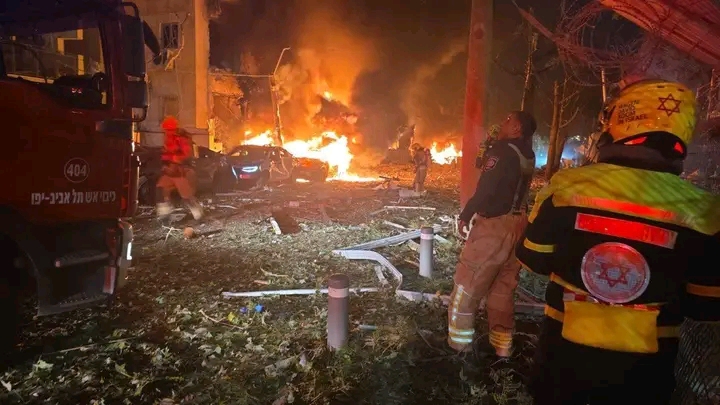
Iran’s retaliation unfolded in coordinated waves. Ballistic missiles rained down on Israeli population centers, striking areas around Tel Aviv, Haifa, and northern and central districts.
Although Israel’s multi-layered air defenses intercepted most projectiles, at least one missile appeared to penetrate the shield over Tel Aviv. A woman in her 50s was killed and more than 120 people were injured.
At the same time, Iranian forces targeted American military assets hosted across the Gulf.
Strikes hit Al Udeid Air Base in Qatar, the US Navy’s Fifth Fleet headquarters in Manama, Bahrain, facilities in Kuwait, Al Dhafra base in the United Arab Emirates, positions in Jordan, and possibly sites in Saudi Arabia. Explosions and fires broke out near several locations.
Incidents near Dubai’s Palm Jumeirah, Kuwait International Airport, and Abu Dhabi caused injuries and widespread alarm even though Gulf states reported intercepting many incoming weapons.
The attacks forced the closure of airspace over Iran, Israel, Jordan, Qatar, and other nations, bringing international air travel to a standstill and triggering urgent safety alerts for commercial flights across the region.
Global Alarm and Diplomatic Fallout
The rapid escalation has triggered emergency meetings of the United Nations Security Council at the request of Russia, China, and Iran. Numerous governments have condemned the original airstrikes and called for immediate restraint to prevent a wider war.
Analysts warn that any disruption to oil flows through the Strait of Hormuz—compounded by renewed Houthi threats in the Red Sea and Bab al-Mandab Strait—could send energy prices soaring and rattle the global economy.
The strikes followed months of stalled nuclear negotiations, some mediated through Oman. Critics argue that diplomatic channels were used as cover for a long-planned military campaign.
As of the early hours of March 1, 2026, the situation remains extremely fluid. No confirmed Houthi attacks on shipping had been reported yet, but the vows signal heightened risk.
Further exchanges cannot be ruled out, and casualty figures, leadership claims, and battlefield assessments continue to shift rapidly as conflicting reports emerge from all sides.
The Middle East now stands on a knife-edge, with the risk of broader regional involvement—including through Iran’s proxy network—growing by the hour.
Share This Post