
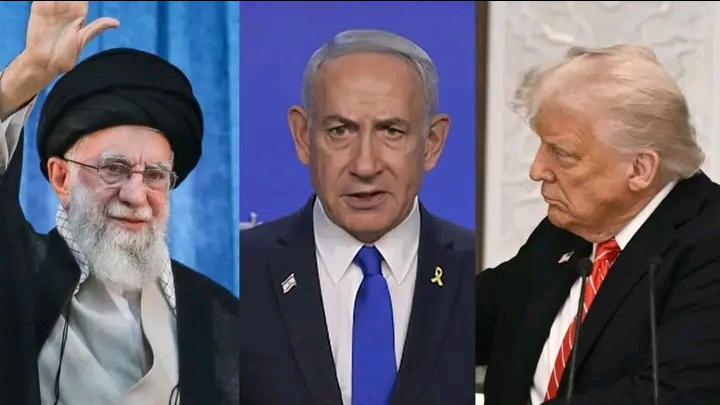

In the shadowed hours of February 28, 2026, the world awoke to the thunderous roar of war machines as the United States and Israel unleashed a devastating barrage on Iran, shattering fragile hopes for peace and plunging the Middle East into yet another vortex of destruction.
This joint military assault, cloaked in the rhetoric of preemptive defense, has instead exposed the brutal futility of endless conflict, where human lives are sacrificed on the altar of geopolitical ambition.
As bombs rained down on cities and civilians alike, the strikes not only targeted military assets but also sowed seeds of widespread suffering, reminding us all of war’s insatiable hunger for innocence and stability.
Escalating Tensions: The Path to Avoidable Catastrophe
The roots of this tragedy trace back through months of simmering hostility, fueled by disputes over Iran’s nuclear ambitions, ballistic missile developments, and its influence across the region.
Under President Donald Trump’s administration, negotiations with Iran flickered briefly in late 2025 and early 2026, with diplomatic envoys convening in Geneva as recently as February 26.
These talks, intended to curb Iran’s programs through mutual concessions, crumbled under a barrage of accusations and threats from both sides.
Instead of bridging divides, they widened them, setting the stage for violence that could have been averted through sustained dialogue.
This assault builds on the scars of the brief but brutal Israel-Iran war in June 2025, a 12-day conflagration where Israel struck first, followed by US interventions against Iranian nuclear sites.
That earlier clash left Iran’s defenses weakened and its people reeling, yet it failed to resolve underlying grievances, only breeding deeper resentment.
In the lead-up to the latest strikes, the US orchestrated a massive military buildup in the region, repositioning aircraft carriers and bolstering assets in a show of force that screamed inevitability rather than deterrence.
High-level coordination between Washington and Jerusalem, including a pivotal visit by Israeli Prime Minister Benjamin Netanyahu, reportedly finalized plans weeks in advance.
This marks the second major direct assault on Iran in less than a year, a grim repetition that underscores the cycle of aggression over diplomacy.
The Assault Unleashed: A Symphony of Destruction
Dubbed Operation Epic Fury by the US and Operation Roaring Lion by Israel, the campaign erupted in the early morning of February 28, around 1 a.m. local time in Iran, when the first waves of airstrikes pierced the night sky.
What unfolded was a coordinated aerial and missile onslaught of staggering scale, encompassing hundreds of precision hits across at least nine to 14 cities.
Described by perpetrators as a necessary blow to existential threats, it instead revealed the horrifying efficiency of modern warfare in dismantling lives and infrastructure.
The targets spanned a vast array of Iran’s military and security apparatus. Revolutionary Guard command centers were obliterated, air defense networks crippled, and ballistic missile sites, along with drone production facilities and storage depots, reduced to rubble.
Military airfields echoed with explosions, naval assets were decimated, and intelligence headquarters vanished in plumes of smoke.
In a chilling escalation, strikes extended to leadership compounds, including attempts at decapitation against high-ranking officials, and even the homes of Iranian figures.
Residual nuclear facilities, already battered from the 2025 attacks, faced further devastation, ostensibly to halt weapon development but risking environmental catastrophe in the process.
Israeli forces, deploying waves of up to 200 jets, spearheaded much of the aerial assault, while US missiles provided relentless support.
Officials from both nations framed the operation as a crusade against Iran’s missile arsenal, naval capabilities, and its network of regional allies, often labeled the Axis of Resistance.
Yet, in their public addresses, Trump and Netanyahu veered into inflammatory territory, exhorting ordinary Iranians to overthrow their government.
Trump, in particular, portrayed the strikes as a golden window for regime change, declaring it the people’s only chance for generations to seize control and embrace freedom.
Such calls, far from liberating, only deepen divisions and invite chaos, ignoring the profound human cost of imposed upheaval.
Iran’s Defiant Counter: The Inevitable Spiral of Retaliation
Iran’s response was swift and fierce, a testament to the predictable backlash of unprovoked aggression.
Within hours, salvos of ballistic missiles and drones arched toward Israel, striking northern regions and testing defenses.
Simultaneously, attacks rained on US military installations scattered across the Persian Gulf, including bases in Bahrain, Kuwait, Qatar, the United Arab Emirates, and Jordan.
Iranian leaders, undeterred by the onslaught, pledged a decisive and crushing reply, one that would make aggressors regret their hubris, while refuting claims of leadership losses.
Hundreds of projectiles were launched in retaliation, with interception rates varying wildly amid the fog of war. Reports of damage trickled in, painting a picture of strained alliances and heightened vulnerabilities.
This exchange, far from achieving security, only amplifies the risk of broader entanglement, drawing in proxies and allies into a quagmire that benefits no one but the architects of discord.
The Human Toll: Lives Shattered in the Name of Strategy
As the dust settled on February 28, the grim ledger of loss began to emerge, a stark indictment of war’s indifference to humanity.
Unverified yet persistent claims from US and Israeli sources asserted that Supreme Leader Ayatollah Ali Khamenei perished in strikes near his Tehran compound, part of a sweeping effort to eliminate Iran’s entire leadership cadre, past and present.
Iranian outlets vehemently denied this, suggesting possible relocation or survival, but the uncertainty itself breeds instability.
Other targets included figures like President Masoud Pezeshkian and scores of military and security officials, with dozens reportedly slain in the initial fury.
On the ground, the suffering extended far beyond elites. Estimates from the early hours tallied at least 201 killed and 747 injured in Iran, a figure encompassing civilians caught in the crossfire and military personnel defending their homeland.
Homes, neighborhoods, and vital infrastructure bore the brunt, exacerbating hardships in a nation already strained.
Strikingly, the assault coincided with the sacred month of Ramadan, a time of reflection and restraint, rendering the timing not just tactical but profoundly insensitive to cultural and human rhythms.
In contrast, US and Israeli casualties remained minimal in initial accounts, with defenses holding against Iranian reprisals and no significant losses reported at American bases.
Yet, this asymmetry highlights the profound injustice of such conflicts, where one side’s technological superiority inflicts disproportionate agony.
The campaign, billed as ongoing without a defined endpoint, threatens sustained bombardment, prolonging terror and displacement for millions.
Global Echoes: A Plea for Sanity Amid Rising Chaos
Framed by the US and Israel as a vital preemptive measure to neutralize nuclear and missile threats, this operation echoes the flawed logic of the 2025 war, which similarly promised resolution but delivered only ruin.
In truth, it perpetuates a cycle of violence that erodes global security, inviting escalation from regional actors and straining international alliances.
Reactions worldwide have been a chorus of alarm, with calls for immediate de-escalation from diplomats and humanitarians alike, underscoring the isolation of warmongers in a world weary of bloodshed.
As events unfold rapidly into March 2026, the potential for wider conflagration looms large, involving proxy forces or direct confrontations that could engulf the region.
This needless escalation serves as a haunting reminder: true security stems not from bombs and bravado, but from dialogue, empathy, and a collective rejection of war’s illusions.
In the face of such devastation, the international community must rally not for sides, but for peace, lest we all become casualties of unchecked ambition.
Share This Post