

In the grand theater of politics, where ambition masquerades as principle, unity born of deceit is akin to a house built on shifting sands- a fleeting illusion destined for collapse.
As Niccolò Machiavelli astutely observed in The Prince, alliances forged in the shadows of self-interest are brittle constructs, prone to fracture under the slightest pressure of reality.
Such is the tragic farce unfolding in Isiolo County, where a once-formidable coalition, orchestrated by Senator Fatuma Dullo, has devolved into a cauldron of mistrust, backstabbing, and irreparable fragmentation.
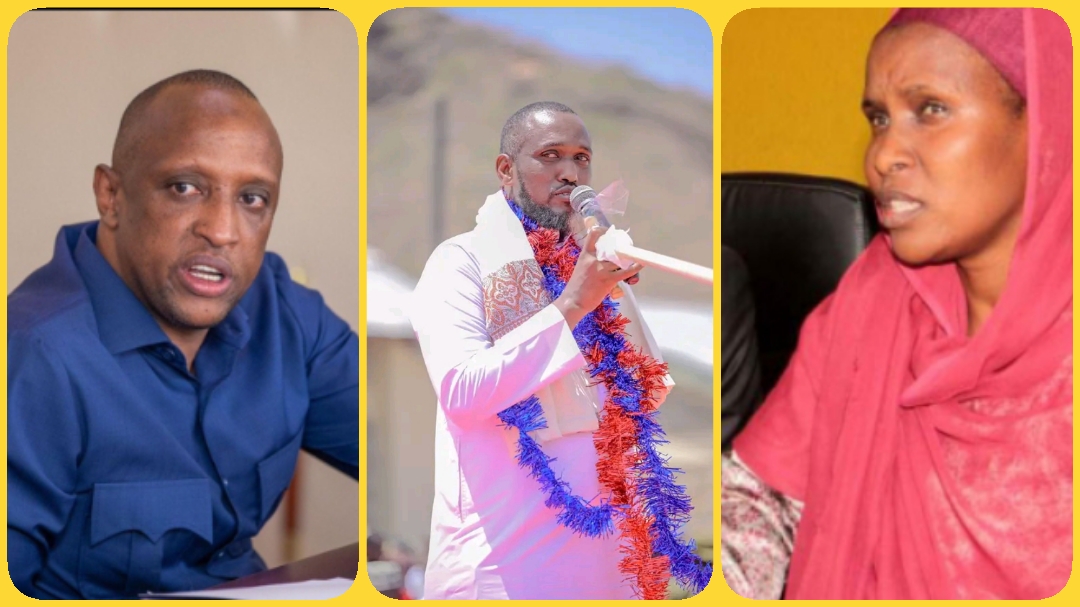
In this op-ed, I shall dissect the turmoil within Dullo’s crumbling alliance. It features the likes of former Speaker Mohamed Roba Qotto (MRQ), NGEC chairperson Rehema Dida Jaldesa (RDJ), and Sports Fund CEO Nuh Hajji.
The piece comes as a cautionary tale of realpolitik gone awry, all while underscoring the unassailable poise of Governor Abdi Ibrahim Hassan, affectionately known as Guyo, whose leadership emerges as the beacon of stability amid the chaos in Isiolo County.
The Genesis of a Deceptive Pact: Ambition Over Ideology
The seeds of this political maelstrom were sown in the fertile ground of impatience and personal aggrandizement, far removed from any genuine ideological synergy or commitment to public welfare.
Senator Fatuma Dullo, a ‘seasoned operator’ in Kenya’s labyrinthine political landscape, positioned herself as the linchpin of this opportunistic cabal.
Rallying disaffected figures like MRQ, RDJ, and Nuh Hajji, she engineered a Machiavellian stratagem aimed at unseating Governor Guyo through an impeachment motion that reeked of desperation rather than deliberation.
This was no noble crusade for accountability; it was a calculated gambit to redistribute power among the conspirators, with each eyeing the gubernatorial throne as their ultimate prize.
Philosophically, this alliance echoes the ancient wisdom of Sun Tzu in The Art of War: “He who exercises no forethought but makes light of his opponents is sure to be captured by them.”
Dullo’s coalition, bereft of strategic depth, relied on the ephemeral glue of mutual enmity toward Guyo- a shared foe that masked deeper fissures.
MRQ, the former Speaker, was enlisted as the frontline tactician, his ‘legislative acumen’ ostensibly lending credibility to the plot.
RDJ, leveraging her dual roles as Principal Secretary and former Isiolo Women Representative (now chairing the Gender Commission), brought a ‘veneer of institutional gravitas’, while Nuh Hajji’s ‘administrative clout’ as Sports Fund CEO promised grassroots mobilization.
Yet, beneath this facade of solidarity lurked the Hobbesian state of nature: a war of all against all, where trust is the first casualty.
The Impeachment Fiasco: Catalyst for Internal Carnage
The attempted impeachment of Governor Guyo, a move that promised to upend Isiolo’s political equilibrium, instead exposed the alliance’s inherent fragility.
Crafted in secretive huddles and propelled by inflammatory rhetoric, the motion collapsed spectacularly, thwarted by procedural hurdles, public skepticism, and Guyo’s adept maneuvering within the county assembly.
This failure was not merely a setback; it ignited a chain reaction of betrayals that dismantled the coalition from within.
Ironically, Dullo, the self-anointed architect, became the inaugural victim of her own design. In a stunning act of perfidy, MRQ surreptitiously excised her name from the roster of potential gubernatorial candidates in their post-impeachment regrouping.
What was once touted as an “unshakable” pact revealed itself as a faux solidarity, where loyalty was currency spent without remorse.
Dullo’s demotion from influencer to outcast exemplifies the Aristotelian notion that “injustice arises when equals are treated unequally”- here, her contributions were repaid with isolation, transforming her from mobilizer to marginalized spectator.
The venom spread swiftly. MRQ, once hailed as the alliance’s strategic maestro, soon found himself ensnared in the web of expendability.
Public forums, those unforgiving arenas of political theater, laid bare his diminishing stature: allies stood proximate in body but distant in allegiance, their endorsements laced with tepid ambiguity. Body language- averted gazes, strained smiles- betrayed the collective epiphany: MRQ’s utility had evaporated.
In the cutthroat calculus of hegemonic realignment, he transitioned from asset to liability overnight, a poignant reminder of Friedrich Nietzsche’s aphorism that “in individuals, insanity is rare; but in groups, parties, nations, and epochs, it is the rule.”
His rage, reportedly simmering in solitary midnight reflections, stemmed not just from external treachery but from self-inflicted folly- he had discarded the proverbial honey spoon, only to watch it dissolve into unattainable regret.
Ripples of Suspicion: The Erosion of Trust Among the Remnants
As the alliance’s edifice cracked, suspicion permeated its ranks like a insidious fog, enveloping figures such as Nuh Hajji and RDJ in a vortex of paranoia.
Hajji, ever the watchful bureaucrat, scrutinized RDJ’s every move with narrowed scrutiny, questioning the authenticity of her commitments amid whispers of hidden agendas.
RDJ, in reciprocity, dissected each gesture and pledge, her experience as a former parliamentarian honing her instincts for duplicity.
Meetings devolved into elaborate charades, where smiles concealed zero-sum calculations and handshakes harbored ulterior motives.
This internal discord underscores a deeper philosophical malaise: the Lockean social contract, predicated on mutual consent and trust, fractures when self-preservation overrides collective good.
Time, that inexorable arbiter, amplified these rifts, transforming potential into peril. The opposition’s inability to adapt exacerbated their plight; mired in analog paradigms, they faltered in an era demanding digital dexterity and innovative foresight.
While Governor Guyo’s administration embraced modernity- leveraging data-driven governance and community engagement- these relics clung to outdated tactics, akin to generals fighting yesterday’s wars with obsolete weaponry.
Their strategies, steeped in tribal patronage and blunt-force rhetoric, proved ill-equipped for a polity evolved beyond such primitivism, rendering them not just ineffective but anachronistic.
Guyo’s Unyielding Ascendancy: Restraint as the Ultimate Strategy
In stark contrast, Governor Guyo’s camp observes this self-immolation with the serene detachment of victors.
Reclining in the comfort of cohesive unity, they embody the Platonic ideal of the philosopher-king: governing with wisdom, restraint, and an unwavering focus on Isiolo’s prosperity.
Guyo’s tenure, marked by infrastructural advancements, equitable resource allocation, and inclusive policies, stands as a bulwark against the opposition’s entropy.
His team need not engage in the fray; the most potent maneuver, as Lao Tzu counseled, is often inaction- allowing adversaries to unravel through their own hubris.
This turmoil in Dullo’s alliance serves as a microcosm of broader Kenyan political dynamics, where ephemeral coalitions crumble under the weight of egoism.
For Isiolo County, it signals an unequivocal truth: amid the cacophony of confusion, noise sans strategy, and ambition devoid of cohesion, Governor Guyo emerges as the singular hegemon.
As general elections loom, the opposition’s descent into irrelevance cements his dominance- a lone stallion amid a field of faltering contenders, who, with all due respect, resemble mere pack animals in the race for relevance.
In the end, deceit may muster momentary multitudes, but authenticity endures. Isiolo’s future, under Guyo’s stewardship, promises not fragmentation, but flourishing- a testament to the enduring power of principled leadership over predatory pacts.
Disclaimer: The views and opinions expressed in this piece are solely author’s very own
Share This Post