
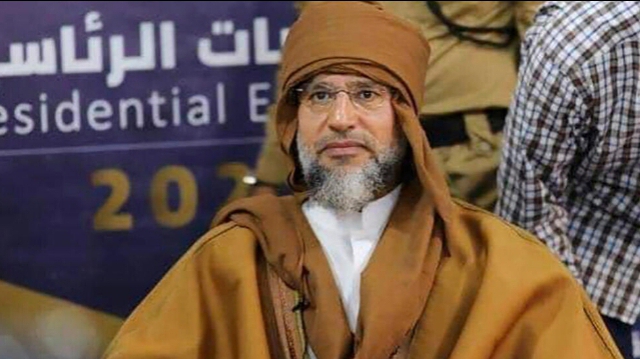

Dr. Gaddafi Was Championing National Reconciliation and Renewal at the Time of His Death
In a devastating blow to Libya’s fragile path toward stability and reconciliation, Dr. Saif al-Islam Gaddafi, the visionary son of former leader Muammar Gaddafi and a beacon of hope for many Libyans, was tragically assassinated on February 3, 2026, at the age of 53.
Once hailed as a potential reformer who could bridge the nation’s deep divides, Saif al-Islam had emerged as the outright front-runner in the long-delayed presidential elections, promising a future of unity and progress.
His untimely death in the western city of Zintan, where he had sought refuge and rebuilt his life, has plunged the country into renewed grief and uncertainty, robbing Libya of a leader who embodied resilience and redemption.
The Fateful Attack in Zintan: A Cowardly Act Amid Shadows of Conflict
The circumstances surrounding Saif al-Islam’s death paint a picture of calculated malice in a land still scarred by factional strife.
According to multiple confirmed reports, he was ambushed and shot by four unidentified gunmen at his private residence in Zintan, a rugged town southwest of Tripoli that had become his sanctuary for over a decade.
The attackers, striking under the cover of disabled surveillance cameras, fled the scene swiftly, leaving behind a trail of unanswered questions and a nation in shock.
While some initial accounts hinted at clashes involving local militias, such as the 444th Brigade—which vehemently denied any involvement—the prevailing narrative from credible sources underscores a targeted assassination, devoid of the chaos of broader skirmishes.
Zintan, nestled in the Nafusa Mountains and known for its tribal loyalties, had offered Saif al-Islam a measure of protection since his release from detention in 2017. Yet, even in this relative haven, the shadows of Libya’s ongoing instability loomed large.
Conflicting details emerged in the hours following the incident, with a few reports suggesting the attack occurred near the Libya-Algeria border or amid an attempted arrest, but the consensus among major outlets firmly places the tragedy in Zintan, where he was tending to his garden—a symbol of his quiet pursuit of peace amid turmoil.
An official investigation has been launched by Libyan authorities, though in a country fragmented by rival factions and militia influence, many fear the truth may remain elusive, perpetuating the cycle of violence that has haunted Libya since the 2011 uprising.
From Heir Apparent to Symbol of Reform: A Life Marked by Intellect and Adversity
Saif al-Islam Gaddafi’s journey was one of profound transformation, from the corridors of power to the depths of captivity, and ultimately toward a redemptive political resurgence.
Born on June 25, 1972, as the second son of Muammar Gaddafi, he was educated abroad, earning a doctorate in philosophy from the London School of Economics, where his thesis on global governance showcased his intellectual depth and forward-thinking vision.
Often viewed as his father’s heir apparent, Saif al-Islam played a pivotal role in Libyan diplomacy during the early 2000s, advocating for economic liberalization, human rights improvements, and reconciliation with the West.
His efforts helped normalize Libya’s international relations, including the abandonment of weapons of mass destruction programs, earning him praise as a modernizer in a regime long isolated.
The 2011 Arab Spring uprising shattered this trajectory. Captured by rebel forces in November 2011, Saif al-Islam faced an International Criminal Court (ICC) arrest warrant for alleged crimes against humanity during the conflict—a charge he consistently denied, arguing it was politically motivated amid the chaos of civil war.
In 2015, a Tripoli court sentenced him to death in absentia for war crimes, a verdict widely condemned by international observers for its lack of due process and fairness.
Yet, in a testament to his enduring spirit, he was released under a general amnesty in 2017, retreating to Zintan to live a low-profile life focused on reflection and quiet advocacy.
Far from bitterness, Saif al-Islam used this period to foster dialogue among Libya’s warring factions, positioning himself as a unifier rather than a divider.
A Bold Political Comeback: The Front-Runner Poised to Heal a Divided Nation
In recent years, Saif al-Islam’s star had risen once more, captivating Libyans weary of endless instability.
In 2021, he made a daring return to the political arena by registering as a candidate for the presidential elections, which were indefinitely postponed due to disputes among rival groups.
As the founder of the Popular Front for the Liberation of Libya, he campaigned on themes of national reconciliation, economic revival, and anti-corruption—resonating deeply with a populace scarred by years of militia rule and foreign interference.
Polls and expert analyses consistently placed him as the outright front-runner in the impending elections, with his blend of traditional tribal support and reformist appeal drawing admirers from across the spectrum.
His vision for Libya was compassionate and inclusive: rebuilding infrastructure ravaged by conflict, harnessing the nation’s vast oil wealth for equitable development, and forging peace among eastern and western factions.
Supporters saw in him not just the legacy of his father, but an evolved leader capable of transcending past grievances.
“Saif represented hope for a Libya where dialogue replaces division,” noted one political analyst, echoing the sentiments of many who viewed his candidacy as a genuine chance for renewal.
His assassination, occurring just as electoral momentum was building, has been decried as an attempt to derail this progress, snuffing out a voice that could have steered the country away from perpetual chaos.
Echoes of Martyrdom: Global Reactions and Libya’s Uncertain Future
The confirmation of Saif al-Islam’s death came swiftly from those closest to him, underscoring the profound loss felt by his inner circle and beyond.
His lawyer, Khaled al-Zaidi, and political adviser, Abdullah Othman, publicly verified the tragedy, while family relatives, including his cousin Hamid Gaddafi, spoke movingly on Libyan network Al-Ahrar: “Seif al-Islam has fallen as a martyr,” invoking a term rich with connotations of unjust sacrifice in Islamic and Arabic traditions.
This framing has resonated widely, transforming his death into a symbol of enduring struggle against oppression.
International reactions have poured in, with outlets like Reuters, Al Jazeera, and the BBC highlighting the implications for Libya’s already volatile landscape.
As the nation grapples with ongoing rivalries between the Tripoli-based Government of National Unity and eastern forces led by Khalifa Haftar, Saif al-Islam’s elimination removes a key figure who could have mediated between them.
Social media platforms, including X (formerly Twitter), buzzed with tributes, with users lamenting the loss of a “reformer assassinated in his prime.”
In the wake of this heartbreak, Libya stands at a crossroads. Saif al-Islam Gaddafi’s legacy endures not in the violence that claimed him, but in the ideals he championed: compassion, reform, and unity.
As investigations unfold and the world watches, one can only hope that his martyrdom inspires the reconciliation he so fervently pursued, turning tragedy into a catalyst for a brighter Libyan dawn.
Share This Post