Nairobi, Kenya| The Kenyan government has launched an urgent, multi-pronged intervention to avert a deepening humanitarian crisis after the National Drought Management Authority (NDMA) officially classified Mandera County as being in the Alarm drought phase – the second-most severe category in Kenya’s drought monitoring system.
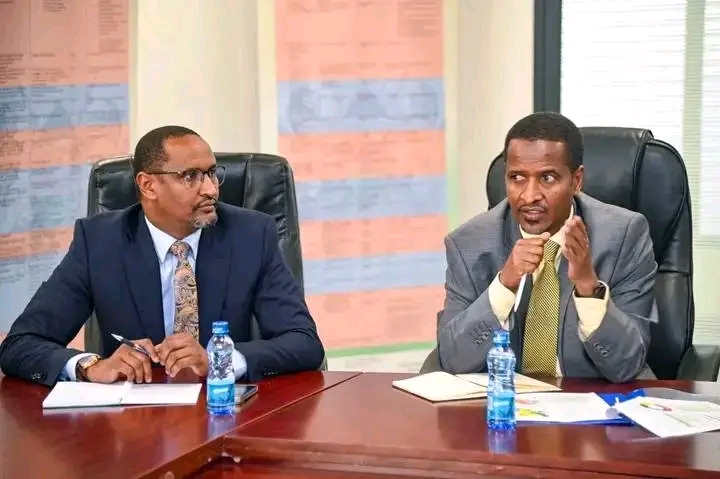
The decision was reached during a high-level drought and food security briefing held on Monday in Nairobi, chaired by Principal Secretary for ASALs and Regional Development Kello Harsama and co-chaired by PS for Special Programmes Ismael Madey.
Senior NDMA officials, food security experts, and Members of Parliament from Mandera, Wajir, and Garissa counties attended the crucial session.
Mandera in Alarm, Nine Counties on Alert
According to the latest NDMA monthly drought update, Mandera has deteriorated into the Alarm phase due to the complete failure of the 2025 short rains (October–December), persistently high temperatures, severe depletion of pasture and water resources, and rising malnutrition rates.
Nine other counties remain in the Alert drought phase, with conditions rapidly worsening: Wajir, Garissa, Marsabit, Isiolo, Tana River, Samburu, Turkana, Kitui, and parts of Kwale.
NDMA early-warning projections indicate that, without immediate and scaled-up intervention, more than 2.1 million people across the affected ASAL counties could require humanitarian food and nutrition assistance by January 2026 – a sharp increase from the current caseload.
Accelerated Six-Point Emergency Response
Following intensive deliberations, the meeting endorsed an immediate and comprehensive emergency package.
The government will fast-track the rehabilitation of boreholes and the drilling of new strategic water points to restore access to safe water, while significantly expanding water-trucking operations to reach remote settlements, schools, and health facilities.
At the same time, authorities will strengthen the management of livestock migration by opening designated corridors and supplying emergency fodder. To prevent conflict over scarce resources, security patrols will be intensified in known hotspots.
Relief food distribution and unconditional cash transfers will begin without delay to the most affected households, and a large-scale mobilisation of crop residues and supplementary livestock feed will be rolled out to reduce further animal losses and protect the main source of livelihood for pastoralist communities.
Principal Secretary Kello Harsama emphasised the government’s proactive stance:
“We are not waiting for the situation to slide into Emergency phase. The resolutions made today will be implemented with speed and precision to safeguard lives and livelihoods in Mandera and the wider ASAL region.”
Co-chair PS Ismael Madey added that the Ministry of East African Community, ASALs and Regional Development is coordinating closely with county governments, the NDMA, the National Government Constituencies Development Fund (NG-CDF), and humanitarian partners to ensure rapid resource deployment.
Broader Context: Climate Change and Consecutive Failed Rains
The current drought follows three consecutive below-average rainy seasons, compounding the impacts of the devastating 2021–2023 Horn of Africa drought – one of the worst in four decades.
Climate scientists warn that rising global temperatures are making short-rain seasons increasingly erratic and unreliable across East Africa.
Livestock losses, school dropouts due to water fetching, and acute malnutrition among children under five are already being reported at higher-than-normal levels in Mandera and neighbouring counties.
Next Steps and Call for Support
The NDMA will release its December 2025 drought bulletin later this month, which is expected to provide a clearer picture of how far the drought has spread.
Meanwhile, the government has appealed to development partners, NGOs, and the private sector to complement national efforts through cash contributions, in-kind support, and technical expertise.
As Kenya races against time to contain the crisis before the onset of the 2026 long rains (March–May), the situation in Mandera serves as a stark reminder of the growing climate vulnerability facing the country’s arid and semi-arid lands.