
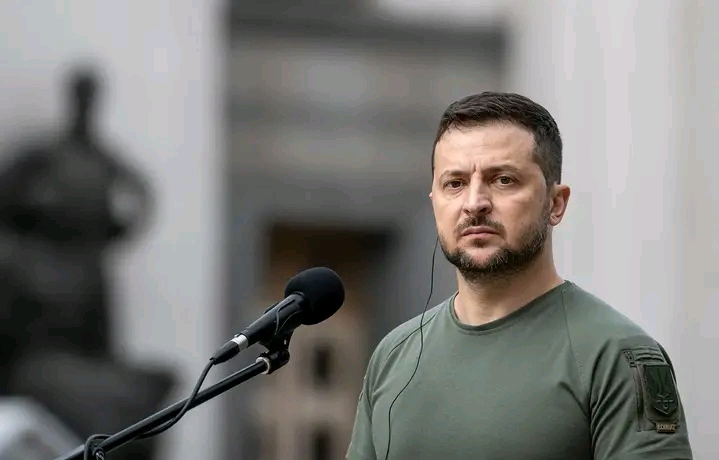

Washington/Kyiv| The United States is mounting unprecedented diplomatic pressure on Ukrainian President Volodymyr Zelenskyy to swiftly accept a proposed peace framework for ending the war with Russia, one that would require Kyiv to cede significant territory, including the entirety of the Donbas region, multiple sources familiar with the talks tell Axios.
According to senior officials and diplomats briefed on the closed-door discussions, the emerging U.S.-backed plan would formally recognize Russian control over the Donetsk and Luhansk People’s Republics – the full Donbas – as well as other occupied territories, in exchange for an immediate ceasefire and security guarantees that fall far short of Ukraine’s long-standing demand for full NATO membership.
Ukrainian leadership views the proposal as heavily tilted in Moscow’s favor and believes the Trump administration is applying substantially greater pressure on Kyiv than on Russian President Vladimir Putin, Zelenskyy’s office has privately complained.
The diplomatic push reached a new level of intensity in recent days after two of President Donald Trump’s closest envoys – real-estate magnate and special Middle East envoy Steve Witkoff and Trump’s son-in-law Jared Kushner – traveled to Moscow for direct talks with Putin.
Following those meetings, Witkoff and Kushner participated in a follow-up call with President Zelenskyy in which they urged him to deliver an immediate “yes” to the framework, warning that the window for a deal on these terms may soon close, three sources with knowledge of the call told Axios.
The rapid escalation has stunned many in Kyiv and European capitals, where leaders had hoped the incoming Trump administration would at least maintain the Biden-era policy of arming Ukraine while negotiations proceeded gradually.
Instead, the signals from Trump’s inner circle suggest a strong desire to conclude a deal before or shortly after his January 20 inauguration – even if it means locking in Russian territorial gains achieved since the 2022 full-scale invasion.
Senior Ukrainian officials have expressed alarm that the proposed security guarantees remain vague and do not include the ironclad Article 5 protections Ukraine has sought through NATO membership.
One official described the package as “a frozen conflict dressed up as peace,” warning that accepting it would reward aggression and leave Ukraine vulnerable to future Russian incursions.
The Kremlin, for its part, has responded cautiously but positively to the American overtures.
Russian officials have indicated they are open to a ceasefire along current lines provided Ukraine drops its NATO ambitions, recognizes Russian sovereignty over Crimea and the four annexed regions (Donetsk, Luhansk, Zaporizhzhia, and Kherson), and agrees to permanent military neutrality and demilitarization measures.
While the exact details of the Witkoff-Kushner discussions with Putin remain closely held, sources say the Russian leader expressed willingness to halt offensive operations and begin troop withdrawals from certain areas in exchange for the sweeping territorial and political concessions.
European allies, already uneasy about the prospect of diminished U.S. commitment, are scrambling to understand the scope of the American proposal.
Several NATO diplomats told Axios they fear a rushed deal could fracture Western unity and leave Ukraine in a permanently weakened position.
President Zelenskyy has so far resisted giving a definitive answer, insisting any agreement must be put to the Ukrainian people through a referendum and must include credible, enforceable security guarantees.
Publicly, he has maintained that Ukraine will not trade territory for peace, though privately his team acknowledges the mounting pressure from Washington could soon become coercive.
As the clock ticks toward Trump’s return to the White House, the coming weeks are likely to be decisive.
If Zelenskyy rejects the current framework, he risks alienating the incoming U.S. administration at the very moment Ukraine’s battlefield position remains precarious and its dependence on American weapons and financial aid is near total.
If he accepts, he faces the prospect of massive domestic backlash and being remembered as the leader who formalized the permanent loss of roughly 20% of Ukraine’s sovereign territory.
For now, the ball remains in Kyiv’s court – but the weight of American persuasion behind Moscow’s terms has rarely been heavier.
Share This Post