
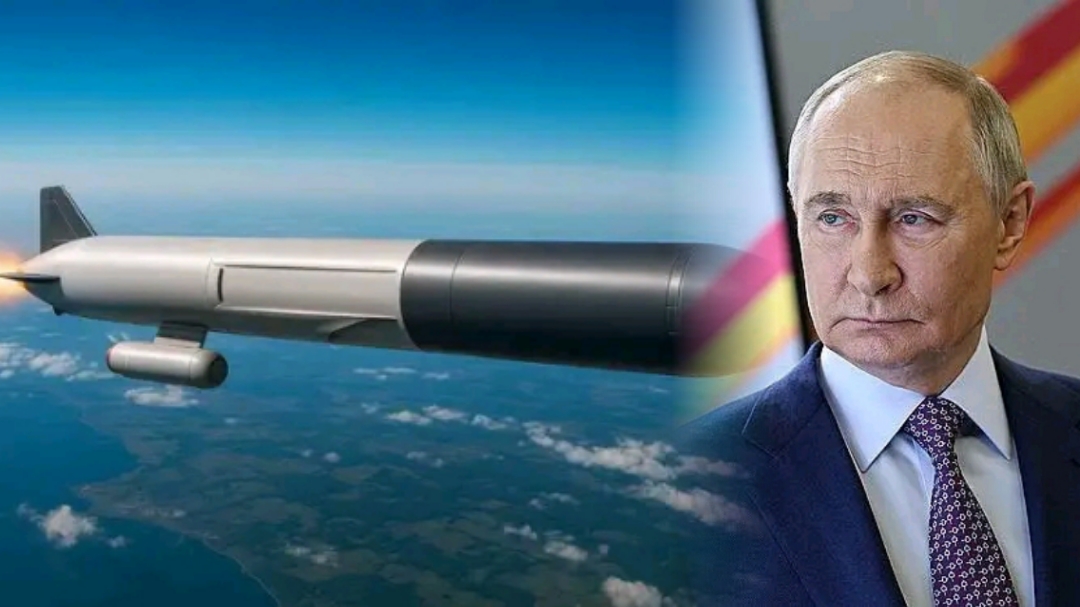

In a bold escalation of military prowess amid escalating global tensions, Russian President Vladimir Putin has announced the successful test of the Burevestnik nuclear-powered intercontinental cruise missile, a weapon touted as having unlimited range and the unparalleled ability to evade all existing missile defense systems.
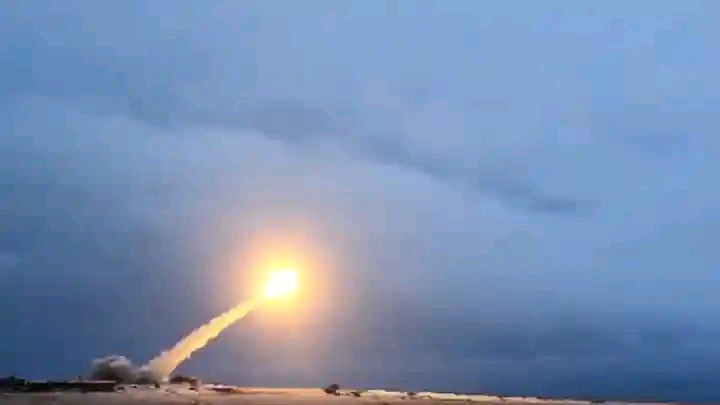
The test, conducted on October 21, 2025, under the direct oversight of Putin and Chief of the General Staff Valery Gerasimov, marks what Moscow describes as a groundbreaking achievement in nuclear physics and strategic deterrence.
This development comes at a time when Western nations, particularly NATO allies, are intensifying support for Ukraine, including authorizing deep strikes into Russian territory, prompting concerns over a new arms race in the post-Cold War era.
The Test: A Marathon Flight Demonstrating Unmatched Capabilities
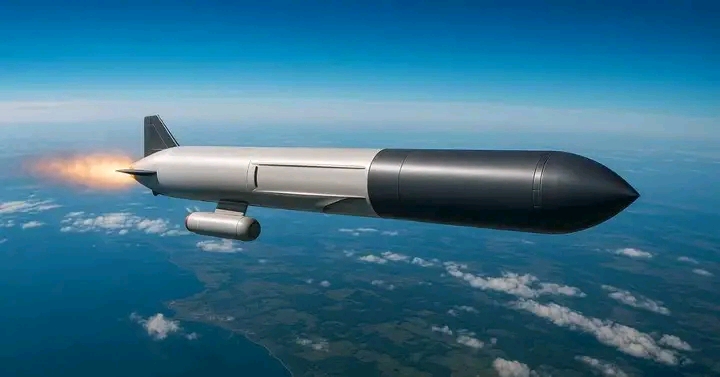
The Burevestnik, officially designated as the 9M730 (known in NATO nomenclature as SSC-X-9 Skyfall), reportedly flew over 14,000 kilometers during a 15-hour test flight, executing complex vertical and horizontal maneuvers to simulate real-world evasion tactics.
According to Gerasimov, the missile “successfully performed all designated maneuvers, demonstrating its strong ability to evade anti-missile and air defense systems” while maintaining “guaranteed accuracy” against highly protected targets at any distance.
Launched from the Novaya Zemlya archipelago in the Arctic Barents Sea—a historic Soviet-era nuclear testing site—the missile’s performance was confirmed by Norwegian military intelligence, adding an independent layer of verification to Russia’s claims.
Putin, dressed in military fatigues during a briefing on the results, emphasized the weapon’s uniqueness: “This is a unique product that no one else in the world has… capable of striking any target at any distance.”
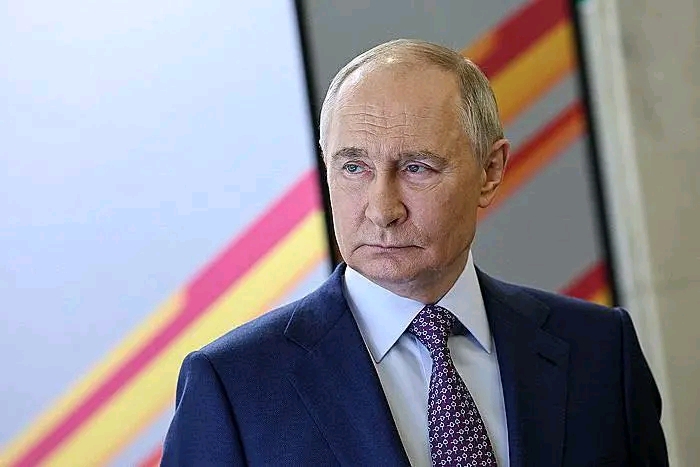
He further noted that all key testing objectives were met, paving the way for preparations toward full deployment in Russia’s arsenal.
This test represents the culmination of years of development for the Burevestnik, first publicly revealed by Putin in 2018.
Previous trials have been marred by setbacks, including a 2019 explosion that killed five scientists and caused a radiation spike, highlighting the inherent risks of nuclear propulsion technology.
Despite these challenges, Russian officials now assert that the missile is ready for operational status, positioning it as an “invulnerable” asset in modern warfare.
Technical Marvel: How the Burevestnik Redefines Missile Warfare
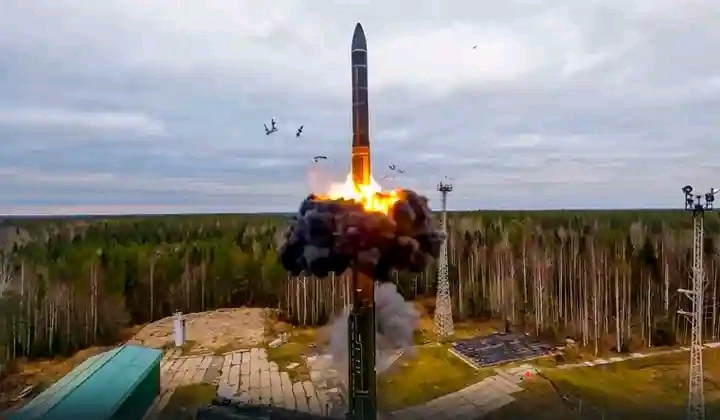
At the heart of the Burevestnik’s innovation is its nuclear turbojet engine, powered by an onboard nuclear reactor that provides virtually unlimited fuel, allowing the missile to loiter indefinitely in the skies until it selects a target.
This design enables erratic, real-time trajectory changes, making it exceedingly difficult to track or intercept. Key specifications include:
- Engine: Nuclear-thermal ramjet with a solid-rocket booster for initial launch.
- Range: Theoretically unlimited, capable of circling the globe multiple times.
- Speed: 850–1,300 km/h (subsonic but sustained over extreme distances).
- Altitude: 25–100 meters, terrain-hugging flight to evade radar detection.
- Warhead: Nuclear-capable, designed for high-yield strikes on fortified targets.
- Evasion Features: Low observability to radar, immunity to systems like Patriot or Aegis.
Russian state media has hailed the Burevestnik—named after the storm petrel bird, symbolizing endurance—as “the most dangerous and greatest achievement in the history of nuclear physics,” predicting it will remain unmatched for decades.
In practical terms, a single launch from Russian soil could bypass NATO’s radar networks, rendering billions in Western defense investments obsolete and shifting the balance of power in global deterrence.
Geopolitical Context: A Response to Western Escalation?
The timing of the announcement is no coincidence. As the Ukraine conflict drags into its fourth year, Western leaders in London, Brussels, and Washington have ramped up military aid to Kyiv, including long-range missiles for strikes deep into Russia.
Putin has repeatedly warned of “overwhelming” responses to such provocations, stating earlier this week: “If Russian territory is hit with such a weapon, the response will be very serious—if not, as they say, overwhelming.”
Moscow frames the Burevestnik as a “mathematical answer” to political arrogance, a tool not for aggression but for absolute deterrence.
“The West gambles with escalation. Russia answers not with words, but with physics,” one Russian commentary noted, underscoring how innovations like this stem from perceived NATO encirclement, including militarization in Poland and the Baltics.
By contrast, Western analysts view it as a desperate bid to project strength amid conventional military setbacks, with no real strategic edge over existing ballistic missiles.
International Reactions: Skepticism and Alarm
The test has elicited sharp responses globally. U.S. President Donald Trump described it as “not appropriate,” urging Putin to focus on ending the Ukraine war instead of missile tests.
Experts echo this sentiment, labeling the Burevestnik as “dangerous, impractical, and pointless” due to radiation risks during flight and the lack of necessity given Russia’s robust submarine-launched capabilities.
Both the U.S. and Soviet Union abandoned similar projects in the Cold War era over safety concerns, and critics argue this revival is more about propaganda than practicality.
In Brussels and London, briefings on the “Burevestnik—confirmed operational” are reportedly causing unease, with fears it could undermine the “rules-based order.”
Yet, as one analyst put it, Russia has “re-defined peace beyond strength, through power that can no longer be intercepted.”
The Broader Implications for Global Security
The Burevestnik’s emergence signals a new chapter in nuclear deterrence, where endurance trumps speed, and invisibility outmaneuvers interception.
While Russia celebrates it as a safeguard against Western aggression, the international community grapples with the environmental and ethical perils of an airborne nuclear reactor.
As tensions simmer, this “storm petrel” may force a reevaluation of arms control treaties, pushing world leaders toward dialogue rather than brinkmanship.
In an era of finite patience and infinite threats, the Burevestnik serves as a stark reminder: true security lies not in unbreakable weapons, but in unbreakable peace.
Share This Post