
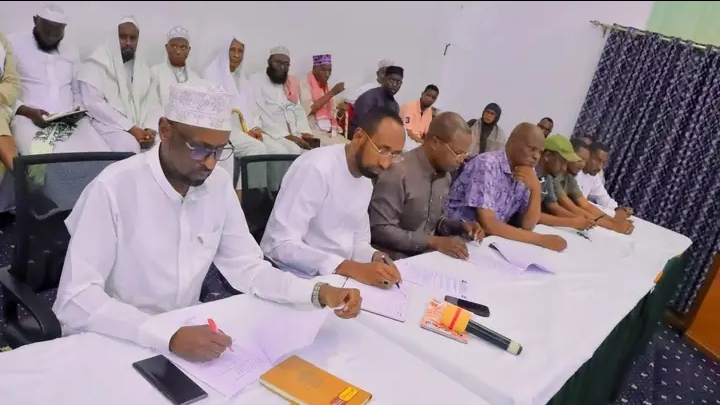

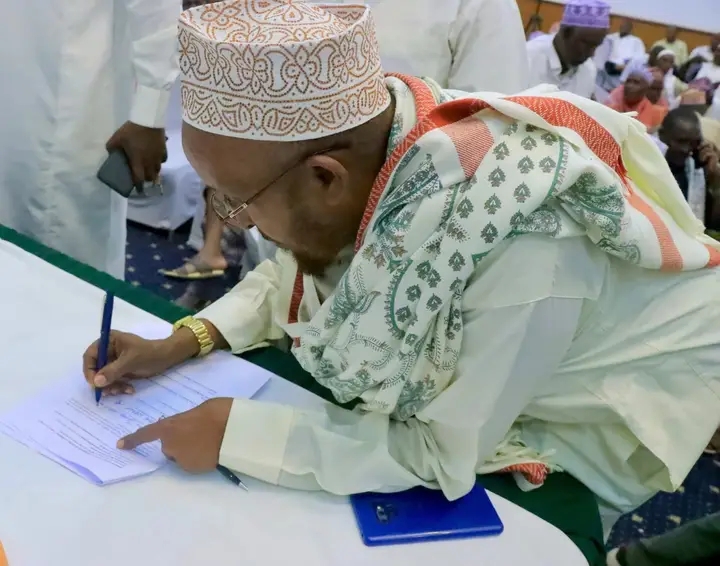
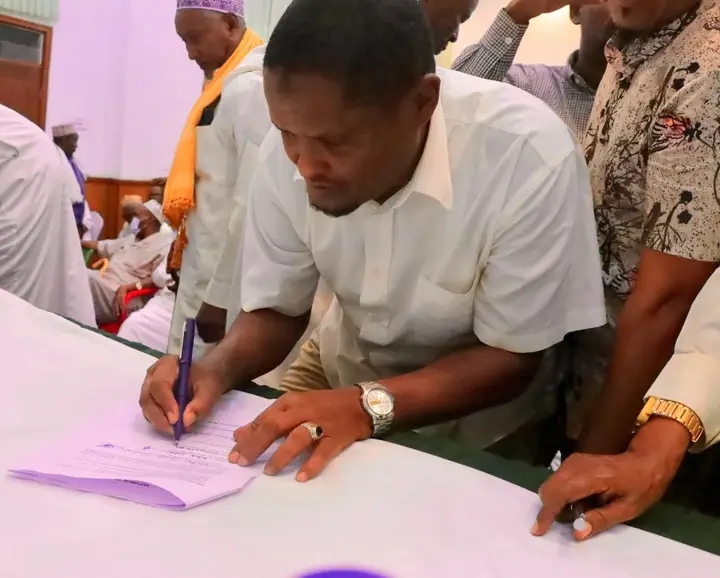
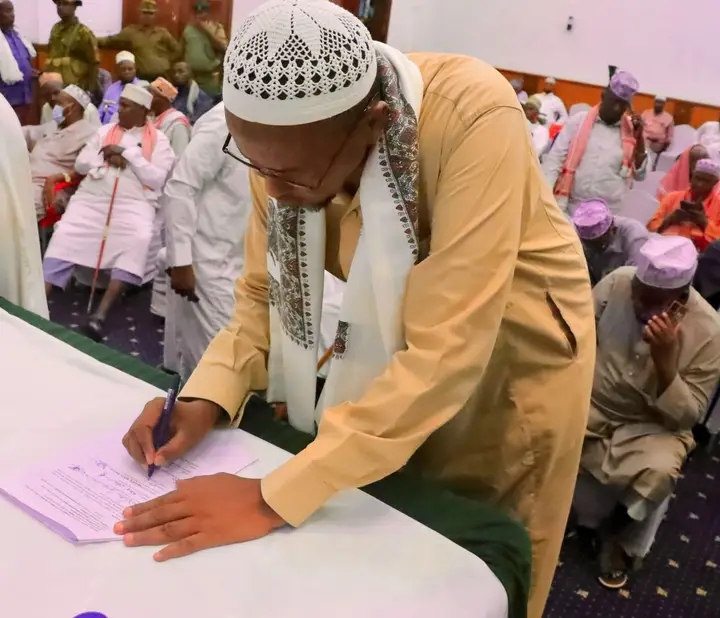
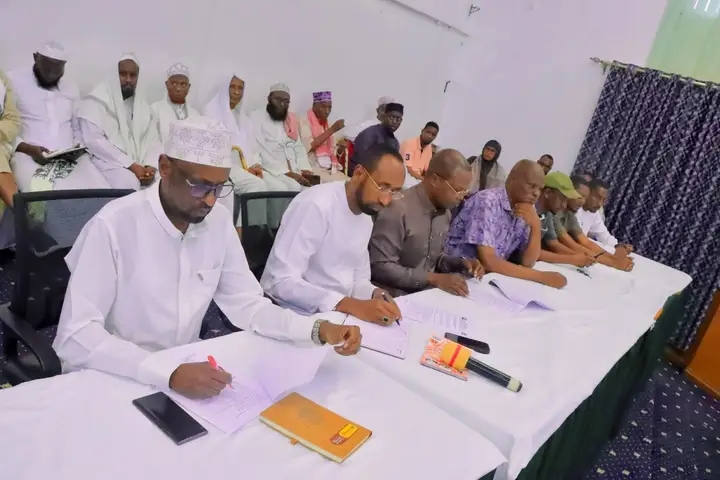
In a landmark moment for northern Kenya, elders and intellectuals from the Degodia and Garre communities have inked a historic peace agreement in Mandera County, signaling a potential end to decades of intermittent clashes that have plagued the region.
This accord, signed amid high hopes and cautious optimism, comes after years of resource-driven conflicts, political rivalries, and cross-border influences that have left communities scarred by violence, displacement, and loss.
Witnessed by prominent political figures, religious leaders, and community representatives, the deal aims to foster lasting coexistence and pave the way for development in one of Kenya’s most volatile border areas.
The signing ceremony, held on October 20, 2025, in Mandera, marked a pivotal step toward reconciliation between the two Somali clans, who share deep cultural and historical ties but have been divided by longstanding grievances.
Leaders from both sides described the agreement as a “beacon of hope” for unity, emphasizing its role in halting recurrent skirmishes over grazing lands, water sources, and political dominance in arid Mandera County.
“This is not just a pact on paper; it’s a commitment to our shared future,” one elder reportedly stated during the event, echoing sentiments that the deal could serve as a model for other pastoralist communities across Kenya’s northern frontier.
A Deep-Rooted Conflict: Understanding the Historical Context
The Degodia-Garre rivalry traces its origins to colonial-era boundary disputes and has intensified over the decades due to competition for scarce resources in the semi-arid landscapes of Mandera, which borders Ethiopia and Somalia.
Conflicts often erupt in sub-counties like Banisa, where pastoralist lifestyles clash over access to pastures and water points, exacerbated by climate change and environmental degradation.
Political factors have further fueled the fire: the 2008 election of Abdikadir Mohamed from the Degodia clan as Mandera’s Member of Parliament sparked widespread violence, highlighting how electoral contests can deepen clan divisions.
By 2011, tensions spilled over from Somalia, where similar clan disputes in regions like Gedo influenced cross-border skirmishes, leading to deaths, injuries, and mass displacements in Mandera and Wajir counties.
The involvement of militant groups such as Al-Shabaab has complicated matters, with reports of the group exploiting clan rifts to recruit fighters and launch attacks, turning local grievances into broader security threats.
In 2013, violent clashes continued, driven by competition over devolved resources and governance positions under Kenya’s 2010 constitution, which decentralized power but inadvertently amplified ethnic rivalries.
More recent flare-ups underscore the conflict’s persistence. In May 2025, clashes in areas like Muruthow claimed over 10 lives, including a six-month-old child, prompting condemnation from the Kenya National Commission on Human Rights (KNCHR) for violations of human rights and the rule of law.
A peace resolution brokered that month by Mandera Governor Mohamed Adan Khalif brought elders together, but violence resurfaced soon after, highlighting enforcement challenges.
By early September 2025, renewed fighting in Wargudud and Ashabito resulted in at least four deaths, amid political campaigns for the Banisa by-election following the death of MP Kullow Maalim Hassan in March.
Experts attribute these cycles to a mix of factors: inadequate security responses, political hypocrisy where leaders prioritize electoral alliances over accountability, and external spillovers from Somali conflicts.
“The conflicts in Gedo occasionally spill into the Kenyan side, causing tensions among communities and the influx of refugees,” notes a recent conflict analysis report.
Details of the October 2025 Peace Deal
Building on earlier efforts, including a June 2025 high-level peace forum facilitated by organizations like the Rural Agency for Community Development & Assistance (RACIDA) and the International Organization for Migration (IOM) Kenya, the latest accord focuses on practical measures for reconciliation.
Key provisions include joint resource-sharing agreements for grazing and water, community-led patrols to prevent incursions, and mechanisms for restorative justice to address past grievances.
Religious leaders, trained as mediators in early October, play a central role in ongoing dialogues to ensure implementation.
The event was attended by Mandera’s political elite, including Governor Khalif and Deputy Governor Dr. Ali Mahamud, who have framed the deal as integral to regional stability amid the by-election.
International partners like IOM Kenya have supported these initiatives through projects aimed at elevating peacebuilding and accountability.
Elders from both clans emphasized intra-community consensus, drawing on shared Somali heritage to reject violence and promote economic development.
Challenges and Immediate Setbacks
Despite the fanfare, the accord’s fragility was evident when, just hours after the signing, unknown gunmen killed one person in the Qablawarer area of Mandera North Constituency.
This incident has raised alarms about potential sabotage by militias or political actors, underscoring the need for robust enforcement.
Critics, including local political figures, argue that previous deals have failed due to “hypocrisy” from leaders who protect perpetrators for electoral gains, calling for impartial investigations and additional security resources from the national government.
Broader Implications for Northern Kenya
If sustained, this peace deal could transform Mandera, enabling investments in infrastructure, education, and healthcare while reducing the humanitarian toll—thousands displaced and orphaned over the years.
It also sets a precedent for cross-clan collaboration in other conflict-prone areas, such as Wajir and Garissa, where similar pastoralist disputes persist.
With support from devolved governance and international aid, experts believe addressing root causes like climate resilience and equitable resource allocation could yield lasting peace.
As Mandera moves forward, the true test lies in implementation. Communities, leaders, and stakeholders must prioritize justice over division, ensuring this historic accord doesn’t join the ranks of “never-ending” failed pacts but instead heralds a new era of prosperity for northern Kenya.
Share This Post