
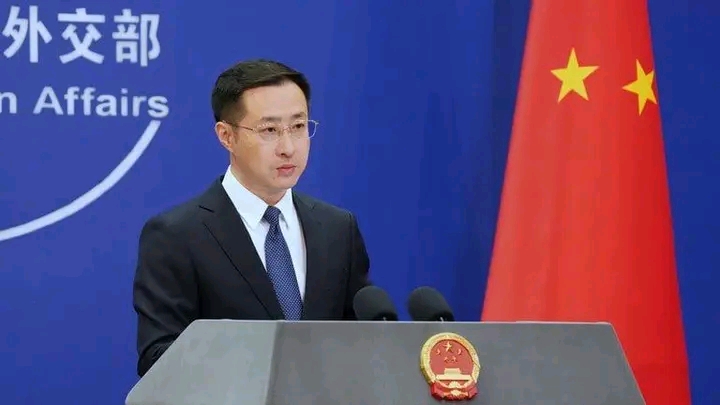

In a escalating geopolitical showdown, China has issued a stern warning to the United States, vowing retaliation against any moves that threaten its economic interests amid intensifying pressure over its purchases of Russian oil.
The bold statement comes as Washington ramps up efforts to isolate Moscow economically, leveraging global alliances to curb Russia’s energy exports and, by extension, the Ukraine conflict.
This development underscores the fragile balance of international trade, energy security, and superpower rivalries, with potential ripple effects on global markets from Asia to Europe.
The Chinese Foreign Ministry’s condemnation arrived swiftly in response to recent US overtures targeting not just Russia, but its key trading partners like Beijing and New Delhi.
Officials in Beijing decried what they described as “unilateral bullying” by the US, emphasizing that China’s energy procurement decisions are rooted in legitimate national needs and international law.
“Any attempt to coerce or sanction our sovereign choices will meet with resolute countermeasures,” a ministry spokesperson declared, signaling Beijing’s readiness to deploy a arsenal of retaliatory measures, including tariffs, export restrictions, or diplomatic escalations.
This rhetoric highlights China’s growing assertiveness in defending its role as the world’s largest importer of Russian crude, a position that has ballooned since the onset of the Russia-Ukraine war in 2022.
At the heart of the tension is US President Donald Trump’s aggressive campaign to starve Russia of revenue streams that fund its military operations.
Trump, who returned to the White House in 2025, has made no secret of his strategy, repeatedly urging allies to sever economic ties with Moscow’s supporters.
“If we cut off their oil money, this war ends fast,” Trump stated during a recent address, framing the push as a moral and strategic imperative to support Ukraine’s defense against Russian aggression.
His administration argues that secondary sanctions—penalties imposed not on Russia directly, but on third countries dealing with it—could effectively dismantle the Kremlin’s war machine without direct military involvement from NATO.
The catalyst for China’s rebuke was a bombshell report from the Financial Times last week, revealing Washington’s behind-the-scenes lobbying at the G7 summit.
According to the article, US Treasury officials pressed G7 finance ministers to explore “secondary tariffs” ranging from 50% to a staggering 100% on imports from China and India tied to Russian oil.
These measures would target goods perceived as benefiting from discounted Russian energy, such as refined petroleum products or downstream industries reliant on cheap feedstock.
The proposal extends beyond energy, potentially ensnaring a broad swath of bilateral trade valued at hundreds of billions annually.
Trump didn’t stop at the G7. In parallel discussions with European Union leaders, he advocated for similar punitive tariffs—up to 100%—on exports from Beijing and New Delhi. This joint initiative aims to create a unified front against Moscow, pressuring Russia to the negotiating table by amplifying the pain of its isolation.
EU officials, already grappling with their own energy vulnerabilities post-Ukraine invasion, have expressed cautious interest but highlighted the risks of alienating major trading partners like China, whose supply chains are deeply intertwined with Europe’s manufacturing sector.
The broader context reveals a high-stakes game of economic chess. Since Western sanctions crippled Russia’s access to traditional markets following the 2022 invasion of Ukraine, China has stepped in as a lifeline, snapping up record volumes of discounted Urals crude and other grades.
In 2024 alone, Chinese imports of Russian oil surged by over 20%, helping Moscow reroute exports and sustain revenues exceeding $100 billion despite the embargo.
India, too, has emerged as a major buyer, refining and reselling the oil to global markets, often in violation of the spirit—if not the letter—of US sanctions.
For the US, this represents a strategic vulnerability. Enforcing secondary tariffs could boomerang, inflating costs for American consumers and disrupting supply chains for everything from electronics to automobiles.
Analysts warn of inflationary pressures, with estimates suggesting a 50% tariff on Chinese imports could add 1-2% to US CPI.
Moreover, China’s retaliation could target US agricultural exports, semiconductors, or even rare earth minerals critical for defense and tech industries—moves that echo the tit-for-tat trade war of Trump’s first term.
On the international stage, the G7 and NATO’s involvement adds layers of complexity.
While the alliances share a commitment to Ukraine, divisions persist: Germany, heavily reliant on Chinese manufacturing, has voiced concerns over economic fallout, while hawkish voices in the US Congress push for even tougher measures.
NATO’s upcoming summit in late 2025 could become a flashpoint, with Trump’s “America First” doctrine clashing against multilateral norms.
As tensions simmer, experts urge de-escalation. “This isn’t just about oil; it’s a proxy battle for global influence,” said Dr. Elena Vasquez, a senior fellow at the Brookings Institution. “Missteps could fracture alliances and ignite a broader trade war, benefiting no one but exacerbating the Ukraine crisis.”
For now, all eyes are on diplomatic channels—and whether Beijing’s warnings will deter Washington’s gambit or propel the world toward uncharted economic turbulence.
This brewing conflict over Russian oil tariffs exemplifies the intricate web of energy geopolitics, where US sanctions, Chinese defiance, and Russian resilience collide.
Stakeholders from policymakers to investors should monitor developments closely, as the outcome could redefine international relations for years to come.
Share This Post