
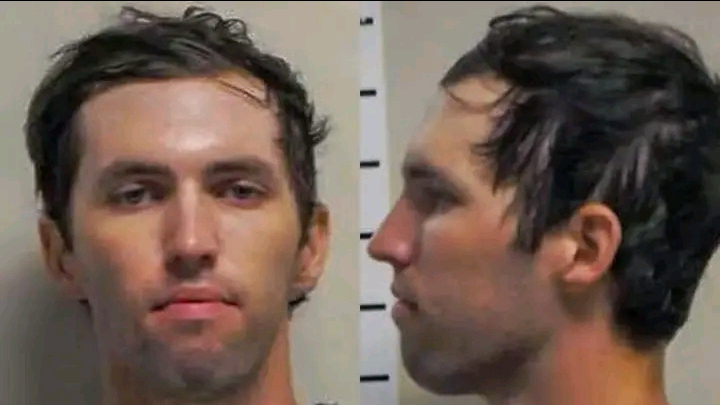

In a stunning turn of events that underscores the deep divides in American politics, 22-year-old Tyler Robinson has been arrested for the brazen assassination of conservative activist Charlie Kirk, founder of Turning Point USA.
The suspect, who allegedly gunned down the 31-year-old during a campus speech, was handed over to authorities by his own father—a veteran sheriff’s deputy—marking a dramatic end to a nationwide manhunt that gripped the nation for days.
The arrest unfolded on September 12, 2025, just two days after the fatal shooting at Utah Valley University in Orem, Utah, where Kirk was addressing a crowd of students and supporters.
Robinson, a resident of Washington, Utah—approximately 50 miles south of the crime scene—reportedly confessed to his father, Matt Robinson, a long-serving officer with the Washington County Sheriff’s Office.
Overwhelmed by guilt or perhaps a lingering sense of familial loyalty, the young man revealed his involvement in the crime, prompting his father to immediately contact federal agents and facilitate the surrender.
Matt Robinson’s decision to turn in his son has been hailed as an act of profound integrity amid a politically charged atmosphere. “This is a father who put duty and justice above everything else,” said Utah Governor Spencer Cox during a press conference announcing the arrest.
The governor described the incident as a “political assassination,” citing engravings on bullet casings found at the scene that hinted at ideological motivations.
While officials have not yet released specifics on the messages, speculation has swirled around Robinson’s growing political radicalization in recent years, potentially fueled by opposition to Kirk’s staunch conservative views on free speech, campus politics, and cultural issues.
Robinson’s background paints a picture of an unlikely suspect. Raised in a spacious six-bedroom home valued at over $600,000 in the quiet, affluent community of Washington, Utah, he lived a seemingly ordinary life far removed from the spotlight of national politics.
However, sources close to the investigation suggest that Robinson had become increasingly vocal about his disdain for figures like Kirk, whose organization has mobilized millions of young conservatives across college campuses.
The FBI, leading the probe, is exploring whether external influences—such as online radical forums or heated election-year rhetoric—played a role in escalating his views to violence.
As of now, no formal motive has been confirmed, but the agency is considering capital charges, including the death penalty, should Robinson be convicted of first-degree murder under federal hate crime or terrorism statutes.
The shooting itself was a harrowing spectacle that shocked onlookers and reverberated across the political spectrum. On the evening of September 10, Kirk was midway through a fiery address on free speech and conservative values when shots rang out from the audience.
The 31-year-old activist, known for his unapologetic advocacy and close ties to former President Donald Trump and figures like JD Vance, collapsed on stage.
Despite immediate medical attention, he was pronounced dead at the scene, leaving behind a wife, family, and a vast network of supporters mourning the loss of a polarizing yet influential voice in American conservatism.
In the aftermath, reactions poured in from across the aisle. Former President Trump, appearing on Fox & Friends the morning after the arrest, praised the swift resolution and alluded to the familial betrayal: “It was somebody very close who made this possible—shows you the power of doing the right thing, even when it’s your own blood.”
Trump, who had long championed Kirk as a “warrior for truth,” condemned the attack as emblematic of the “radical left’s” assault on free expression, though investigators have cautioned against premature politicization.
Other politicians, including Democrats and Republicans alike, decried the violence as an “attack on the American experiment,” with calls for unity echoing from Capitol Hill to statehouses nationwide.
Kirk’s death not only cements his legacy as a tireless champion of free speech and youth conservatism but also forces a national reckoning with the perils of deepening polarization.
Founded in 2012, Turning Point USA grew under Kirk’s leadership into a powerhouse organization with chapters on hundreds of campuses, advocating for limited government, free markets, and traditional values.
His debates, podcasts, and rallies drew both fervent admirers and fierce critics, often igniting controversies over topics like critical race theory and election integrity.
Yet, in a divided America—still reeling from recent elections and cultural battles—Kirk’s assassination serves as a grim reminder of the human cost when rhetoric turns to rage.
As the investigation continues, questions linger about event security at Utah Valley University and how Robinson evaded initial detection before fleeing the scene.
Multi-agency teams, including the FBI and local law enforcement, conducted an exhaustive search, utilizing tips, surveillance footage, and digital forensics to close in on the suspect.
Robinson is currently in federal custody, with a preliminary hearing expected in the coming days.
In the meantime, memorials for Kirk have sprung up online and on campuses, where supporters vow to carry on his mission amid heightened calls for civility in public discourse.
This tragic episode highlights the fragility of democratic dialogue in an era of extremism, leaving a nation to ponder: How do we bridge the chasms that lead to such irrevocable acts?
As details emerge, the story of Tyler Robinson and Charlie Kirk will undoubtedly shape conversations on politics, family, and justice for years to come.
Share This Post