
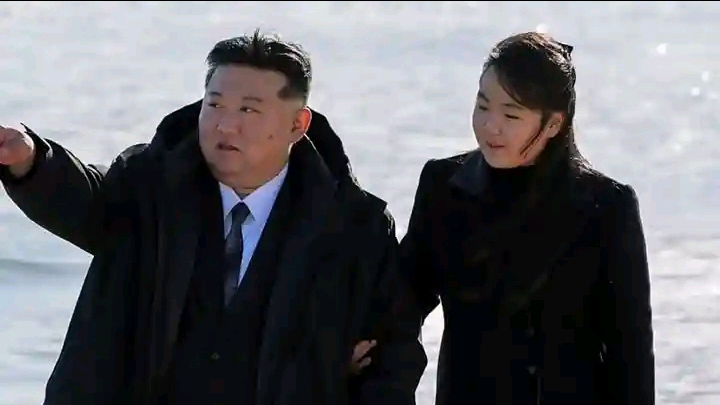

In a nation shrouded in secrecy and steeped in tradition, a new figure is emerging from the shadows of North Korea’s enigmatic regime: Kim Ju-ae, the young daughter of Supreme Leader Kim Jong-un.
According to South Korea’s National Intelligence Service (NIS), Ju-ae, believed to be in her early teens, is being meticulously groomed as the potential heir to the Kim dynasty’s iron grip on power.
Her recent high-profile trip to China alongside her father has sparked global intrigue, marking a pivotal moment in establishing her legitimacy as a future leader in the eyes of the North Korean people.
Yet, in a patriarchal society founded by her great-grandfather, Kim Il-sung, can a young woman truly ascend to the throne of one of the world’s most isolated nations? This in-depth exploration delves into Ju-ae’s rise, the challenges she faces, and the implications for North Korea’s future.
A Historic Trip to China: Ju-ae’s Global Debut
The world caught a rare glimpse of Kim Ju-ae during her recent visit to Beijing, a carefully orchestrated diplomatic maneuver that South Korea’s intelligence agency interprets as a deliberate step in her grooming for leadership.
Accompanying her father, Kim Jong-un, Ju-ae’s presence on the international stage was far from coincidental.
The NIS suggests that this trip was designed to signal her growing prominence within the regime and to begin cultivating her image as a legitimate successor among North Korea’s tightly controlled populace.
Kim Jong-un, known for his calculated displays of power, has increasingly showcased his daughter at high-profile events since her first public appearance over two years ago.
From attending military parades to inspecting missile tests, Ju-ae has been positioned in settings that underscore her connection to the regime’s core pillars: military might and dynastic continuity.
Her appearance in Beijing, a key ally of Pyongyang, was a bold statement to both domestic and international audiences that Ju-ae is being prepared for a significant role in the future of North Korea.
The Kim Dynasty: A Legacy of Power
The Kim family has ruled North Korea with an iron fist since the nation’s founding in 1948 by Kim Il-sung, Ju-ae’s great-grandfather.
His son, Kim Jong-il, and grandson, Kim Jong-un, have continued the dynasty’s unchallenged reign, each carefully grooming their successor to ensure the regime’s survival.
The concept of hereditary succession is deeply embedded in North Korea’s political fabric, with the Kim family portrayed as near-divine figures in state propaganda.
Ju-ae’s emergence as a potential heir represents a continuation of this dynastic tradition, but it also introduces a groundbreaking shift: the possibility of a female leader in a deeply patriarchal society.
At an estimated 12 to 14 years old, Ju-ae is still a child by global standards, yet her public role suggests she is being fast-tracked for leadership.
Her appearances are carefully curated, often featuring her in attire that mirrors her father’s—such as tailored coats and sunglasses—projecting an image of authority and continuity.
State media has begun referring to her with honorifics typically reserved for senior leaders, a subtle but significant indication of her elevated status.
Health of the Supreme Leader: No Immediate Transition
While Ju-ae’s grooming signals long-term planning, South Korea’s NIS reports that Kim Jong-un, despite health concerns, is not likely to relinquish power anytime soon.
During the Beijing trip, observers noted that Kim, who has struggled with obesity, appeared breathless at times. However, the NIS assesses that he shows no signs of serious illness that would necessitate an immediate transfer of power.
At 41 years old, Kim Jong-un remains firmly in control, suggesting that Ju-ae’s preparation is part of a long-term strategy rather than an urgent succession plan.
Kim’s health has long been a subject of speculation, given his visible weight gain and reported issues such as hypertension and diabetes. Yet, his ability to undertake international trips and maintain a rigorous public schedule indicates that he intends to lead for years to come.
For Ju-ae, this means a prolonged period of mentorship under her father’s watchful eye, allowing her to build credibility and familiarity among North Korea’s elite and citizenry.
A Woman in a Patriarchal Regime: Can Ju-ae Break the Mold?
Perhaps the most intriguing aspect of Ju-ae’s potential succession is the question of gender. North Korea’s political and cultural landscape is deeply patriarchal, rooted in Confucian traditions that prioritize male leadership.
The notion of a female supreme leader is unprecedented, leading some analysts to argue that Ju-ae’s path to power is fraught with obstacles.
Critics point out that the regime’s military and political elite, predominantly male, may resist a female leader, viewing her as a departure from the Kim dynasty’s established norms.
However, others argue that the Kim family’s near-mythical status could transcend gender barriers.
The regime’s propaganda machine has proven adept at shaping public perception, and Ju-ae’s lineage as Kim Jong-un’s daughter and Kim Il-sung’s great-granddaughter grants her unparalleled legitimacy.
If the regime frames her as the embodiment of the Kim dynasty’s revolutionary spirit, her gender may become secondary to her bloodline.
Historical parallels, such as female leaders in other authoritarian regimes, suggest that loyalty to the ruling family can outweigh traditional gender roles.
Theories and Speculation: Ju-ae’s Place in the Dynasty
Since Ju-ae’s first public appearance in November 2022, when she was seen at a missile launch with her father, analysts have speculated about her role.
Some initially believed she might serve as a symbolic figure, bolstering Kim Jong-un’s image as a family man and reinforcing the dynasty’s continuity. Others posited that her brother, if one exists, might be the true heir, with Ju-ae’s appearances serving as a distraction.
However, the NIS’s latest assessment, coupled with her increasing visibility, suggests that Ju-ae is indeed the frontrunner to succeed her father.
The lack of concrete information about Ju-ae’s age, education, or personal life—typical of North Korea’s opacity—fuels speculation.
Reports suggest she is being educated in a manner befitting a future leader, likely including ideological training and exposure to the regime’s inner workings.
Her public demeanor, often described as poised and confident, hints at careful preparation for a role that demands both charisma and authority.
Global Implications: What a Ju-ae Leadership Could Mean
The prospect of Ju-ae eventually leading North Korea raises significant questions about the country’s future trajectory.
Kim Jong-un’s reign has been marked by a focus on nuclear development, economic survival under sanctions, and cautious diplomatic overtures to powers like China and Russia.
Would Ju-ae, shaped by her father’s ideology and potentially exposed to a more globalized world, pursue a similar path? Or could her leadership herald subtle shifts in North Korea’s domestic and foreign policies?
For now, Ju-ae’s youth and the regime’s secrecy make such predictions speculative. Her grooming suggests that Kim Jong-un is intent on ensuring the Kim dynasty’s survival, even in the face of internal and external challenges.
Her international debut in China signals that North Korea is already laying the groundwork for her to be recognized as a legitimate successor, both at home and abroad.
Epilogue: A Dynasty in Transition
Kim Ju-ae’s emergence as North Korea’s potential future leader is a historic development in one of the world’s most secretive regimes.
As Kim Jong-un carefully grooms his daughter, the world watches with bated breath, wondering whether she can overcome the barriers of youth, gender, and tradition to lead a nation defined by its dynastic legacy.
Her journey from a shadowy figure to a potential supreme leader is a testament to the Kim family’s enduring grip on power—and a reminder of the unpredictable nature of North Korea’s future.
For now, Ju-ae remains under her father’s shadow, a young heiress in a regime that thrives on control and continuity. Yet, her carefully crafted public image and the regime’s calculated moves suggest that she is being prepared for a role that could reshape North Korea’s destiny.
As the world grapples with the implications of a female Kim at the helm, one thing is clear: the Kim dynasty’s story is far from over, and Ju-ae is its next chapter.
Share This Post