

In the arid expanse of Marsabit County, where conflict over water has been as old as history itself, a tragic confrontation erupted over the weekend, claiming the lives of three individuals and injuring another.
The incident, rooted in a heated dispute between rival herder groups vying for access to a vital water point, has ignited a massive security operation, underscoring the perilous intersection of resource scarcity, communal tensions, and the proliferation of illegal firearms in Kenya’s northern frontier.
The clash unfolded on Saturday at Gathabi Ergek, a remote water point in the Kurkum area of Loiyangalani sub-county. According to Marsabit County Commissioner James Kamau, the violence stemmed from a disagreement between two groups of pastoralists over the method of drawing water for their livestock.
What began as a verbal altercation quickly escalated into a deadly shootout, with assailants unleashing gunfire from illicit weapons.
Three herders were fatally wounded in the chaos, while a fourth sustained severe gunshot injuries and is receiving medical treatment.
Eyewitness accounts and preliminary reports paint a grim picture of the scene: herders, driven by the unrelenting drought that has plagued the region, clashed amid the dusty plains, their livestock caught in the crossfire.
Such conflicts are not uncommon in Marsabit’s pastoral heartlands, where nomadic communities from diverse ethnic backgrounds compete for dwindling grazing lands and water sources.
The area’s proximity to Samburu County further complicates matters, as cross-border movements of herders often intensify resource pressures.
In response, authorities have launched a high-stakes pursuit of the suspected armed criminals.
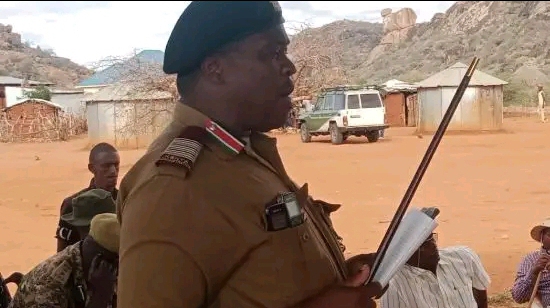
Commissioner Kamau, who chairs the county’s security and intelligence committee, confirmed that a multi-agency team—comprising police, intelligence officers, and other security personnel—has been deployed to the volatile zone.
“Possession of illegal guns is a serious crime,” Kamau emphasized in a stern warning to the public. He reiterated the government’s unwavering commitment to safeguarding citizens and their property, asserting that only state institutions hold the mandate to provide security.
“We are not going to relent until the suspects are arrested and the illicit firearms in their possession are retrieved,” Kamau declared, signaling a no-holds-barred approach to restoring order.
The operation aims not only to apprehend the perpetrators but also to dismantle networks fueling the illegal arms trade in the region.
Investigators are meticulously piecing together evidence, interviewing witnesses, and analyzing ballistic traces to bring the culprits to justice and prevent further bloodshed.
This tragic event arrives on the heels of a nationwide government directive issued just a week prior, mandating the voluntary surrender of all illegal firearms within a two-week window. Failure to comply, as outlined in the ultimatum, would trigger comprehensive mop-up operations across affected areas.
Kamau highlighted how the Marsabit incident starkly confirms the presence of unauthorized weapons in civilian hands, particularly in Loiyangalani sub-county. “A forceful retrieval operation is imminent unless the ultimatum is heeded,” he cautioned, urging residents to act swiftly to avert escalation.
Beyond the immediate crackdown, the county commissioner appealed for unity among local pastoralist communities. “I urge herders to love one another and amicably share the available grazing resources,” Kamau said, advocating for dialogue over discord.
He called for calm as investigations proceed, emphasizing the need to restore normalcy and foster peaceful coexistence in a region long scarred by inter-communal strife.
The broader context of this clash reveals deeper systemic challenges in Kenya’s arid and semi-arid lands (ASALs). Marsabit, like many northern counties, grapples with chronic water shortages exacerbated by climate change, erratic rainfall patterns, and overgrazing.
Herder conflicts, often amplified by the easy availability of small arms smuggled across porous borders, have resulted in hundreds of deaths and displacements in recent years.
Government initiatives, including disarmament campaigns and community peace-building programs, aim to address these root causes, but incidents like this underscore the urgency for more robust interventions.
As the manhunt intensifies, residents of Loiyangalani and surrounding areas remain on edge, hopeful that swift action will deter future violence. Authorities have assured the public that every effort is being made to conclude the investigations logically and equitably.
In the meantime, the tragedy serves as a poignant reminder of the fragile balance between survival and conflict in Kenya’s pastoral frontiers, where a single water point can mean the difference between life and death.