
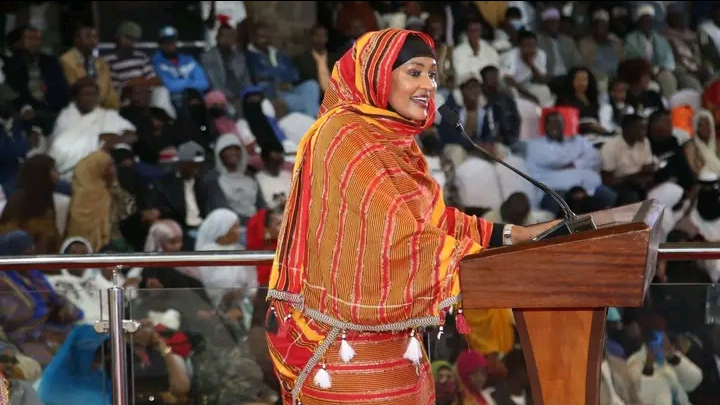

Nairobi, Kenya| In a strategic move poised to shape the future of land governance in Kenya, President William Ruto has appointed Rehema Dida Jaldesa(RDJ), the former Isiolo County Women Representative and erstwhile chairperson of the National Gender and Equality Commission (NGEC), to the high-stakes Selection Panel tasked with recruiting a new chairperson and members for the National Land Commission (NLC).
This appointment, gazetted amid growing anticipation over impending vacancies in one of Kenya’s most pivotal constitutional bodies, underscores the administration’s commitment to transparent and inclusive land reforms in a nation where land disputes remain a perennial flashpoint.
The official announcement came via Gazette Notice No. 11212, dated August 11, 2025, aligning seamlessly with the provisions of the National Land Commission Act (Cap. 281).
This legislative framework mandates a rigorous selection process to fill vacancies arising from the expiration of the current NLC commissioners’ six-year, non-renewable terms.
Appointed on November 15, 2019, the incumbent team—led by figures who have navigated complex land tenure challenges—will see their tenure conclude on November 14, 2025.
As Kenya grapples with historical land injustices, rapid urbanization, and demands for equitable resource allocation, this transition represents a critical juncture for advancing sustainable land management and resolving longstanding grievances.
Rehema Dida Jaldesa: A Trailblazer in Advocacy and Leadership
At the heart of this development is Rehema Dida Jaldesa, a dynamic leader whose career trajectory embodies resilience, advocacy, and public service.
Born and raised in Isiolo County, Jaldesa has long been a vocal champion for women’s rights, community empowerment, and marginalized voices in Kenya’s arid and semi-arid regions.
Her political journey gained prominence when she served as the Isiolo County Women Representative from 2017 to 2022 under the Jubilee Party banner, where she tirelessly advocated for residents’ rights, gender equality, and inclusive development.
During her tenure in the National Assembly, Jaldesa promoted the interests of women and girls, pushing for policies that addressed socio-economic disparities in pastoralist communities.
Jaldesa’s academic credentials further bolster her suitability for this role. She holds a Bachelor’s degree in Leadership and Management from St. Paul’s University (earned between 2013 and 2016) and a Diploma in Public Relations from the University of Nairobi (2003-2005).
Prior to her parliamentary stint, she built a foundation in public relations and community engagement, skills that proved invaluable in her subsequent roles.
Following her time in Parliament, Jaldesa chaired the NGEC, where she spearheaded initiatives to combat gender-based discrimination and promote equality across sectors.
More recently, she has served as Chief Administrative Secretary in the Ministry of Tourism, Wildlife, and Heritage, blending her expertise in governance with efforts to preserve Kenya’s cultural and natural assets.
Her family legacy adds another layer to her profile: Jaldesa is the daughter of the late Dida Jaldesa, a former Member of Parliament for Isiolo who represented the constituency from 1983 to 1992 and was known for his contributions to regional development.
Often hailed as the “Lioness from the North” by supporters, Jaldesa’s appointment to the NLC Selection Panel is seen by many as a nod to her proven track record in navigating sensitive socio-political issues, particularly those intersecting with land rights and gender equity.
The Selection Panel: A Diverse Team for a Monumental Task
Jaldesa joins a seven-member panel comprising seasoned professionals from various fields, ensuring a multifaceted approach to the recruitment process.
The other appointees include Jasper Micheni Mbiuki, Dr. Peris C.K. Mang’ira, Dr. Electine Nasambu, Ann Mwangangi, Bibiana Rabuku Omalla, and Prof. Nichola Letting.
While detailed biographies of these individuals are not widely publicized, their inclusion suggests a deliberate effort to incorporate expertise in law, academia, public administration, and land-related disciplines.
For instance, Prof. Nichola Letting is recognized in academic circles for contributions to policy and governance, while Dr. Peris C.K. Mang’ira and Dr. Electine Nasambu bring scholarly insights potentially from fields like social sciences or environmental studies.
The panel’s mandate is comprehensive and time-bound, designed to uphold the highest standards of meritocracy and accountability.
Key responsibilities include advertising the vacant positions to attract a broad pool of qualified candidates, meticulously shortlisting applicants based on criteria such as integrity, experience, and expertise in land matters, conducting thorough interviews, and ultimately forwarding a list of suitable nominees to the President.
These recommendations will then require approval from the National Assembly, ensuring parliamentary oversight and public scrutiny.
This process, enshrined in the Constitution and the NLC Act, aims to prevent cronyism and foster confidence in the commission’s independence.
The National Land Commission: Guardian of Kenya’s Most Valuable Asset
To appreciate the significance of this appointment, one must delve into the NLC’s pivotal role in Kenya’s governance landscape.
Established under Article 67 of the 2010 Constitution, the NLC serves as the custodian of public land, managing it on behalf of both national and county governments.
Its core functions encompass recommending national land policies, advising on compulsory land acquisitions for public projects, conducting research on land and natural resource utilization, assessing land taxes and premiums, and monitoring the registration of land rights.
Moreover, the commission has the authority to initiate investigations into present or historical land injustices—either on its own volition or based on complaints—making it a vital instrument for redressing colonial-era dispossessions and contemporary disputes.
Since its inception, the NLC has achieved notable milestones, including facilitating land acquisitions for 97 flagship public projects across sectors like transport, water, sanitation, energy, and security.
However, it has also faced challenges, such as bureaucratic overlaps with the Ministry of Lands and criticisms over delays in resolving disputes.
In a country where land is not just an economic resource but a cultural and emotional anchor—fueling conflicts in regions like the Rift Valley, Coast, and Northern Kenya—the incoming commissioners will inherit a docket fraught with urgency.
Issues like illegal land grabs, climate-induced displacements, and the need for sustainable urban planning demand innovative leadership to prevent escalation into violence or inequality.
Broader Implications and the Road Ahead
President Ruto’s decision to constitute this panel ahead of the November deadline reflects proactive governance, especially as Kenya pushes forward with ambitious infrastructure agendas under the Bottom-Up Economic Transformation Agenda (BETA).
Land reforms are integral to these plans, enabling projects that boost economic growth while safeguarding vulnerable communities.
Analysts view Jaldesa’s inclusion as particularly astute, given her background in advocating for pastoralist rights in land-scarce areas like Isiolo, where conflicts over grazing lands and water resources are rampant.
As the selection process unfolds, stakeholders—including civil society groups, legal experts, and ordinary Kenyans—will watch closely. The panel’s work could set precedents for transparency in public appointments, potentially influencing other constitutional commissions.
For Jaldesa, this role marks another chapter in her illustrious career, positioning her at the forefront of national discourse on equity and justice.
In summary, this appointment is more than a routine administrative step; it’s a beacon of hope for resolving Kenya’s enduring “land question.”
With a panel led by accomplished figures like Rehema Dida Jaldesa, the stage is set for a renewed NLC that could transform how the nation stewards its most precious resource.
Stay tuned to ICBNews for updates as the recruitment drive commences, promising a new era in land administration.
Share This Post