
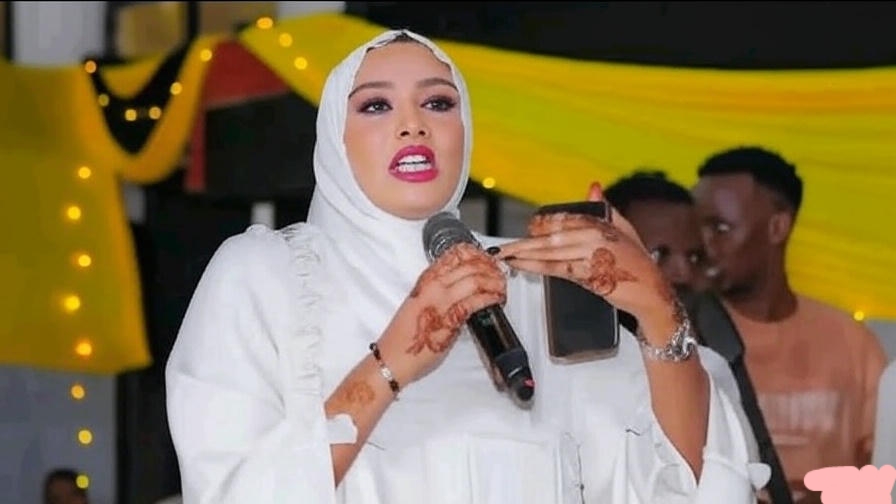

In the vast, sun-kissed expanses of Isiolo County, where the arid winds whisper tales of resilience and the earth cradles dreams as golden as the dawn, a figure emerges like a rare bloom in the desert—Fatuma Halake Dida, lovingly dubbed “Honey.”
She is not merely a candidate vying for the Women Representative seat in the 2027 Kenyan elections; she is a symphony of strength and sweetness, a philosophical beacon illuminating the path toward true empowerment.
As we stand at the crossroads of history, pondering the essence of leadership in a world thirsting for authenticity, Honey embodies the alchemical blend of beauty, intellect, and unyielding spirit. Could she be the ideal guardian of Isiolo’s women’s voices?
In this exploration, we delve into her story, not as a mere political profile, but as an inspirational odyssey that resonates with the human soul’s quest for progress.
Born in the heart of Kinna, a cradle of cultural richness amid Isiolo’s rugged landscapes, Honey’s origins are steeped in the poetry of perseverance. Like the honey that flows from the hives of ancient acacias—nourishing, pure, and transformative—her life reflects the sweetness derived from hardship.
In a region where water is scarce and opportunities even scarcer, Honey has risen as a testament to the indomitable will of Kenyan women. Her nickname, “Honey,” is more than a term of endearment; it symbolizes the golden elixir of hope she brings to her community.
Philosophically, honey represents the fruits of collective labor, the reward of bees working in harmony—a metaphor for the collaborative leadership Honey champions.
In an era where politics often sours into division, her approach promises a balm, healing the fractures of marginalization and fostering unity.
At the core of Honey’s allure lies her unparalleled intellectual prowess, a foundation built on academic excellence that has been lauded far and wide.
Her scholarly journey is a narrative of relentless pursuit, mirroring the philosophical ideals of enlightenment thinkers who viewed education as the key to liberation.
Honey’s sharp mind, honed through years of rigorous study, equips her to dissect complex issues with precision and foresight. In Isiolo, where educational access remains a battleground for equality, her commitment to learning serves as an inspirational blueprint.
Imagine a leader who doesn’t just advocate for schools but embodies the transformative power of knowledge—turning arid minds into fertile grounds for innovation.
This intellectual depth ensures that her policies on women’s empowerment are not superficial slogans but deeply rooted strategies, informed by data, empathy, and a vision for sustainable growth.
Yet, Honey’s brilliance extends beyond the confines of academia into the realm of eloquent expression and heartfelt connection. Her communication skills are a captivating force, weaving words like threads of silk that bind communities together.
In her activism, she effortlessly bridges divides—speaking to elders in the language of tradition, inspiring youth with visions of tomorrow, and empowering women with the rhetoric of self-reliance.
Picture her at a community gathering under the starlit Isiolo sky, her voice rising like a gentle yet unyielding river, articulating dreams of economic upliftment in a land where pastoral economies clash with modern aspirations.
Honey’s grassroots ties run deep, forged in the fires of local advocacy, where she has championed youth development programs that nurture talents often overlooked in Kenya’s semi-arid regions.
Her ability to connect with diverse groups—be they Borana herders, Turkana blacksmiths, Somali traders, or urban entrepreneurs—positions her as a philosophical unifier, echoing Aristotle’s belief that true leadership lies in the art of persuasion and communal harmony.
As the 2027 elections loom, Honey stands as a frontrunner amid a field of contenders, her fresh energy distinguishing her like a vibrant oasis in a monotonous desert. While others may bring experience, Honey offers innovation—a blend of charm that disarms skeptics and wisdom that inspires allies.
In-depth analysis reveals her unique edge: rooted in Isiolo’s soil yet visionary in scope, she is poised to amplify marginalized voices that have long echoed unheard in the halls of power.
Her platform emphasizes women’s empowerment through targeted initiatives—microfinance for female entrepreneurs, health programs addressing maternal mortality in remote areas, and youth skills training to combat unemployment.
Economically, she envisions transforming Isiolo’s challenges into opportunities, harnessing renewable energy from its winds and suns to fuel growth, while philosophically advocating for a “honey economy”—one that is inclusive, sustainable, and sweet in its rewards for all.
What makes Honey truly inspirational is her holistic approach to leadership, infused with a poetic touch that elevates politics from mundane maneuvering to a noble quest.
She reminds us that beauty is not skin-deep but a reflection of inner grace; intellect is not elitist but a tool for the masses; and eloquence is not performative but a bridge to understanding.
In a world grappling with gender disparities, Honey’s candidacy is a clarion call: a philosophical musing on how one woman’s rise can uplift an entire county.
Voters in Isiolo, from the bustling markets of Meru to the quiet villages of Garbatulla, are invited to reflect on this—backing Honey isn’t just a vote; it’s an investment in a sweeter future, where empowerment flows abundantly like honey from the comb.
As we conclude this ode to potential, let us rally behind Fatuma Halake Dida, the embodiment of Isiolo’s untapped promise.
With her at the helm, 2027 could mark the dawn of a new era—one where women’s representation transcends tokenism and becomes a transformative force. It’s time to embrace the sweetness of change.
Disclaimer| The views and opinion(s) expressed in this article are solely those of the author
Share This Post