
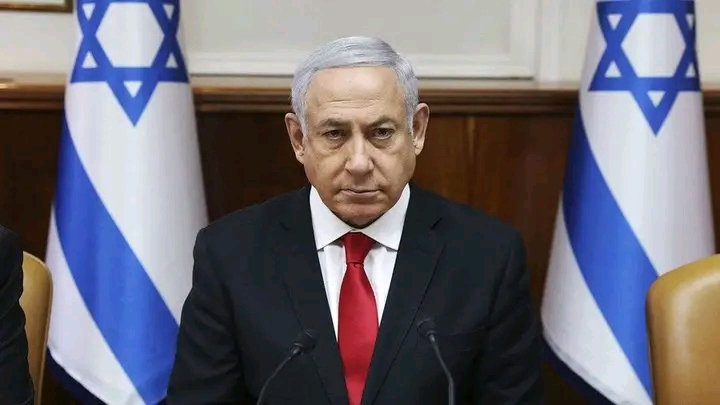

In a dramatic escalation of Israel’s ongoing conflict with Hamas, Prime Minister Benjamin Netanyahu has reportedly informed his cabinet of plans to pursue a full military occupation of the Gaza Strip, according to The Times of Israel.
This decision, which marks a significant shift in Israel’s strategy, has sparked intense debate within the government and military, with concerns over its feasibility, humanitarian implications, and the safety of hostages still held by Hamas.
As the world watches this volatile situation unfold, the announcement raises critical questions about the future of Gaza, the Israeli-Palestinian conflict, and the broader Middle East.
A Shift Toward Total Control
According to reports, Netanyahu has explicitly used the term “occupation of the Strip” in private discussions with ministers, signaling his intent to expand Israel’s military presence across the entirety of Gaza.
This move would reverse Israel’s 2005 disengagement from the enclave, when it withdrew both its military forces and settlers after 38 years of control, leaving Gaza under the administration of the Palestinian Authority.
Hamas, a Palestinian militant group designated as a terrorist organization by Israel, the United States, and the European Union, seized control of Gaza in 2006 following its victory in local elections—the last to be held in the territory.
Netanyahu’s plan, as reported by Ynet, involves a full-scale occupation, with the Israel Defense Forces (IDF) tasked with controlling the remaining 25% of Gaza’s territory not currently under Israeli authority.
A senior official close to the prime minister was quoted as saying, “The die is cast – we are going for a full occupation of the Gaza Strip… There will be operations even in areas where hostages are being held. If the IDF chief of staff doesn’t agree, he should resign.”
This hardline stance underscores Netanyahu’s determination to assert dominance over Gaza, despite significant pushback from military leadership and concerns about the risks to both Israeli and Palestinian lives.
IDF Resistance and Hostage Risks
The IDF, which currently controls approximately 75% of Gaza, has expressed serious reservations about the proposed occupation.
Military officials argue that seizing and maintaining control over the entire enclave could take years, given the complexity of dismantling Hamas’s extensive network of tunnels, weapons caches, and operational infrastructure.
The group has proven resilient despite Israel’s sustained military campaigns, and a full occupation could further entrench its resistance.
More critically, the IDF has raised alarms about the potential danger to the roughly 50 hostages still held by Hamas, fewer than half of whom are believed to be alive.
The conflict, which erupted in October 2023 following a surprise Hamas attack on southern Israel that killed approximately 1,200 people and saw 250 others taken hostage, has already exacted a heavy toll.
Israel’s retaliatory campaign has devastated Gaza, with local health authorities reporting at least 60,000 deaths and widespread destruction of infrastructure, homes, and essential services.
Any military push into areas where hostages are held risks provoking Hamas into executing captives, a scenario the IDF is keen to avoid.
Historical Context and Regional Implications
Israel’s history with Gaza is fraught with complexity. From 1967 to 2005, Israel maintained direct control over the territory, a period marked by settlement expansion and frequent clashes with Palestinian groups.
The 2005 disengagement, spearheaded by then-Prime Minister Ariel Sharon, was intended to reduce tensions and pave the way for Palestinian self-governance.
However, Hamas’s rise to power and the absence of elections since 2006 have left Gaza in a state of political and economic limbo, exacerbated by Israel’s blockade and recurring cycles of violence.
Netanyahu’s push for reoccupation comes at a time when his government faces domestic and international pressure. At home, the Israeli public remains divided, with some demanding decisive action against Hamas and others calling for a focus on securing the hostages’ release.
Internationally, Israel’s actions in Gaza have drawn widespread condemnation, with human rights organizations accusing the military of disproportionate force and violations of international law.
The reported death toll of 60,000 in Gaza—though figures vary and are difficult to verify independently—has fueled calls for a ceasefire and renewed diplomatic efforts.
The decision to pursue a full occupation could also have ripple effects across the region. Neighboring countries, including Egypt and Jordan, have long played a mediating role in the Israeli-Palestinian conflict and may view the move as destabilizing.
Moreover, it risks further alienating the Palestinian Authority, which governs parts of the West Bank and has struggled to maintain legitimacy amid ongoing Israeli restrictions and internal divisions.
The broader Arab world, already critical of Israel’s policies, may intensify its rhetoric, potentially complicating U.S. efforts to broker peace or normalize relations between Israel and Arab states.
Strategic and Humanitarian Challenges
Netanyahu’s plan raises significant strategic and humanitarian questions. A full occupation would require a massive deployment of resources, including troops, logistics, and funding, at a time when Israel’s economy is already strained by the ongoing war.
The IDF’s concerns about the timeline—potentially years to neutralize Hamas—highlight the operational challenges of governing a hostile territory with a population of over 2 million, many of whom are displaced and living in dire conditions.
The humanitarian crisis in Gaza, already catastrophic, could worsen under a prolonged occupation. The enclave’s infrastructure lies in ruins, with hospitals, schools, and water systems heavily damaged.
Aid organizations have struggled to deliver supplies due to the blockade and ongoing fighting, and a full occupation could further restrict access, exacerbating food insecurity and medical shortages.
The international community, including the United Nations, has repeatedly called for increased humanitarian access to Gaza, but Israel’s security concerns have often taken precedence.
A Divisive Path Forward
As Netanyahu prepares to seek cabinet approval for the occupation plan, the decision is likely to deepen divisions within Israel’s government.
Several ministers reportedly support the prime minister’s vision, seeing it as a necessary step to eliminate Hamas’s threat once and for all.
Others, however, align with the IDF’s cautious stance, advocating for a more targeted approach that prioritizes hostage negotiations and minimizes civilian casualties.
The international response will also be critical. The United States, Israel’s closest ally, has provided significant military and diplomatic support throughout the conflict but has urged restraint to avoid further escalation.
European nations, meanwhile, have called for renewed peace talks based on a two-state solution, a prospect that appears increasingly remote given the current trajectory.
What Next?
Prime Minister Benjamin Netanyahu’s reported decision to pursue a full occupation of Gaza represents a pivotal moment in the Israeli-Palestinian conflict.
While aimed at neutralizing Hamas and reasserting Israeli control, the plan carries immense risks, from endangering hostages to deepening the humanitarian crisis and destabilizing the region.
As the Israeli cabinet prepares to debate the proposal, the world awaits the outcome of a decision that could reshape Gaza’s future and redefine the contours of this decades-long conflict.
For now, the path forward remains uncertain, with the stakes higher than ever. The international community, regional powers, and the people of Gaza and Israel alike will be watching closely as this bold and controversial strategy unfolds.
Share This Post