

In a chilling account that has sent shockwaves through East Africa’s activist community, Mwabili Mwagodi, a prominent Kenyan human rights advocate, has detailed his traumatic abduction and four-day ordeal at the hands of unidentified assailants.
The activist, known for his vocal stance on social justice and governance issues, was held incommunicado in Tanzania before being abandoned in a dense thicket in Kinondo, Kwale County, Kenya.
His story, which unfolded on July 23, 2025, raises alarming questions about the safety of activists in the region and the challenges of seeking justice across borders.
A Terrifying Abduction in Tanzania
Mwagodi, a seasoned activist whose work has often spotlighted systemic injustices, was legally employed at a hotel in Tanzania when the nightmare began.
On the evening of July 23, four men accosted him, seizing his identification documents and blindfolding him before whisking him away to an undisclosed location.
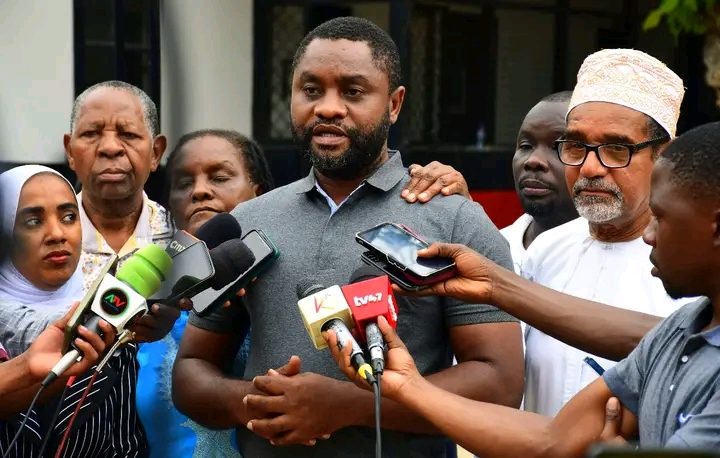
“It happened so fast,” Mwagodi recounted during a press conference in Mombasa, his voice steady but heavy with the weight of the ordeal. “I was going about my duties when these men grabbed me, took my documents, and covered my eyes. I had no idea where I was being taken.”
For the next four days, Mwagodi endured captivity in harrowing conditions. He was held overnight in an isolated room, his wrists bound by handcuffs.
The following day, his captors transported him to his residence at the hotel, where they confiscated his two mobile phones and laptop—tools critical to his activism.
“I was locked in a bedroom in a private house, guarded by two armed men,” Mwagodi said. “The cuffs stayed on day and night, only removed when I was allowed to eat. It was dehumanizing.”
The activist’s ordeal culminated in his release, though not without further trauma. On the fourth day, his captors abandoned him in a thicket in Kinondo, Kwale County.
Disoriented and weakened, Mwagodi managed to seek help, eventually receiving medical treatment for five days at a hospital in Mombasa to recover from the physical and psychological toll of his captivity.
A Frustrating Quest for Justice
On August 2, 2025, Mwagodi, accompanied by his relatives, lawyer, and fellow activists, visited the Central Police Station in Mombasa to formally report the incident and seek justice. However, their efforts were met with bureaucratic resistance.
The Officer Commanding Station (OCS) declined to record Mwagodi’s statement, citing a lack of jurisdiction since the abduction occurred in Tanzania, outside Kenyan territory.
This refusal has sparked outrage among Mwagodi’s supporters, who argue that the incident’s cross-border nature demands a coordinated response from authorities in both Kenya and Tanzania.
“This is not just about me; it’s about the safety of every activist in this region,” Mwagodi told journalists outside the police station. “If authorities can dismiss a case like this because of jurisdictional technicalities, what hope is there for justice? My abductors are still out there, and I fear for others who speak truth to power.”
Mwagodi’s lawyer, whose identity has been withheld for safety reasons, condemned the police’s inaction, calling it a “failure of the system to protect vulnerable individuals.”
The lawyer announced plans to escalate the matter to higher authorities, including Kenya’s Directorate of Criminal Investigations and Tanzania’s law enforcement agencies, to ensure a thorough investigation. “We will not rest until those responsible are brought to justice,” the lawyer vowed.
A Broader Context of Activist Persecution
Mwagodi’s abduction is not an isolated incident but part of a troubling pattern of intimidation targeting activists across East Africa.
In recent years, human rights defenders in Tanzania, Kenya, and neighboring countries have faced increasing threats, including abductions, forced disappearances, and extrajudicial detentions.
According to a 2024 report by the East African Human Rights Network, at least 37 activists in the region have been targeted for their work since 2023, with many cases remaining unresolved due to lack of political will or cross-border cooperation.
Mwagodi’s case highlights the precarious situation for those who challenge powerful interests. His activism, which includes advocating for equitable labor practices and exposing corruption, has made him a target for those who benefit from the status quo.
“I knew my work came with risks,” Mwagodi admitted. “But I never imagined it would lead to something like this. No one should have to endure this for standing up for what’s right.”
Calls for Regional Action and Solidarity
The activist’s ordeal has galvanized civil society organizations, with many rallying to demand accountability.
The Tanzanian Human Rights Defenders Coalition issued a statement condemning the abduction and urging both Tanzanian and Kenyan governments to investigate.
“Mwabili Mwagodi’s case is a stark reminder of the dangers faced by those who speak out,” the coalition said. “We call for a joint task force to investigate this incident and ensure the perpetrators are held accountable, regardless of where the crime occurred.”
In Mombasa, fellow activists who accompanied Mwagodi to the police station echoed these sentiments, emphasizing the need for regional solidarity.
“This is not just a Tanzanian or Kenyan issue—it’s an East African issue,” said one activist, who requested anonymity due to safety concerns. “If we don’t stand together, these attacks will continue.”
A Resilient Spirit Amid Uncertainty
Despite the trauma and the bureaucratic obstacles, Mwagodi remains defiant. “They tried to silence me, but I’m still here, and I’ll keep speaking out,” he declared to the media.
His resilience has inspired many, with social media platforms buzzing with hashtags like #JusticeForMwagodi and #ProtectActivists trending in Kenya and Tanzania.
As Mwagodi and his supporters await a breakthrough in the case, his story serves as a powerful reminder of the courage it takes to challenge injustice—and the urgent need for systems to protect those who do.
For now, the activist is focusing on his recovery while vowing to continue his work. “This experience has only strengthened my resolve,” he said. “I won’t stop until justice is served—not just for me, but for everyone who’s been silenced.”
What’s Next?
The refusal by Mombasa’s Central Police Station to record Mwagodi’s statement has sparked a broader debate about jurisdictional challenges in cross-border crimes.
Legal experts suggest that the case could set a precedent for how such incidents are handled in the East African Community, where porous borders and differing legal frameworks often complicate justice.
Mwagodi’s legal team is preparing to file complaints with both Kenyan and Tanzanian authorities, while also exploring options with regional bodies like the East African Court of Justice. Meanwhile, human rights organizations are calling for international pressure to ensure the case is not swept under the rug.
For those seeking to support Mwagodi’s cause, the Tanzanian Human Rights Defenders Coalition has launched a petition urging swift action, available at their official website.
As the investigation unfolds, the world watches to see whether justice will prevail for Mwabili Mwagodi—a man whose courage in the face of adversity continues to inspire.
Share This Post