

Doha, Gaza Strip, Tel Aviv| The protracted conflict in the Gaza Strip, now stretching into its second year, continues to defy resolution as ceasefire negotiations in Doha have once again collapsed.
The latest round of talks, aimed at securing a 60-day truce, has stalled over Israel’s refusal to fully withdraw its military forces from the embattled territory.
The breakdown, coupled with a devastating incident on July 12 that left at least 31 Palestinians dead during an aid distribution, underscores the dire humanitarian crisis and the entrenched mistrust between the conflicting parties.
As diplomatic efforts falter, the Gaza conflict remains mired in a cycle of violence, failed negotiations, and escalating civilian suffering.
Ceasefire Talks Hit a Wall
The Doha negotiations, mediated by international stakeholders, sought to build on a fragile January ceasefire agreement but have been derailed by irreconcilable demands.
Israel has proposed retaining control over approximately 40% of Gaza, including the strategically significant southern city of Rafah, while withdrawing from other areas.
Hamas, however, has categorically rejected this proposal, insisting on a complete Israeli withdrawal from all of Gaza as a prerequisite for any agreement.
The group argues that Israel’s plan would effectively partition the territory and perpetuate the displacement of Palestinians, a non-starter for their negotiators.
The sequencing of key concessions remains a central sticking point. Hamas demands an immediate cessation of hostilities before releasing the remaining hostages, while Israel insists that the release of all captives—believed to number over 100—must precede any pause in fighting.
Additionally, Israel has reiterated its long-standing condition that Hamas’s military infrastructure be fully dismantled to ensure a lasting ceasefire.
These hardened positions have left little room for compromise, with sources close to the talks describing the atmosphere as one of “deep mistrust and inflexibility.”
The 60-day ceasefire proposal, championed by U.S. President Donald Trump, was intended to provide a temporary reprieve to facilitate humanitarian aid delivery and pave the way for longer-term negotiations.
However, with both sides unwilling to budge on core issues, the initiative has failed to gain traction, leaving diplomats scrambling to find a path forward.
Humanitarian Tragedy Amid Ongoing Blockade
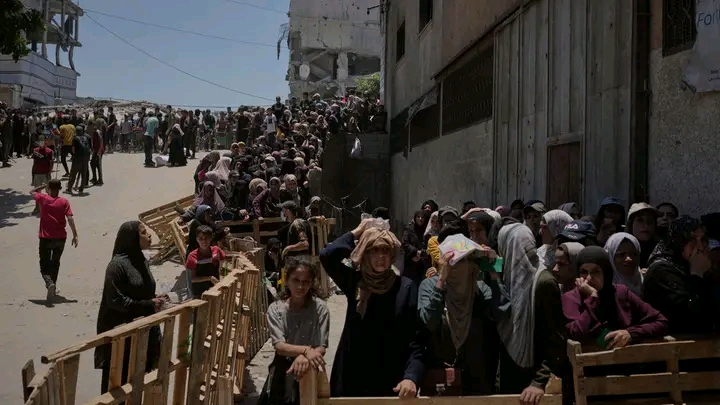
As diplomatic efforts falter, Gaza’s humanitarian crisis has reached catastrophic levels. On July 12, a tragic incident at an aid distribution center in the Gaza Strip claimed the lives of at least 31 Palestinians.
Eyewitnesses reported that Israeli forces opened fire on civilians attempting to access food supplies, with some victims sustaining fatal gunshot wounds to the head and torso.
The Israeli military has denied direct responsibility, claiming that its troops fired warning shots to manage a chaotic crowd and that no conclusive evidence links their actions to the deaths.
The incident has drawn widespread condemnation and reignited calls for accountability in the handling of humanitarian operations.
The tragedy is part of a broader pattern of violence surrounding aid distribution. According to the UN Human Rights Office, 789 civilians have been killed since late May while attempting to access humanitarian aid, with 615 deaths occurring near distribution centers and 183 along aid transport routes.
These figures highlight the perilous conditions faced by Gaza’s population, who are grappling with acute shortages of food, water, and medical supplies.
Israel’s ongoing blockade of Gaza, justified by claims that Hamas seizes aid for its own purposes, has severely restricted the flow of relief.
The “Gaza Humanitarian Foundation,” a U.S.-Israeli initiative launched in May, has been tasked with overseeing aid distribution, but its reach remains limited.
Critics argue that the blockade, combined with stringent security measures, has exacerbated the humanitarian crisis, leaving millions of Palestinians in dire straits.
A Conflict Locked in a Tragic Loop
The Gaza conflict, now one of the deadliest in recent history, shows no signs of abating. Israel’s strategic retention of key territories, including Rafah, is likely to prolong negotiations and deepen the humanitarian toll.
Hamas’s insistence on a full withdrawal and Israel’s demand for the complete dismantling of the group’s military capabilities have created a diplomatic deadlock that threatens to entrench the war footing for the foreseeable future.
Public outcry over the aid-related deaths has intensified international pressure on both parties, particularly Israel, to ease restrictions on humanitarian access and reassess military operations in civilian areas.
Human rights organizations have called for independent investigations into the July 12 incident and other similar tragedies, arguing that the use of lethal force against civilians seeking aid is unjustifiable.
The United Nations and other international bodies have warned that Gaza’s humanitarian crisis is spiraling out of control, with over 1.5 million people displaced and basic infrastructure—hospitals, schools, and water systems—decimated by the ongoing conflict.
Without a breakthrough in negotiations, the prospects for a sustained ceasefire remain dim, and the cycle of violence, failed diplomacy, and civilian suffering is likely to persist.
Global Implications and the Path Forward
The stalled ceasefire talks and escalating humanitarian crisis have far-reaching implications, both regionally and globally. The Gaza conflict has strained relations between Israel and its neighbors, fueled anti-Israel sentiment in parts of the Arab world, and complicated U.S. foreign policy in the Middle East.
President Trump’s ceasefire initiative, while ambitious, has yet to yield tangible results, raising questions about the viability of short-term truces in the absence of a broader political resolution.
For now, the international community faces the daunting task of addressing both the immediate humanitarian needs in Gaza and the underlying issues driving the conflict.
Proposals for increased aid access, independent monitoring of distribution efforts, and renewed diplomatic pressure on both Israel and Hamas are under discussion, but progress remains elusive.
As the war in Gaza continues to claim lives and displace communities, the urgent need for a resolution has never been clearer.
Whether through a breakthrough on troop withdrawal, hostage release, or a reimagined approach to negotiations, the path to peace remains fraught with challenges.
Until meaningful progress is made, Gaza’s civilians will continue to bear the brunt of a conflict that shows no signs of resolution.
Share This Post