


In the heart of Kenya’s arid north, Isiolo County has been a theater of intense political drama, marked by fiery rhetoric, community divisions, and a high-stakes impeachment battle against Governor Abdi Ibrahim Guyo.
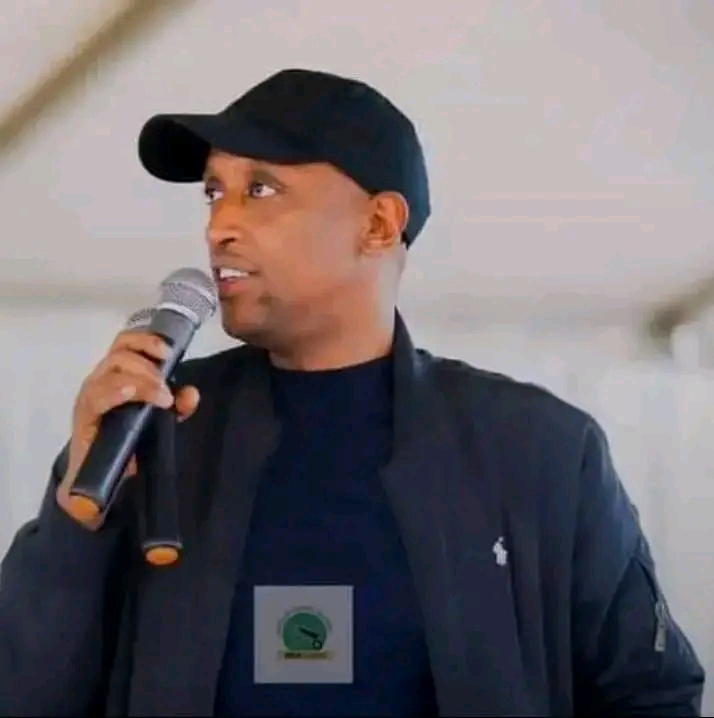
At the center of this storm was Shukri Osman Godana, a prominent Isiolo blogger known as Aba Tayya or Abu Ameer on social media, whose incisive commentary and grassroots influence have shaped public discourse in the region.
Once a staunch ally of Governor Guyo, Godana’s fallout with the county leader and his vocal support for the ousted County Assembly Speaker Mohamed Roba Qoto (MRQ) placed him at the forefront of the impeachment push.
However, in a recent Facebook post following the Kenyan Senate’s rejection of Guyo’s impeachment, Godana struck a reconciliatory tone, signaling a potential shift in Isiolo’s volatile political landscape.

In this article, we delve into the nuances of Godana’s message, the broader implications for Isiolo’s governance, and the path toward healing and unity in a county yearning for stability.
The Impeachment Saga: A Divisive Chapter
The attempt to impeach Governor Abdi Ibrahim Guyo, which gripped Isiolo for over a month, was more than a political maneuver—it was a test of the county’s democratic institutions and communal harmony.
The motion, spearheaded by sections of the Isiolo County Assembly and supported by vocal figures like Godana, centered on allegations of governance failures, mismanagement, and accountability deficits.
Godana, a prolific blogger and the CEO of Arid Times, was unrelenting in his critique, rallying public sentiment through his widely followed social media platforms. His posts, often sharp and unapologetic, resonated with a populace frustrated by perceived leadership lapses.
Yet, the Senate’s decision to reject the impeachment motion marked a turning point. Governor Guyo emerged politically unscathed, demonstrating resilience and strategic acumen in navigating the crisis.
For Godana, who had invested significant energy in the impeachment campaign, the outcome prompted reflection.
In his words, “Guyo has played his cards better. He has blocked the checkmate, held his ground, and emerged the political survivor.” This acknowledgment of Guyo’s political survival is not a concession of defeat but a pragmatic recognition of the need to move forward.
A Call for Peace and Unity
Godana’s post, titled “The Battle is Over. Now Let Isiolo Heal,” is a masterclass in balancing principle with pragmatism.
Written with poetic cadence and rooted in the cultural ethos of Isiolo’s diverse communities, the piece calls for an end to the acrimony that has fractured the county.
“Isiolo is too small to burn and too precious to gamble,” Godana writes, invoking the shared identity of the county’s residents—whether they kneel on the same prayer mats or dream under the same starry skies. His message is clear: political differences must not metastasize into lasting enmity.
The blogger’s appeal for reconciliation is particularly poignant given his history with Governor Guyo. Once a key supporter, Godana’s fallout with the governor remains shrouded in mystery, with no public explanation of the rift.
His support for Mohamed Roba Qoto, the ousted speaker, further deepened the divide. Yet, in his post, Godana transcends personal grievances, urging his followers and the broader Isiolo community to “turn the page.”
He acknowledges the emotional toll of the impeachment saga—division in mosques, tension in marketplaces, and suspicion in homes—and calls for a collective pause to rebuild trust.
A Roadmap for Governance Reform
While Godana extends an olive branch, he does not shy away from holding Governor Guyo accountable. His message to the governor is both congratulatory and cautionary: “Survival is not success.”
He urges Guyo to seize the moment to transform Isiolo’s governance by appointing competent, inclusive leaders, trimming bureaucratic excess, and fostering community-sensitive policies.
“Govern with calm, not contempt. Build bridges, not bunkers,” Godana advises, encapsulating the aspirations of a county weary of political brinkmanship.
This call for reform aligns with Godana’s broader advocacy through Arid Times, where he has consistently championed the rule of law, institutional integrity, and accountable leadership.
His platform has become a vital space for amplifying grassroots voices, particularly in a county where access to mainstream media is limited.
By framing his critique within a reconciliatory narrative, Godana positions himself as a bridge-builder, seeking to influence governance without perpetuating division.
The Cultural and Political Context
Isiolo’s political landscape is shaped by its ethnic diversity, with communities such as the Borana, Somali, Turkana, and Meru coexisting in a delicate balance.
Political contests often intersect with communal identities, making reconciliation efforts like Godana’s all the more significant.
His invocation of an Oromo proverb—“A man who does not make peace with his enemy will never sleep in peace”—resonates deeply in a region where cultural wisdom often guides conflict resolution.
Moreover, Godana’s shift in tone reflects a broader trend in Kenyan politics, where social media influencers and bloggers wield increasing power to shape narratives. As Abu Ameer, Godana commands a significant online following, making his call for peace a potential catalyst for change.
Whether this marks a full reconciliation with Governor Guyo remains unclear, but his willingness to extend dialogue suggests a maturing of Isiolo’s political discourse.
The Path Forward: Healing and Nation-Building
Godana’s message is a clarion call for Isiolo to move beyond the impeachment saga and focus on nation-building. He urges Governor Guyo to redeem his mandate by prioritizing transformative leadership that unites rather than divides.
For the people of Isiolo, this means demanding accountability while embracing dialogue. For Godana himself, it means continuing to speak truth to power while advocating for calm and unity.
The blogger’s journey—from a fierce critic to a voice of reconciliation—mirrors the complexities of Isiolo’s political evolution. His ability to navigate this transition without compromising his ideals underscores his influence as a thought leader.
As Isiolo heals, figures like Godana will play a pivotal role in shaping a future where governance is inclusive, accountable, and responsive to the needs of all.
What Next?
Shukri Osman Godana’s post-impeachment reflection is more than a personal statement; it is a roadmap for Isiolo’s recovery and renewal.
By calling for peace, urging governance reforms, and invoking shared cultural values, he offers a vision of a united Isiolo.
As Governor Guyo navigates the challenges of his second chance, and as the county’s communities seek to mend fractured bonds, Godana’s words serve as a reminder that politics, at its best, is not about endless battles but about building a better future. In Isiolo, the time for healing has begun—let dialogue prevail, let peace reign.
Share This Post