


Mombasa, Kenya| As Kenya gears up for the rollout of Grade 10 under the Competency-Based Education (CBE) system in January 2026, the Vice-Chancellor of the Technical University of Mombasa (TUM), Prof. Leila Abubakar, has called on schools in the coastal region to integrate the Blue Economy into their curricula, with a particular emphasis on marine studies.
This initiative aligns with the government’s prioritization of the Blue Economy as a driver of sustainable development and complements the CBE’s focus on tailoring education to students’ talents and career aspirations.
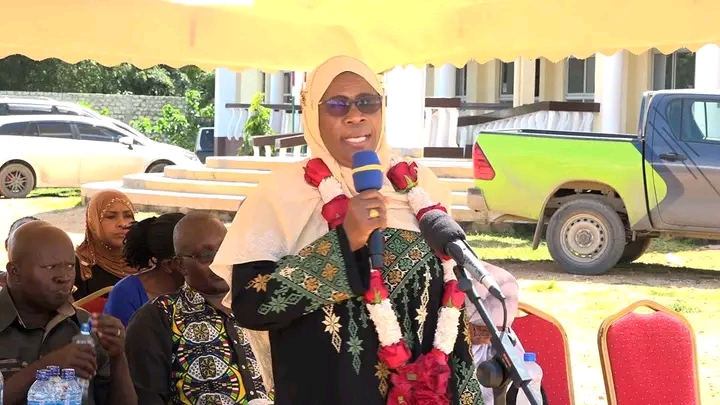
Speaking at a prize-giving ceremony at Mama Ngina Girls’ High School, Prof. Abubakar emphasized the transformative potential of the CBE system, which offers three distinct pathways for senior secondary students: STEM (Science, Technology, Engineering, and Mathematics), Social Sciences, and Arts and Sports Science.
She urged parents to actively guide their Grade 9 learners in selecting pathways that align with their strengths, while also advocating for the inclusion of Blue Economy principles—particularly marine studies—within these pathways to prepare students for emerging opportunities in coastal regions.
“The Blue Economy is a pathway coastal schools should adopt and be equipped to offer,” Prof. Abubakar stated. “It’s critical, especially now that the government is prioritizing the Blue Economy as a key pillar of economic growth. By integrating marine studies into the CBE framework, we can ensure that learners are ready for careers in fisheries, maritime transport, and marine conservation, among others.”
The Blue Economy and CBE: A Synergistic Approach
The Blue Economy encompasses the sustainable use of ocean resources for economic growth, job creation, and improved livelihoods while preserving marine ecosystems.
With Kenya’s 600-kilometer coastline along the Indian Ocean, sectors such as fisheries, aquaculture, maritime logistics, coastal tourism, and marine biotechnology hold immense potential for coastal communities.
The Kenyan government has prioritized the Blue Economy under its Vision 2030 blueprint, with initiatives like the Kenya Marine Fisheries and Socio-Economic Development (KEMFSED) project and the State Department for the Blue Economy driving progress.
The CBE system, designed to nurture creativity and individual strengths, provides an ideal framework for incorporating Blue Economy education.
By embedding marine-related subjects—such as marine biology, oceanography, fisheries management, and maritime engineering—into the STEM pathway, schools can equip students with skills tailored to the unique economic opportunities of the coastal region.
This alignment not only supports national development goals but also ensures that students are prepared for high-demand careers in marine-related industries.
“By the time learners reach university, they’ll have a clear understanding of their interests and career paths,” Prof. Abubakar noted. “Integrating Blue Economy principles into the CBE pathways will allow students to excel in fields that are both relevant to their region and aligned with their strengths.”
Supporting the Grade 10 Transition
Prof. Abubakar commended teachers in Grades 8 and 9 for their dedication in preparing learners for the transition to senior secondary school under the CBE system.
“Like any new system, there were challenges at the start. Parents were uncertain, but teachers have now become familiar with the pathways and are guiding learners accordingly,” she said.
She expressed confidence that the transition to Grade 10 will be smooth and impactful, particularly in coastal schools ready to implement the CBE model.
The Vice-Chancellor urged parents to collaborate with teachers to help Grade 9 learners make informed choices about their senior secondary pathways.
“Parents have a critical role in guiding their children to select pathways that align with their talents and aspirations,” she said. “In the coastal region, this means considering careers in the Blue Economy, which can offer sustainable livelihoods and contribute to national development.”
Preparing Coastal Schools for the Blue Economy
The Technical University of Mombasa is leading by example, offering programs in marine engineering, environmental science, and fisheries technology to support the Blue Economy.
Prof. Abubakar envisions coastal schools adopting a similar approach by integrating marine studies into their CBE offerings.
This could involve introducing subjects like sustainable fishing practices, marine ecosystem conservation, and maritime logistics, which are directly relevant to the region’s economic landscape.
However, implementing Blue Economy education comes with challenges. Many coastal schools lack the resources, trained teachers, and infrastructure needed to deliver specialized programs.
Prof. Abubakar called for increased investment in teacher training, curriculum development, and partnerships with industry stakeholders to address these gaps.
She also emphasized the need for awareness campaigns to encourage students and parents to embrace marine-related careers, which are often overshadowed by more conventional fields.
Empowering Coastal Communities
Integrating the Blue Economy into the CBE framework offers significant benefits for coastal communities.
By equipping students with skills in marine-related fields, schools can empower local youth to participate in emerging industries, reducing reliance on traditional sectors like subsistence fishing and tourism.
This shift could address persistent challenges such as unemployment and poverty, which disproportionately affect coastal regions.
Moreover, marine studies can foster environmental stewardship by educating students on the importance of preserving marine ecosystems.
With threats like overfishing, plastic pollution, and climate change impacting Kenya’s coastal waters, a new generation of environmentally conscious professionals could play a pivotal role in safeguarding these vital resources.
A Collaborative Vision for the Future
Prof. Abubakar’s advocacy underscores the need for a collaborative approach to education reform. By aligning the CBE system with Blue Economy priorities, coastal schools can prepare students for meaningful careers while contributing to sustainable development.
The Technical University of Mombasa is ready to partner with secondary schools, government agencies, and private sector stakeholders to make this vision a reality.
“This is not just about one institution or one region,” Prof. Abubakar said. “It’s about creating a movement where coastal schools see the Blue Economy as a pathway to prosperity and empower their students to lead in this space.”
As Kenya prepares for the Grade 10 rollout, the integration of Blue Economy principles into the CBE framework represents a forward-thinking approach to education.
By combining the flexibility of the CBE system with the economic potential of the Blue Economy, coastal schools can equip students to thrive in a rapidly evolving world while driving progress in their communities.
Share This Post