
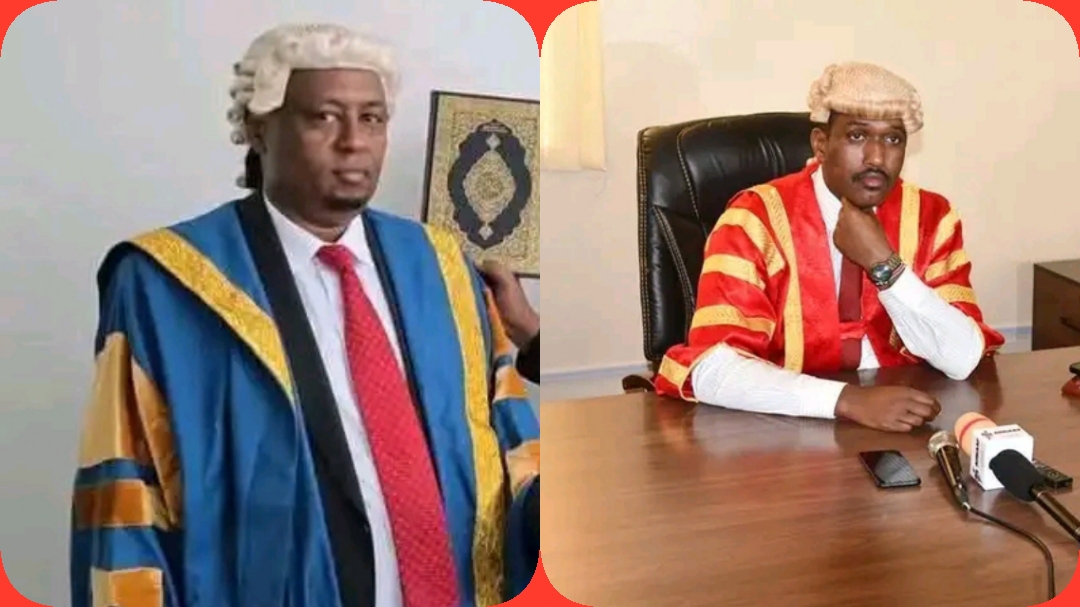

Isiolo, Kenya| In the sun-scorched plains of Isiolo, a political tempest brews, shaking the very foundations of county governance.
A courtroom petition now grips the public imagination, unraveling what many see as an audacious attempt to bend the law for personal conquest—at the heart of it, the embattled former Speaker Mohamed Roba Qoto, and the controversial ascension of Abdullahi Jaldesa Banticha.
The legal challenge—filed by Operation Linda Jamii, a vigilant community organization—contests the June 26 gazettement (Notice No. 8667) that declared Jaldesa the new Speaker of the Isiolo County Assembly.
The petition, filed with urgency by activist Fredrick Onyango Ogola, decries the appointment as not just irregular, but unconstitutional, warning of a creeping erosion of lawful governance.
“There was no vacancy to fill,” the petition thunders. “Mohamed Roba had neither resigned nor been lawfully removed. The gazettement is nothing short of legal heresy.”
In a sharp rebuke to what is described as a “forcible takeover,” the petition seeks to bar Jaldesa from stepping into the Speaker’s chair and demands accountability from those who facilitated his contested rise—naming 25 respondents, from Assembly Clerk Salad Boru Guracha to the Government Printer and 16 MCAs.
But this isn’t just a legal battle—it’s the climax of a political tragedy laced with betrayal and bruised ambition.
A Fall from Grace: Roba’s Gambit Backfires
Once seen as Governor Abdi Ibrahim Guyo’s right-hand man, Mohamed Roba’s fall has been swift and brutal.
In September 2022, he rose from humble beginnings as a law enforcement officer to Speaker—thanks to Guyo’s full-throated endorsement. But what began as a political alliance soon soured into open warfare.
Roba presided over a dramatic June 26 impeachment session against Governor Guyo, with 16 out of 18 MCAs voting for the ouster.
The Senate, however, shredded the motion on July 8, declaring it procedurally flawed and constitutionally unsound—a humiliating defeat for Roba, and a fatal misstep in his political calculus.
Insiders whisper that Roba, intoxicated by dreams of power, saw himself as Deputy Governor in a post-Guyo Isiolo.
There were even murmurs of a resignation letter—allegedly authored by Roba himself—later dismissed by him as a forgery. But the whispers refused to die down.
Some say he had already drawn battle lines to unseat Deputy Governor Dr. James Lowasa next, positioning himself as kingmaker in a coup that never came.
From Betrayal to Isolation: The End of a Reign
The backlash was immediate and severe. Arrested on June 23 in Machakos for allegedly threatening Governor Guyo, Roba cried foul, calling it a witch-hunt. But courts saw otherwise.
The High Court in Meru invalidated the impeachment process under his watch, citing outright contempt of judicial orders. Roba, alongside the motion’s sponsor, was ordered to appear in court on June 30 to answer for their defiance. It was, to many, the final nail.
“Roba’s ambition outpaced his loyalty,” said one political analyst under anonymity. “He betrayed the very hand that fed him—now he’s reaping a bitter harvest of political exile.”
A Speaker in the Shadows: Is Jaldesa the Legal Heir or a Pawn?
Abdullahi Jaldesa Banticha, a former MP for Isiolo South, now finds himself at the center of a constitutional tug-of-war. His appointment, championed by Governor Guyo as a necessary step to “restore order,” has drawn sharp criticism.
Senator Fatuma Dullo told the Senate that only two MCAs were present during Jaldesa’s so-called election—an eyebrow-raising detail that has since cast serious doubts on the entire process.
“The Government Printer gazetted a Speaker elected by only two members,” she noted, calling it “a travesty of legislative practice.”
The gazettement, signed by Clerk Salad Guracha—himself a survivor of Roba’s earlier suspension—has been dismissed by 16 MCAs as an abuse of due process. According to them, no valid sitting occurred, and Roba remains the lawful Speaker, despite his mounting legal woes.
Still, Governor Guyo has publicly thrown his weight behind Jaldesa, urging him to lead with “fairness and commitment to development.” Yet critics warn this could be seen as entrenching a pliant leadership, loyal not to the Constitution, but to the Executive.
Governance in Crisis: Two Speakers, Two Clerks, and a County in Chaos
The legal drama has plunged Isiolo into administrative disarray, with dual claimants to both the Speaker and Clerk offices. Senate Speaker Amason Kingi has called for urgent reconciliation, urging Governor Guyo to extend an olive branch to the MCAs and Senator Dullo.
“The county must rediscover unity to overcome this paralysis,” Kingi cautioned.
Meanwhile, Justice Bahati Mwamuye has declined to reinstate Roba, instead ordering all parties in the case to respond by July 21, with a key mention date set for August 11. The outcome could reshape the legal landscape of devolution across Kenya.
A Tale Etched in Ambition and Miscalculation
As the court deliberates, the story of Isiolo’s Speaker saga reads like a Shakespearean tragedy—loyalty corrupted by vaulting ambition, power squandered by impatience, and institutions strained by the weight of personal vendettas.
Mohamed Roba’s rise and fall offer a sobering lesson: in the volatile theatre of county politics, betrayal comes with a steep price—and those who seek to overthrow their benefactors may soon find themselves cast out, not as kings, but as cautionary tales.
For Isiolo’s residents, the hope now lies not in political intrigue, but in the courts—where the rule of law must stand above personal crusades, and where power, once again, must bow to principle.
Share This Post