
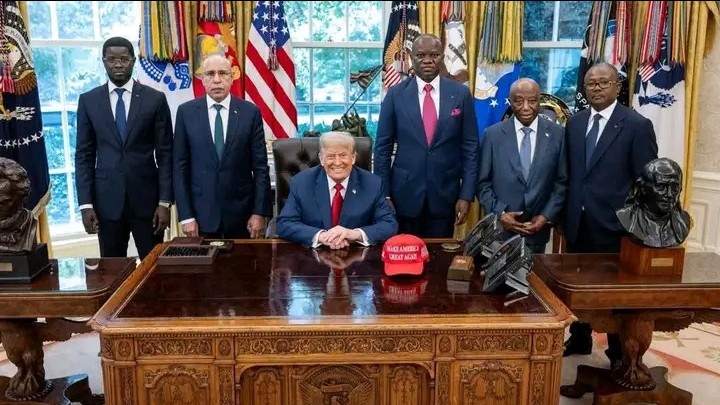

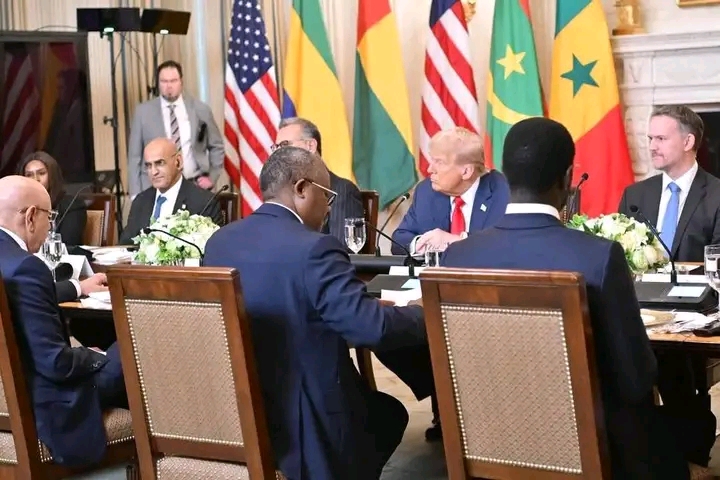
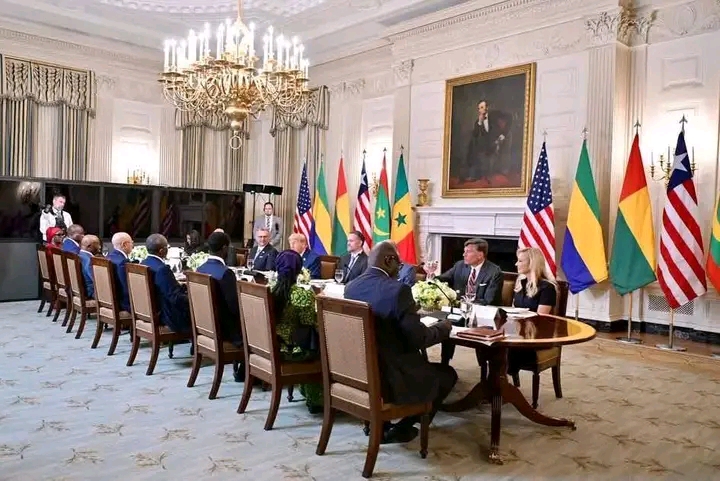
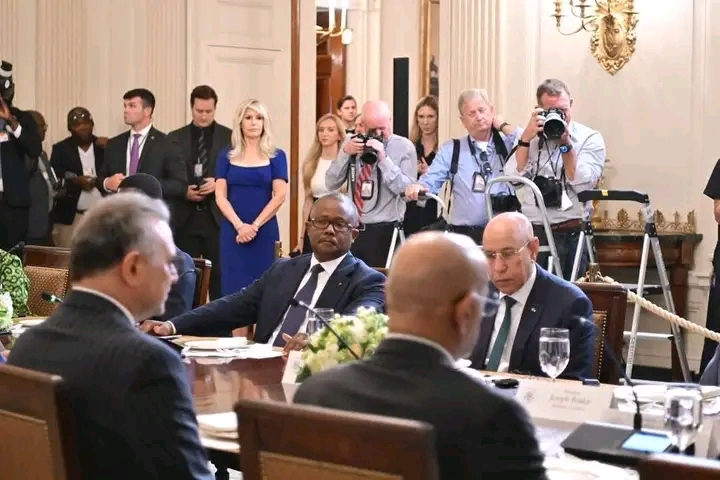
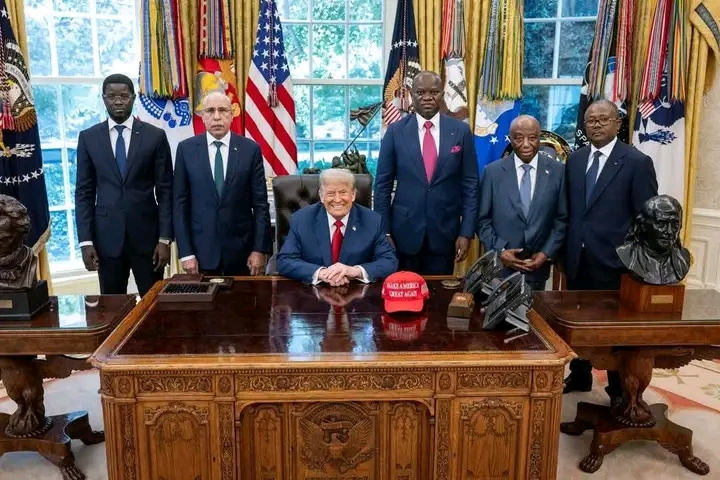
In a landmark meeting at Mar-a-Lago, President Donald Trump hosted an unprecedented summit with leaders from Gabon, Liberia, Guinea-Bissau, Senegal, and Mauritania, marking a significant step toward strengthening U.S.-Africa relations.
The discussions, which focused on economic partnerships, peace initiatives, and resource development, underscored Africa’s growing importance on the global stage and the United States’ renewed interest in fostering mutually beneficial ties.
Trump’s remarks highlighted Africa’s “very valuable land, great minerals, great oil deposits, and wonderful people,” setting an optimistic tone for deeper collaboration.
A Vision for Economic Partnership
A central theme of the summit was Africa’s untapped economic potential. Trump emphasized the continent’s “great economic potential,” signaling a shift toward viewing Africa not just as a recipient of aid but as a hub for investment and innovation.
The African leaders echoed this sentiment, presenting their nations as resource-rich and open for business.
Gabon’s President Brice Oligui Nguema passionately articulated a vision of self-reliance, stating, “We, as Africans, are not poor; we have minerals and other resources; we want partnerships to help us process our resources locally.”
He extended an open invitation to American investors, particularly in electricity production, to bolster Gabon’s infrastructure and economy.
Nguema also issued a subtle warning to Trump, noting that if the U.S. fails to seize these opportunities, other global powers might step in and “beat the U.S. to it.”
Similarly, Liberia’s President Joseph Boakai highlighted his country’s vast mineral wealth and welcomed U.S. investment in geological surveys to map these resources. “We are open to partnerships that will bring mutual benefits,” Boakai said, earning praise from Trump for his “great command of the English language.”
Mauritania’s President Mohamed Ould Ghazouani also spotlighted his country’s mineral wealth, particularly manganese and lithium, as key areas for potential U.S. investment.
Senegal’s President Bassirou Diomaye Faye positioned his country as a prime destination for technological and economic investment.
“Tech companies are welcome to make Senegal’s Dakar city a technological hub,” Faye told Trump, emphasizing the country’s oil and mineral resources as additional draws for American investors.
Peace and Diplomacy on the Horizon
Beyond economic discussions, the summit addressed critical peace and security issues.
Trump announced that the presidents of the Democratic Republic of Congo (DRC) and Rwanda are poised to sign a peace deal in the “coming weeks,” a development that could stabilize a region long plagued by conflict.
He also pledged U.S. support to “facilitate peace” in Sudan and Libya, signaling a proactive diplomatic role for the United States in addressing Africa’s most pressing conflicts.
These commitments reflect a broader strategy to position the U.S. as a key partner in fostering stability across the continent, potentially countering the influence of other global powers like China and Russia, which have expanded their presence in Africa in recent years.
Addressing Visa Overstays and Immigration
The summit also tackled the issue of visa overstays, a topic Trump raised as a priority in discussions with the African leaders.
While specifics were not disclosed, the inclusion of this issue suggests a focus on strengthening bilateral agreements to address immigration concerns while fostering goodwill.
This pragmatic approach underscores the multifaceted nature of the talks, balancing economic and diplomatic priorities with practical governance issues.
A Call for Strategic Engagement
The African leaders’ messages were clear: Africa is open for business, but it seeks partnerships that prioritize local processing and value addition over raw resource extraction.
By inviting U.S. companies to invest in sectors like energy, technology, and mining, these leaders are positioning their nations as equal partners in global trade.
The emphasis on local processing aligns with broader African Union goals to boost industrialization and reduce dependency on exporting unprocessed commodities.
Trump’s engagement with these leaders signals a potential shift in U.S. policy toward Africa, moving away from traditional aid-centric models toward investment-driven partnerships.
His recognition of Africa’s “wonderful people” and vast resources sets a positive tone, but the success of this approach will depend on concrete actions and follow-through from both sides.
Why This Matters for U.S.-Africa Relations
The summit comes at a pivotal moment when global competition for Africa’s resources and markets is intensifying. With China’s Belt and Road Initiative and Russia’s growing diplomatic outreach, the U.S. faces pressure to assert its influence through strategic investments and partnerships.
The leaders’ invitations to American businesses—coupled with Trump’s enthusiasm for Africa’s economic potential—suggest a window of opportunity for the U.S. to redefine its role on the continent.
For American businesses, the summit highlights lucrative opportunities in sectors like renewable energy, technology, and critical minerals, which are increasingly vital for global supply chains.
For African nations, partnerships with the U.S. could provide the capital and expertise needed to unlock their resource wealth while fostering sustainable development.
Looking Ahead
As the U.S. and African nations explore new avenues for collaboration, the outcomes of this summit could shape the trajectory of bilateral relations for years to come.
The anticipated DRC-Rwanda peace deal, potential U.S. mediation in Sudan and Libya, and the push for investment in Africa’s resources and infrastructure all point to a dynamic and evolving partnership.
For now, the ball is in the court of American policymakers and businesses. Will they seize the opportunity to invest in Africa’s future, or will other global players fill the gap? As President Nguema warned, the window for action is narrow, and the stakes are high.
Share This Post