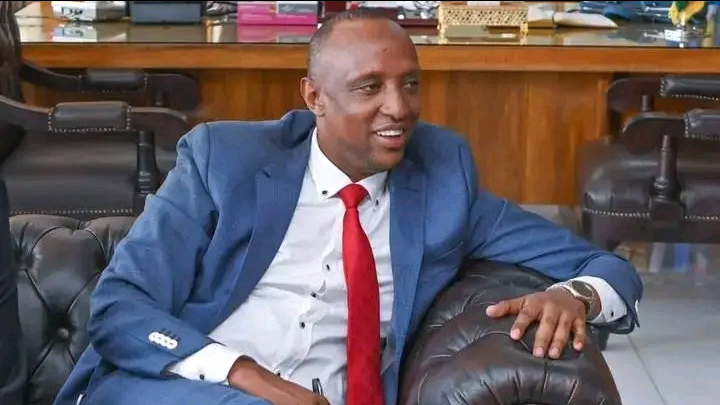
Isiolo County| In the wake of the recent impeachment(which has since been contested by Salad Boru, the substantive county assembly clerk) of Isiolo Governor Abdi Ibrahim Guyo, political analysts, bloggers, and Northern Kenya stakeholders have weighed in on what is being described by some as a thinly veiled political witch-hunt rather than a legitimate exercise in accountability.
One of the most vocal figures is Drosophila Melanogaster, a respected political blogger known for his insight into Northern Kenya politics.
In a strongly worded statement, he claimed the impeachment effort against Governor Guyo was less about integrity and governance, and more about settling personal and political scores—both within Isiolo County and from external actors with vested interests.
“I stand with Governor Abdi Hassan Guyo not because he’s a saint, but because he’s being fought by bad actors,” Melanogaster stated. “There’s no question of accountability here. No concern for public interest. This was a targeted, politically engineered takedown.”
📷Govenor Abdi Ibrahim Guyo; Isiolo County Governor
Accusations of External Interference and Political Retaliation
According to Melanogaster, powerful political interests beyond Isiolo were instrumental in orchestrating the governor’s impeachment.
Chief among them is Marsabit Governor Mohamud Ali and elements within the United Democratic Movement (UDM) party. Their alleged motivation? Retaliation for remarks Governor Guyo made earlier this year.
During President William Ruto’s development tour of Mandera County in February, Governor Guyo reportedly dismissed UDM as “a village party,” a statement that sparked backlash among the party’s top brass.
Since then, insiders suggest that key UDM figures have sought to undermine Guyo’s leadership at every turn.
Melanogaster further challenged the legitimacy of the impeachment by contrasting it with governance failures in neighboring counties.
He highlighted Mandera and Marsabit counties as regions plagued by systemic corruption and deteriorating public services—yet their leadership continues largely unchallenged.
“If this were about accountability, the process should have begun in Mandera, where billions allocated for water and health have vanished. Or in Marsabit, where development has stagnated since the exit of Ukur Yatani in 2017,” he argued.
“In Marsabit, public servants just received their February salaries last week. Why isn’t anyone calling for accountability there?”
The blogger further alleged that Mandera’s leadership has been shielded from scrutiny by UDM heavyweights, likening their protection to “family-planning-like cover” — a metaphor for tight political insulation from consequences.
Guyo’s Leadership Record and the Power Struggle in Isiolo
Governor Abdi Guyo, who was elected on a Jubilee ticket before aligning with President Ruto’s Kenya Kwanza alliance, has often been perceived as a pragmatist with a bold leadership style.
His administration has prioritized infrastructure, inter-community cohesion, and streamlining county operations. However, these efforts have occasionally put him at odds with entrenched political interests, both locally and regionally.
“Guyo is not being fought because he failed,” Melanogaster concluded. “He’s being fought because he dared to challenge the arrogance of political cartels who believe Northern Kenya belongs to them.”
A County in Political Limbo
As Isiolo navigates the political storm triggered by the impeachment, many residents are left wondering whether the process truly reflected their interests—or merely served the ambitions of a few power-brokers.
The Senate,(if admitted at all as there is reportedly a court injunction in place barring the county assembly from undertaking such exercise) is now expected to deliberate on the matter and determine the legitimacy of the county assembly’s decision.
With tensions high and regional politics deeply intertwined, the fate of Governor Guyo may well shape the broader discourse on governance, equity, and political accountability in Northern Kenya.