
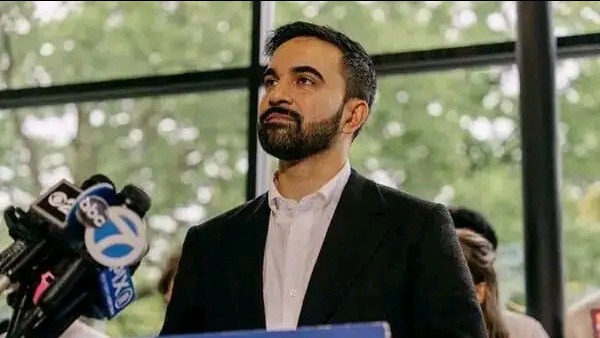

In a political upset that has sent shockwaves through New York City and beyond, 33-year-old State Assemblyman Zohran Mamdani decisively defeated former Governor Andrew Cuomo in the Democratic primary for New York City mayor on June 24, 2025, marking a pivotal moment in the city’s political evolution and signaling a broader shift within the Democratic Party.
Mamdani, a Democratic Socialist who has represented parts of Queens since 2021, clinched 43.5% of the vote compared to Cuomo’s 36.4%, with 93% of ballots counted, according to the Associated Press. Despite no candidate reaching the 50% threshold required under the city’s ranked-choice voting system, Mamdani’s margin was decisive enough to prompt Cuomo’s concession late Tuesday night.
A Grassroots Movement with Progressive Ambition
Launched in October 2024, Mamdani’s insurgent campaign grew from relative obscurity into a dynamic, youth-driven movement that galvanized diverse constituencies across the city. His platform centered on affordability and social equity, with bold policy proposals such as:
- Fare-free MTA buses
- Tuition-free City University of New York (CUNY)
- City-run grocery stores
- Rent freezes for struggling tenants
Positioning himself as the candidate of economic justice, Mamdani struck a chord with voters who feel excluded by New York’s entrenched political machinery. His message resonated particularly with younger, progressive, and racially diverse voters across Queens, Brooklyn, and Manhattan, drawing significant backing from white, Latino, and Asian communities.
Mamdani’s campaign, which he described as “joyous and defiant,” used viral social media content, Bollywood-themed multilingual advertising in Urdu and Hindi, and high-profile endorsements from progressive icons like Alexandria Ocasio-Cortez and Bernie Sanders. A volunteer base of 40,000 activists reportedly knocked on one million doors, underscoring the scale of his grassroots operation.
If elected in the November general election, Mamdani would become New York City’s first Muslim and Indian-American mayor, a historic milestone in the city’s long, multicultural political tapestry.
Cuomo Concedes—but Doesn’t Quit
Despite entering the race as the presumed frontrunner, Cuomo struggled to overcome the political fallout from his 2021 resignation amid multiple sexual harassment allegations and his controversial management of the COVID-19 pandemic. While he secured early institutional support, including from major unions like 32BJ SEIU and the Hotel and Gaming Trades Council, Cuomo’s campaign lacked the visible momentum and grassroots enthusiasm of Mamdani’s movement.
Speaking to supporters at the Carpenters Union Hall just over an hour after polls closed, Cuomo conceded defeat with uncharacteristic humility:
“Tonight was not our night. Tonight was Assemblyman Zohran Mamdani’s night. He deserved it. He won.”
However, sources confirmed by June 27 that Cuomo would remain on the general election ballot as an independent, setting up a potential three-way contest against Mamdani and incumbent Mayor Eric Adams, who is also running as an independent after opting out of the Democratic primary.
Cuomo’s team believes a broader general electorate—less ideologically rigid than primary voters—may be wary of Mamdani’s transformative agenda. They see an opportunity to appeal to moderates, centrists, and disillusioned Democrats, particularly by highlighting Mamdani’s positions on housing policy, government intervention, and his criticism of Israel, which has drawn scrutiny from pro-Israel groups and segments of the Jewish community.
Progressive Wave Gains Institutional Ground
Mamdani’s primary victory has already begun to consolidate Democratic support behind him. On June 27, just days after the primary, 32BJ SEIU and the Hotel and Gaming Trades Council—previous Cuomo backers—formally switched endorsements to Mamdani, citing his commitment to working-class concerns and affordable living.
“Zohran has united and inspired New Yorkers with a vision that speaks to our everyday struggles,” said 32BJ president Manny Pastreich.
Mamdani has also gained endorsements from influential Democrats like Rep. Jerry Nadler and Brooklyn Democratic leader Rodneyse Bichotte Hermelyn, though key national figures such as Governor Kathy Hochul, Senate Majority Leader Chuck Schumer, and House Minority Leader Hakeem Jeffries have so far praised Mamdani’s campaign without offering formal endorsements.
Nationally, Mamdani’s win has reignited debate over the Democratic Party’s ideological future. While progressives hail it as a rejection of establishment politics, some analysts, including political strategist Basil Smikle, caution that Cuomo’s scandal-ridden history played a significant role in the outcome.
Meanwhile, Republicans have moved swiftly to define Mamdani as a threat to centrist values. Stephen Miller, a top aide in the Trump administration, labeled him an “anarchist-socialist,” underscoring the GOP’s intent to nationalize his image in the run-up to the 2026 midterms.
A Historic and Contentious General Election Ahead
The general election in November is shaping up to be one of the most ideologically charged and historically significant in New York City’s modern political era.
Mamdani will face:
- Eric Adams, the incumbent mayor seeking a second term as an independent centrist, despite low approval ratings and lingering perceptions of corruption (federal bribery charges against him were dropped earlier this year).
- Andrew Cuomo, running as an independent, banking on name recognition and the support of moderate voters wary of both Mamdani’s progressivism and Adams’s controversies.
- Curtis Sliwa, the Republican nominee, who has attacked Mamdani with inflammatory rhetoric, often employing anti-Muslim and anti-immigrant tropes.
Despite these challenges, Mamdani appears well-positioned heading into the general election. While final ranked-choice tabulations are still pending, his primary lead is statistically insurmountable.
His campaign now faces the daunting task of broadening its coalition to appeal beyond the progressive base, addressing concerns around public safety, economic stability, and housing while fending off attacks from both the center and the right.
A Blueprint for a New Political Era?
Regardless of the outcome in November, Mamdani’s meteoric rise has already altered the landscape of New York City politics and offered a blueprint for a new generation of Democrats—diverse, digitally native, and deeply connected to economic justice.
His primary win demonstrates the enduring power of grassroots mobilization in an era of political cynicism and voter fatigue. Whether that momentum can carry him across the finish line in a fractured and fiercely contested general election remains to be seen.
But for now, Zohran Mamdani’s name is etched into the annals of American political upsets—and the future of urban progressive politics may well run through New York City.
Share This Post