
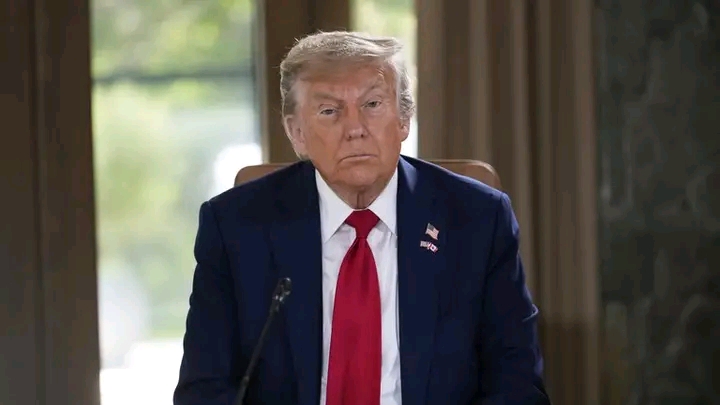

In a dramatic escalation of tensions in the Middle East, U.S. President Donald Trump announced on Sunday, June 22, 2025, that American forces conducted large-scale airstrikes targeting three key Iranian nuclear facilities: Fordow, Natanz, and Esfahan.
The announcement, made via Trump’s Truth Social platform, confirmed the U.S. military’s involvement in a coordinated bombing campaign alongside Israeli forces, marking the first American air raids on Iranian soil in this ongoing conflict.
Details of the U.S. Airstrikes
According to President Trump’s statement, the operation was a resounding success, with a “full payload of BOMBS” dropped on the primary target, Fordow, a heavily fortified underground uranium enrichment facility.
The strikes also hit Natanz, Iran’s main nuclear enrichment complex, and Esfahan, a key research and production site for nuclear technology.
Trump emphasized that all U.S. planes involved in the operation had safely exited Iranian airspace and were en route back to their bases.
“We have completed our very successful attack on the three Nuclear sites in Iran, including Fordow, Natanz, and Esfahan,” Trump wrote. “All planes are now outside of Iran air space. A full payload of BOMBS was dropped on the primary site, Fordow. All planes are safely on their way home.”
The president praised the precision and capability of the U.S. military, stating, “Congratulations to our great American Warriors. There is not another military in the World that could have done this.”
In a surprising pivot, Trump concluded his announcement with a call for de-escalation, urging, “NOW IS THE TIME FOR PEACE! Thank you for your attention to this matter.”
U.S. Joins Israel’s Ongoing Campaign
The U.S. airstrikes come amid a week-long Israeli bombing campaign targeting Iranian nuclear facilities and military infrastructure.
Israel, which has long viewed Iran’s nuclear program as an existential threat, has intensified its military operations in recent days.
Trump’s confirmation of U.S. involvement signals a significant escalation, aligning American forces with Israel in a high-stakes confrontation with Tehran.
While specific details about the scope of the U.S. operation remain limited, the coordinated nature of the strikes suggests a strategic alignment between Washington and Jerusalem.
The decision to target Fordow, Natanz, and Esfahan underscores the focus on crippling Iran’s nuclear capabilities, which the U.S. and Israel have accused of being a cover for developing nuclear weapons—a claim Iran has consistently denied.
Iran’s Warnings and Regional Tensions
The Middle East is now bracing for Iran’s response, as Tehran had previously warned of severe consequences should the U.S. participate in Israel’s “war of aggression.”
Iranian officials had explicitly threatened to target American military bases in the region if Trump authorized strikes on its nuclear sites.
As of 03:25 AM EAT on June 22, 2025, Iranian authorities have yet to issue an official statement regarding the U.S. airstrikes, leaving the region in a state of heightened uncertainty.
The timing of the U.S. strikes is particularly sensitive, as Iran has been engaged in delicate diplomatic efforts to revive the 2015 Joint Comprehensive Plan of Action (JCPOA), commonly known as the Iran nuclear deal.
The Trump administration’s withdrawal from the agreement in 2018 had already strained U.S.-Iran relations, and these airstrikes are likely to further complicate any prospects for diplomacy.
Strategic Implications and Global Reactions
The U.S. decision to bomb Iranian nuclear facilities raises critical questions about the trajectory of the conflict and its broader implications for global security.
Analysts are closely monitoring whether Iran will retaliate militarily, potentially targeting U.S. or Israeli assets in the region, or opt for a diplomatic response to rally international support against the strikes.
The international community has yet to respond formally to the developments, but the airstrikes are expected to dominate discussions at the United Nations and other global forums.
Allies of the U.S. and Israel, as well as nations critical of their actions, will likely weigh in on the legality and consequences of the military operation.
Trump’s Call for Peace: A Contradiction?
President Trump’s call for peace in the aftermath of the airstrikes has sparked debate among observers.
While the strikes represent a significant act of aggression, Trump’s messaging appears to frame the operation as a decisive action to pave the way for negotiations.
However, the likelihood of Tehran engaging in talks following such a provocative move remains uncertain.
The president’s rhetoric also reflects his broader foreign policy approach, which blends military assertiveness with appeals for dialogue.
Whether this strategy will defuse tensions or further inflame the conflict remains to be seen.
What Happens Next?
As the world awaits Iran’s response, the Middle East stands on the brink of a potential wider conflict.
The U.S. and Israel’s coordinated strikes on Iran’s nuclear infrastructure have upended the regional status quo, raising the stakes for all parties involved. Key questions include:
- Will Iran retaliate? Tehran’s next moves could range from direct military action to cyberattacks or proxy operations through allied militias in the region.
- How will the international community react? The U.N. Security Council may convene to address the crisis, with Russia and China likely to condemn the U.S. and Israeli actions.
- Can diplomacy prevail? Trump’s call for peace may signal an openness to negotiations, but Iran’s willingness to engage after such a significant escalation is questionable.
For now, the region remains on edge, with the world watching closely for developments that could reshape the geopolitical landscape.
Stay tuned for updates as more details emerge about the U.S. airstrikes on Iran and their aftermath.
Share This Post