
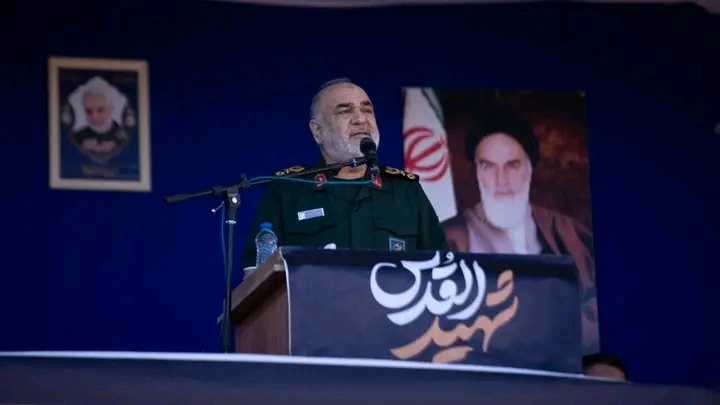

In a dramatic escalation of regional hostilities, Israeli airstrikes targeting military and nuclear facilities in Iran have reportedly killed Major General Hossein Salami, the commander of the Islamic Revolutionary Guard Corps (IRGC), along with other senior Iranian officials.
The strikes, described by Israel as a “preemptive” operation, have sparked global concern and come just days before critical nuclear negotiations between Iran and the United States.
Targeted Strike on Iranian Leadership
According to multiple Iranian news outlets, Major General Salami, a central figure in Iran’s military establishment, was killed when Israeli warplanes launched coordinated strikes on high-value targets in Tehran and other strategic locations across the country early Friday morning.
Salami, who had led the IRGC since 2019, played a pivotal role in shaping Iran’s regional security posture and was considered a key architect of its asymmetric warfare strategy.
Among the other casualties reportedly confirmed by Press TV are Major General Gholam Ali Rashid, Deputy Chief of Staff of the Iranian Armed Forces, and prominent nuclear scientists Mohammad Mehdi Tehranchi and Fereydoon Abbasi.
The latter had previously served as the head of Iran’s Atomic Energy Organization and was a former member of the Iranian parliament.
The Iranian government has yet to issue an official statement confirming the deaths or the extent of the damage. However, local reports indicate that several residential areas in Tehran were also hit, with civilian casualties feared.
The scope of the destruction and the number of fatalities remain unclear as authorities work to assess the aftermath.
Israel Cites Nuclear Threat as Justification
The Israel Defense Forces (IDF) confirmed that its air force executed a series of strikes on what it described as “military and nuclear infrastructure” in Iran, including the heavily fortified uranium enrichment facility in Natanz.
Israeli Prime Minister Benjamin Netanyahu said the operation was launched to “thwart Iran’s imminent threat” and prevent the Islamic Republic from acquiring a nuclear weapon.
“This was a preemptive action taken in defense of our people and our future,” Netanyahu said in a televised address. “We will not allow Iran to cross the nuclear threshold.”
Israel has long viewed Iran’s nuclear program as an existential threat and has previously carried out covert sabotage operations, including cyberattacks and targeted assassinations of nuclear scientists.
However, Friday’s direct military action marks a significant and unprecedented escalation.
Regional and Global Repercussions
The timing of the strike is particularly sensitive, coming just days before the scheduled resumption of nuclear talks between the U.S. and Iran in Oman.
The sixth round of negotiations aims to revive the Joint Comprehensive Plan of Action (JCPOA), the 2015 nuclear deal that former President Trump abandoned in 2018.
U.S. President Donald Trump, who remains a vocal critic of Iran’s nuclear ambitions, recently accused Tehran of “slow-walking” the negotiations.
Speaking on Friday, U.S. Secretary of State Marco Rubio stated that Washington had no involvement in the Israeli strikes and urged all sides to exercise restraint.
“This was an Israeli decision made independently,” Rubio said. “The United States is committed to diplomatic efforts, but we are also prepared for any eventuality.”
Iran Maintains Peaceful Intentions
Iran has consistently denied any intention to develop nuclear weapons, asserting that its nuclear activities are strictly for peaceful, civilian purposes.
Iranian leaders have maintained that their research and enrichment efforts are legal under the Nuclear Non-Proliferation Treaty (NPT), to which Iran is a signatory.
However, Western powers, including the United States and European allies, remain skeptical of Iran’s intentions, especially in light of recent increases in uranium enrichment levels that exceed JCPOA limits.
What Comes Next?
The reported killing of top military and nuclear figures represents a critical turning point in the long-standing Israel-Iran confrontation.
Analysts warn that the attack could trigger retaliatory actions by Tehran and potentially ignite a broader conflict across the Middle East.
Iran’s response—whether through diplomatic channels, covert operations, or direct military retaliation—will likely shape the next phase of the standoff.
Meanwhile, the viability of upcoming nuclear negotiations hangs in the balance, with the international community watching closely.
As tensions soar, the world braces for the potential fallout of what may become one of the most consequential regional flashpoints in recent years.
Share This Post