
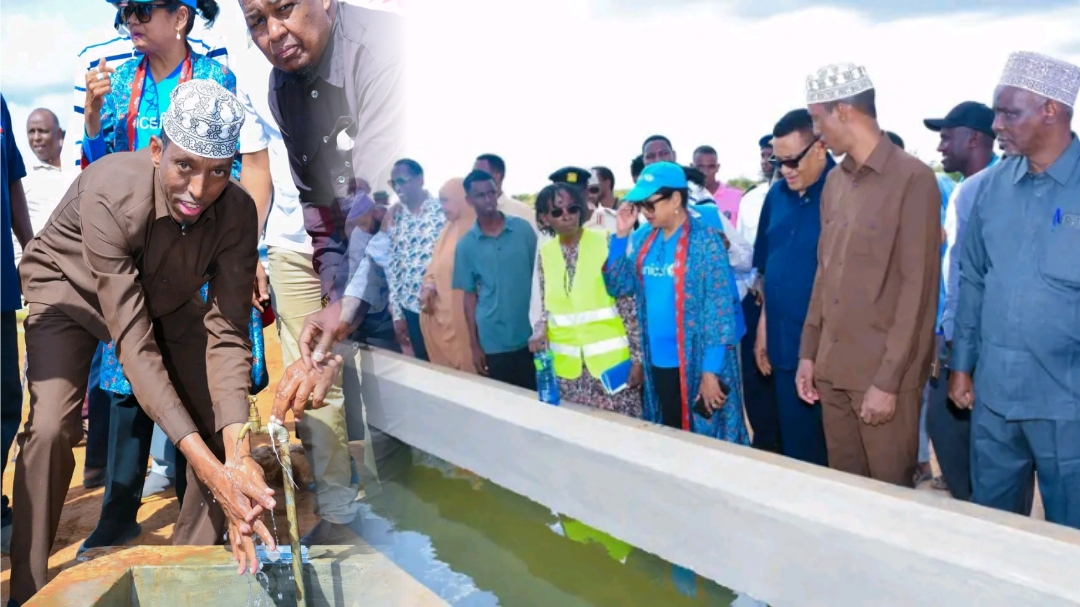

In a landmark step toward addressing chronic water scarcity in one of Kenya’s most arid regions, Wajir Deputy Governor Ahmed Muhumed officially commissioned Phase I of the Griftu Water Supply Project on Tuesday, May 27, 2025.
The initiative, a collaborative effort between the Wajir County Government, the United Nations Development Programme (UNDP) Regional Resilience Hub for Africa, and UNICEF Kenya, was handed over by Dr. Zeynu Ummer of UNDP and Shaheen Nilofer, UNICEF Kenya Representative.
This ambitious project promises to transform lives by providing sustainable water access to approximately 3,000 residents and over 120,000 livestock in Griftu and its surrounding communities, bolstering resilience in a region frequently plagued by drought.
A Game-Changer for Water Security
The Griftu Water Supply Project is a beacon of hope for Wajir County, where water scarcity has long been a barrier to development and community well-being.
Phase I of the initiative introduces state-of-the-art infrastructure designed to deliver clean, reliable water to both people and livestock, addressing immediate needs while laying the foundation for long-term sustainability.
At the heart of the project is a 454-meter-deep solar-powered borehole, equipped with a 31 KVA backup generator to ensure uninterrupted operation.
The system feeds two elevated water tanks, each with a 60,000-liter capacity, capable of storing substantial reserves to meet community demand. A 3-kilometer pipeline extends the reach of the water supply, ensuring accessibility across a wider area.
The project also includes a range of auxiliary infrastructure to maximize its impact. A 16-tap water kiosk provides convenient access for residents, while two water trucking points facilitate distribution to remote areas.
Water troughs have been installed to cater to the region’s significant livestock population, a critical component of the local economy.
Additional facilities include a power control house, a guard house, sanitation units, and a secure perimeter fence to protect the infrastructure from vandalism and environmental wear.
A Collaborative Triumph
The Griftu Water Supply Project is a testament to the power of partnerships in addressing pressing developmental challenges.
Spearheaded by the Wajir County Government, the initiative received critical support from the UNDP Regional Resilience Hub for Africa and UNICEF Kenya.
These organizations brought technical expertise, funding, and a shared commitment to improving water security in vulnerable regions.
During the commissioning ceremony, Deputy Governor Muhumed expressed profound gratitude to the development partners for their unwavering support.
“Water is life, and this project represents a crucial step toward building a more resilient, self-reliant, and prosperous future for the people of Wajir,” he said.
He emphasized that the initiative aligns with the county’s broader strategy to strengthen community resilience through sustainable water solutions, particularly in areas prone to climate-induced shocks like drought.
Dr. Zeynu Ummer of UNDP highlighted the project’s role in advancing sustainable development goals, noting that access to clean water is fundamental to health, education, and economic stability.
Shaheen Nilofer of UNICEF Kenya echoed this sentiment, underscoring the organization’s commitment to supporting vulnerable populations, especially children, through improved water and sanitation infrastructure.
Impacting Lives and Livelihoods
The Griftu Water Supply Project is poised to deliver far-reaching benefits to the region.
By providing clean water to over 3,000 residents, the initiative will reduce the burden of waterborne diseases, improve hygiene, and free up time for women and children who previously spent hours fetching water from distant sources.
For the more than 120,000 livestock supported by the project, access to reliable water sources will enhance animal health and productivity, safeguarding the livelihoods of pastoralist communities that form the backbone of Wajir’s economy.
The project’s focus on sustainability is particularly significant in a region vulnerable to climate change. The solar-powered borehole reduces reliance on fossil fuels, lowering operational costs and minimizing environmental impact.
The 31 KVA backup generator ensures continuity of service during periods of low sunlight, while the secure fencing and guard house protect the infrastructure from potential threats, ensuring its longevity.
A Step Toward a Resilient Future
The commissioning of Phase I marks a significant milestone in Wajir County’s journey toward water security, but it is only the beginning.
The project is part of a broader effort to address the systemic challenges of drought and water scarcity in the region.
By investing in sustainable infrastructure and fostering partnerships with global organizations, Wajir is laying the groundwork for a future where communities can thrive despite environmental challenges.
Deputy Governor Muhumed emphasized that the Griftu Water Supply Project is a model for other drought-prone regions.
“This initiative demonstrates what is possible when we work together to prioritize the needs of our people,” he said. “We are committed to expanding such projects to ensure every resident of Wajir has access to clean water.”
As Phase I begins to deliver tangible benefits, plans for subsequent phases are already underway, with the potential to scale up infrastructure and extend services to additional communities.
The success of the Griftu project serves as a powerful reminder of the transformative impact of targeted, collaborative interventions in addressing some of the world’s most pressing challenges.
A Blueprint for Sustainable Development
The Griftu Water Supply Project stands as a shining example of how innovation, partnership, and community-driven solutions can create lasting change.
By addressing the critical need for water in one of Kenya’s most arid regions, the initiative not only improves quality of life but also strengthens the region’s resilience to climate shocks.
As Wajir County and its partners continue to build on this success, the project offers a blueprint for sustainable development that could inspire similar efforts across Africa and beyond.
Share This Post