

In democratic governance, parliamentary oversight serves as a vital pillar—meant to safeguard public resources, enforce accountability, and fortify the social contract between elected leaders and their constituents.
Yet, when wielded recklessly, this powerful tool risks morphing into an instrument of political vendetta.
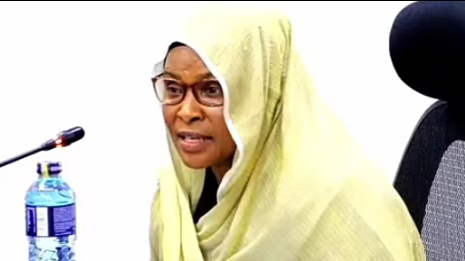
Such is the unsettling trajectory revealed in the unfolding Isiolo Stadium saga, where Senator Fatuma Dullo’s conduct epitomizes the dangerous transformation of oversight into orchestrated political persecution.
At the heart of this controversy is the Senator’s performance during a recent session of the Senate Committee probing the stalled Isiolo Stadium project.
Far from exhibiting an impartial quest for accountability, Dullo’s theatrics exposed a premeditated attempt to corner, accuse, and politicize—a textbook case of a legislator weaponizing public frustration to wage a personal war cloaked in the guise of civic concern.
Her calculated and emotionally charged inquiry to Abdi Mohamud, the Ethics and Anti-Corruption Commission (EACC) CEO—”Chair, I want to frame one more question to the CEO before I conclude. The Stadium. The Isiolo Stadium!“—was less a question and more an ambush.
It was not framed to elicit clarity or uncover facts; it was designed to compel a defensive response, to spotlight a convenient villain, and to emotionally sway the public.
By invoking the plight of Isiolo’s youth and suggesting bureaucratic sabotage, she artfully sidestepped the real legal complexities at play.
Indeed, the law is unequivocal: once a public project becomes the subject of a formal EACC probe, especially one involving suspected financial impropriety, all operations must legally halt.
Investigation protocols demand that documents be secured, procurement activities frozen, and expenditure monitored or ceased to preserve evidence and prevent further loss. This isn’t obstruction—it’s statutory prudence.
To ignore these requirements would not only be unethical but unlawful. Thus, demanding progress on a flagged project mid-investigation, as Senator Dullo subtly implied, betrays either ignorance of due process or a deliberate attempt to mislead.
But the plot thickens. Senator Dullo’s entanglement with the matter extends beyond legislative curiosity. Allegations linking her to entities under investigation add a troubling layer of conflict of interest.
Even more disconcerting is the timing of recent protests led by Isiolo youth—an agitation conveniently staged mere days before the EACC CEO appeared before Dullo’s committee. Coincidence? Hardly. The choreography reeks of calculated pressure and narrative engineering, not grassroots accountability.
Such tactics raise profound concerns about the integrity of legislative oversight. When oversight becomes performance—driven by populist rage rather than facts, and laced with innuendo rather than inquiry—the public suffers.
Institutions tasked with upholding justice and order find themselves vilified, their work obstructed by political spectacle masquerading as scrutiny.
What Senator Dullo offers is not transparency, but theatrics. Not justice, but judgment.
Her version of oversight hinges on selective outrage, emotive framing, and public manipulation—a trifecta that threatens to erode public faith in the very institutions she purports to defend. It is the classic playbook of the political witch-hunt: frame, inflame, and defame.
Make no mistake—the Isiolo Stadium’s stagnation is not a reflection of executive incompetence, but an inevitable consequence of a lawful investigation underway. Any attempt to resume construction prematurely would flout established anti-corruption protocols.
That Senator Dullo seems unfazed by this legal reality underscores her true intentions: not to champion the people of Isiolo, but to stage a populist crusade against her political rivals.
Her conduct, when viewed through a wider lens, presents a cautionary tale. The misuse of legislative platforms for personal or political vendettas sets a dangerous precedent.
It not only weaponizes institutions like the EACC, but also muddies the waters for genuine accountability efforts. The more such political expeditions are tolerated, the more oversight risks devolving into partisan spectacle.
Senator Dullo’s actions reflect a troubling trend—where oversight is no longer about safeguarding public interest, but about enforcing political submission.
When senators begin to act as prosecutors, judges, and jury in politically charged dramas, the credibility of parliamentary institutions crumbles under the weight of their own theatrics.
In a time when Kenya’s democratic institutions face mounting scrutiny, leaders must rise above the temptations of political expediency.
Public trust is not built on grandstanding and rhetoric but on integrity, impartiality, and lawful process. As citizens, we must remain vigilant and resist the seduction of sensationalism.
Senator Dullo may temporarily captivate her audience, but history will remember those who chose principle over propaganda. The true measure of leadership is not in one’s ability to stir emotions, but in the courage to uphold justice—even when it is inconvenient.
In the end, political witch-hunts, no matter how theatrically executed, cannot conceal the truth. And no stadium—stalled or not—should ever become the stage for the erosion of institutional justice.
Disclaimer| The views and opinions expressed in this publication are the author’s very own.
Share This Post