
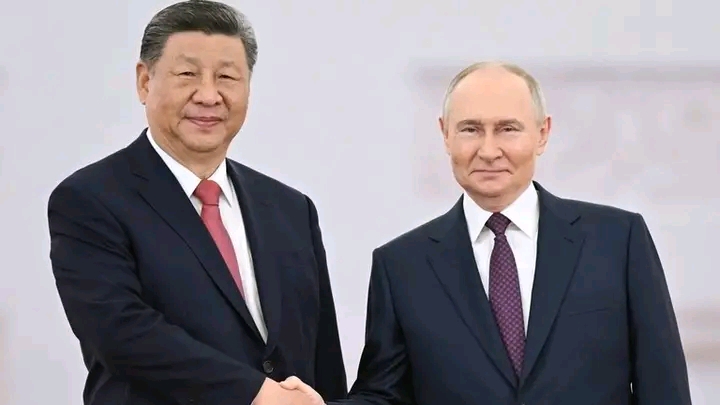

Moscow, Russia| In a significant show of strategic unity, Russian President Vladimir Putin and Chinese President Xi Jinping have issued a joint statement urging the international community to lift economic sanctions and reduce external pressure on North Korea.
The appeal came as part of a wide-ranging declaration signed during a high-level summit at the Kremlin, under the title “Enhancing Comprehensive Partnership and Strategic Interaction in the New Era.”
The joint declaration emphasized that North Korea-related tensions should be resolved through peaceful, diplomatic means.
Both leaders denounced what they described as excessive sanctions imposed on Pyongyang, warning that continued pressure risks undermining stability on the Korean Peninsula.
Putin and Xi also addressed broader international concerns, notably the ongoing conflict in Ukraine.
While both reiterated support for peace negotiations, they asserted that any lasting resolution must confront the “root causes” of the war.
Without naming specific parties, the leaders suggested that geopolitical expansionism and military encroachments have contributed to the conflict, indirectly critiquing Western policies.
In a notable warning, the joint statement raised alarm over the increasing threat of nuclear conflict, citing deteriorating relations among global nuclear powers.
Putin and Xi urged a return to dialogue and restraint, calling for an end to Cold War-style military posturing.
The two heads of state further reaffirmed their commitment to supporting a diplomatic resolution of Iran’s nuclear program, while expressing concern over rising instability in the Middle East.
Their remarks hinted at a desire for greater multilateral involvement in the region’s peace processes.
Criticism was also leveled at the United States’ global missile defense initiatives, particularly the so-called “Golden Dome” system.
Moscow and Beijing argued that such systems disrupt global strategic stability and contribute to arms race dynamics.
Beyond their joint statement, the summit yielded several bilateral agreements aimed at strengthening cooperation in areas such as global strategic stability, mutual investment protections, and enhanced coordination on international platforms.
The leaders also confirmed plans to deepen collaboration on energy, defense, and advanced technologies.
President Putin praised the talks as “exceptionally productive,” describing the current state of Russia-China relations as the strongest in history.
President Xi echoed that sentiment, emphasizing the shared worldview between the two nations and a mutual commitment to resolving key international issues without resorting to coercive measures.
Xi also revealed plans for informal talks with Putin during upcoming luncheons and private discussions, focusing on sensitive topics such as Ukraine’s ceasefire negotiations and trade tariffs.
The summit marks a pivotal moment in the evolving global power structure. The joint declaration not only reflects growing alignment between Moscow and Beijing but also signals an emerging diplomatic axis poised to challenge U.S.-led initiatives on issues ranging from Korean Peninsula security to nuclear non-proliferation.
Analysts suggest this closer coordination could embolden North Korea and complicate efforts by the United States and its allies to manage regional tensions in East Asia.
Simultaneously, the Iranian nuclear question may be increasingly shaped by Russian-Chinese proposals for multilateral engagement, potentially shifting the center of diplomatic gravity away from the West.
In essence, the Kremlin summit underlined a deepening Russia-China strategic partnership that transcends conventional bilateralism.
Their united front on major global security concerns may herald a new phase in the reconfiguration of international diplomacy—toward a more multipolar world order.
Share This Post