
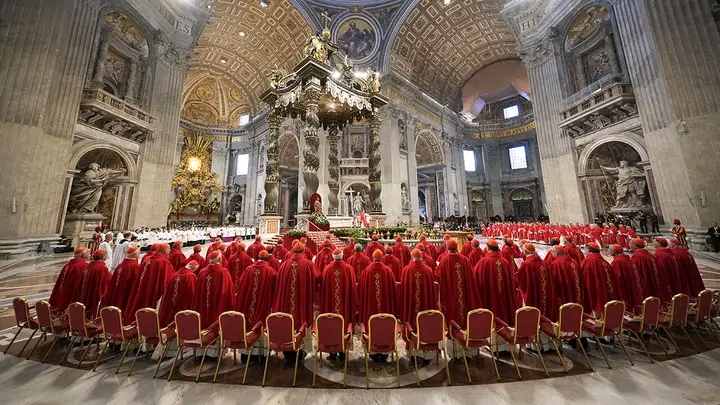

A historic and solemn chapter in the Roman Catholic Church’s centuries-old tradition unfolded this week as the papal conclave officially commenced in Vatican City.
With the Apostolic See vacant, 115 cardinal electors from across the globe—each under the age of 80—have entered into closed-door deliberations inside the revered Sistine Chapel to select the next spiritual leader of the world’s 1.3 billion Catholics.
The conclave, derived from the Latin phrase cum clave meaning “with a key,” symbolizes the seclusion and confidentiality under which the process takes place.
The cardinals, bound by an oath of secrecy, will participate in successive rounds of secret ballots until one candidate garners the requisite two-thirds majority—at least 77 votes.
In keeping with long-standing Vatican protocol, white smoke rising from the chapel’s chimney will announce the successful election of a new Pope, while black smoke will indicate that consensus has not yet been reached.
The proceedings carry immense global significance beyond ecclesiastical boundaries.
At a time marked by war, humanitarian crises, technological disruption, and ideological polarization, the election of a new pontiff holds the potential to impact global diplomacy, interfaith cooperation, and moral discourse.
The world now watches as the Church deliberates between maintaining its deeply rooted traditions or embracing reformative change.
Observers note that the new Pope’s leadership will inevitably influence the Vatican’s stance on a spectrum of critical global issues—including migration, climate change, poverty, gender equality, and secularism.
Many are also watching for signs of how the next pontiff might steer the Church’s engagement with youth, the LGBTQ+ community, and the digital transformation of religious life.
This conclave comes at a pivotal moment for the Church, which continues to wrestle with internal challenges such as declining membership in the West, the lingering shadow of abuse scandals, and the call for greater transparency and inclusivity in its governance.
The outcome of this conclave could shape the spiritual and geopolitical narrative for decades to come.
Whether the cardinals elect a Pope who embodies continuity with established orthodoxy or one who signals a bold step toward modernization, the world awaits not just a name—but a vision.
As silence cloaks the Sistine Chapel, the faithful around the world pray and watch the chimney, awaiting the smoke that will mark the dawn of a new papacy.
Share This Post